{source}
<?php  require_once JPATH_SITE.'/TTcustom/TT_contentparser.php';\(parameters = array("topicname" => "biology", "modelname" => "ejss_model_lifecycleanimals_4cycle");echo generateSimHTML(\)parameters, "EJSS");
?>
{/source}
1. Overview:
This briefing document summarizes the key information presented in two related sources from the Open Educational Resources / Open Source Physics @ Singapore website. The primary focus is on understanding the concept of life cycles, specifically the four-stage life cycles exhibited by mosquitoes, beetles, and butterflies, as highlighted in an interactive HTML5 quiz. The resources also emphasize the broader importance of understanding cycles in nature.
2. Main Themes:
- Life Cycles as Repeated Patterns: Both sources emphasize that life cycles are examples of "repeated patterns of change in nature." The "Sample Learning Goals" section explicitly states, "There are repeated patterns of change around us." This understanding is crucial for predicting events and appreciating the Earth as a self-sustaining system.
- Four-Stage Life Cycles: The core of the interactive quiz and the associated title focuses on the four-stage life cycles of mosquitoes, beetles, and butterflies. While the specific stages for each insect are detailed in the linked resources (though not explicitly within these excerpts), the emphasis is on this particular type of complete metamorphosis. The availability of drag-and-drop quizzes for these specific insects indicates a pedagogical focus on students learning to identify and order these stages.
- Importance of Observing Cycles: The resources highlight the practical benefits of studying cycles. According to the "Sample Learning Goals," "Observing cycles helps us to make predictions and understand things around us." This aligns with the broader scientific goal of identifying patterns to make sense of the natural world.
- Open Educational Resources for Science Learning: The context of these resources within the "Open Educational Resources / Open Source Physics @ Singapore" initiative underscores their purpose in providing freely accessible interactive tools for science education, particularly in biology. The embedding option for the quiz ("Embed this model in a webpage:") further supports this goal of easy integration into teaching materials.
- Curriculum Alignment: The inclusion of "Primary 4 Science" and "Cycles in plants and animals (Lifecycles)" suggests that this material is designed to align with the Singaporean primary science curriculum. The reference to the Ministry of Education (MOE) syllabus further reinforces this connection.
3. Key Ideas and Facts:
- The resources provide an HTML5 drag-and-drop quiz specifically designed to teach the four-stage life cycles of mosquitoes, beetles, and butterflies.
- The development and sharing of these resources are credited to lookang, Felix J. Garcia Clemente, and Francisco Esquembre, utilizing EJS (Easy Java/JavaScript Simulations Toolkit).
- The content is licensed under a Creative Commons Attribution-Share Alike 4.0 Singapore License, promoting sharing and adaptation.
- The broader topic of "Cycles" in nature, including life cycles and the water cycle, is presented as fundamental to understanding the world around us.
- Understanding cycles enables prediction and appreciation of Earth's self-sustaining nature.
- The resources cater to primary science education, as indicated by the "Primary 4 Science" tag and the inclusion of related curriculum documents.
- Links are provided to other related interactive resources, including life cycles of frogs, humans, chickens, grasshoppers, and cockroaches, as well as resources on "Cycles" in general. These other resources illustrate different types of life cycles (e.g., three-stage life cycles with nymphs).
- The resources encourage curiosity and responsibility towards living things ("Show curiosity in exploring the surrounding plants and animals and question what they find." and "Show concern by being responsible towards plants and animals such as their own pets.").
4. Relevant Quotes:
- "There are repeated patterns of change in nature. Examples of these cycles are the life cycles of living things and the water cycle." (About Cycles section)
- "Understanding these cycles helps Man to predict events and processes and to appreciate the Earth as a self-sustaining system." (About Cycles section)
- "Observing cycles helps us to make predictions and understand things around us." (Sample Learning Goals)
- "What makes a cycle?" (Key Inquiry Questions)
- "Why are cycles important to life?" (Key Inquiry Questions)
5. Implications and Potential Use:
These resources provide valuable, interactive tools for teaching primary school students about life cycles. The focus on the four-stage life cycles of specific insects allows for targeted learning and assessment. The open nature of the resources encourages their integration into various educational settings and the potential for adaptation by educators. The broader emphasis on the importance of understanding cycles in nature can help students develop a deeper appreciation for biological processes and the interconnectedness of the environment.
6. Further Information:
For more detailed information on the specific stages of the mosquito, beetle, and butterfly life cycles, users can access the embedded simulation or explore the direct links provided in the source document. The "For Teachers" section may also contain additional pedagogical guidance.
Life Cycles of Mosquito, Beetle, and Butterfly: A Study Guide
Key Concepts
- Life Cycle: The series of changes in form that an organism undergoes, returning to the starting state.
- Cycle: A repeated pattern of change.
- Metamorphosis: A biological process by which an animal physically develops after birth or hatching, involving a conspicuous and relatively abrupt change in the animal's form or structure through cell growth and differentiation.
- Four-Stage Life Cycle: A life cycle that includes the egg, larva, pupa, and adult stages.
- Egg: The first stage of the life cycle, typically a fertilized ovum.
- Larva: The immature, wingless, feeding stage of holometabolous insects (those that undergo complete metamorphosis). Larvae often look very different from the adult form.
- Pupa: The transformation stage in insects with complete metamorphosis, during which the larva develops into the adult. The pupa is typically inactive and may be enclosed in a cocoon or chrysalis.
- Adult: The final, sexually mature stage of the life cycle.
Quiz
- What defines a life cycle in living organisms, according to the provided text?
- Name the four distinct stages that characterize the life cycles of mosquitoes, beetles, and butterflies.
- In the context of insect development, what is metamorphosis?
- Describe the larval stage in the life cycle of a beetle or butterfly. How does it typically differ from the adult stage?
- What happens during the pupa stage in insects like butterflies and beetles?
- Explain the significance of understanding life cycles, as mentioned in the Open Educational Resources text.
- Besides animal life cycles, what other natural cycle is given as an example of repeated patterns of change?
- What are some of the verbs mentioned in the Primary 4 Science syllabus that students should be able to do regarding animal life cycles?
- According to the "For Teachers" section, are the life cycles of all the listed animals four-stage cycles? Provide an example to support your answer.
- What essential takeaways are highlighted regarding "Cycles" in the Sample Learning Goals?
Quiz Answer Key
- A life cycle in living organisms is defined as a repeated pattern of change.
- The four distinct stages are egg, larva, pupa, and adult.
- Metamorphosis is a biological process involving a conspicuous and relatively abrupt change in an animal's form or structure after birth or hatching.
- The larval stage is an immature, wingless, feeding stage that often looks very different from the adult. For example, a caterpillar (butterfly larva) is very different from a winged butterfly.
- During the pupa stage, the larva undergoes transformation and develops into the adult form. This stage is typically inactive.
- Understanding life cycles helps us to predict events and processes and to appreciate the Earth as a self-sustaining system.
- The water cycle is another natural cycle mentioned as an example of repeated patterns of change.
- Students should be able to observe and compare the life cycles of animals over a period of time.
- No, not all listed animals have a four-stage cycle. For example, the frog, chicken, human, grasshopper, and cockroach have different life cycle patterns (e.g., egg, young, adult or egg, nymph, adult).
- The essential takeaways are that there are repeated patterns of change around us, and observing cycles helps us to make predictions and understand things around us.
Essay Format Questions
- Compare and contrast the four stages of the life cycle (egg, larva, pupa, adult) in mosquitoes, beetles, and butterflies. Discuss the key characteristics and the primary function of each stage in these insects.
- The provided text emphasizes the importance of understanding cycles in nature. Elaborate on why the study of life cycles, such as those of insects, contributes to a broader appreciation of the Earth as a self-sustaining system.
- Discuss the concept of metamorphosis in insects. Explain why some insects undergo complete metamorphosis (with a larval and pupal stage) while others have incomplete metamorphosis (e.g., grasshopper with a nymph stage). How do these different developmental patterns benefit the respective insect groups? (Note: The source material primarily focuses on complete metamorphosis).
- Based on the provided resources, discuss the educational value of interactive tools, such as the "Life cycle of 4 Stage Cycles only for Mosquito, Beetle and Butterfly Drag and Drop Quiz HTML5," in teaching and learning about biological cycles.
- The Primary 4 Science syllabus encourages students to "Observe and compare the life cycles of animals over a period of time." Design a simple classroom activity that would allow students to achieve this learning objective, focusing on the life cycles mentioned in the source material and considering the "Essential Takeaways" and "Key Inquiry Questions" provided.
Glossary of Key Terms
- Adult: The fully developed, mature stage in the life cycle of an organism, capable of reproduction.
- Cycle: A sequence of events that repeats itself in a regular and predictable order.
- Egg: The first stage in the life cycle of many animals, containing the developing embryo.
- Larva: An immature, often worm-like stage that hatches from the egg in insects undergoing complete metamorphosis. It is typically a feeding and growing stage.
- Life Cycle: The entire sequence of developmental stages in the life of an organism, from conception to death, often including reproduction and the start of a new generation.
- Metamorphosis: A significant transformation in physical form that some animals undergo between the immature and adult stages.
- Nymph: An immature stage in insects with incomplete metamorphosis that resembles a smaller version of the adult. It undergoes molting but lacks a pupal stage. (Note: While mentioned in the broader context, this is not a stage in the mosquito, beetle, or butterfly life cycle discussed in detail).
- Pupa: A non-feeding, usually inactive stage in the life cycle of insects undergoing complete metamorphosis, during which larval tissues are broken down and the adult form develops.
Sample Learning Goals
Cycles There are repeated patterns of change in nature. Examples of these cycles are the life cycles of living things and the water cycle. Understanding these cycles helps Man to predict events and processes and to appreciate the Earth as a self-sustaining system. The essential takeaways and key inquiry questions for “Cycles” are: Essential Takeaways Key Inquiry Questions There are repeated patterns of change around us. Observing cycles helps us to make predictions and understand things around us. What makes a cycle? Why are cycles important to life?
Primary 4 Science
Cycles
Cycles in plants and animals (Lifecycles)
The freed up curriculum time is to enable teachers to use more engaging teaching and learning approaches, and/or to implement customised schoolbased programmes as long as the aims of the syllabus are met. This enables teachers to make learning more meaningful and enjoyable for their students.
About Cycles: There are repeated patterns of change in nature. Examples of these cycles are the life cycles of living things and the water cycle. Understanding these cycles helps Man to predict events and processes and to appreciate the Earth as a self-sustaining system.
*Observe and compare the life cycles of animals over a period of time (butterfly, beetle, mosquito, grasshopper, cockroach, chicken, frog).
*Show curiosity in exploring the surrounding plants and animals and question what they find. *Show concern by being responsible towards plants and animals such as their own pets. *Value individual effort and team work.
For Teachers
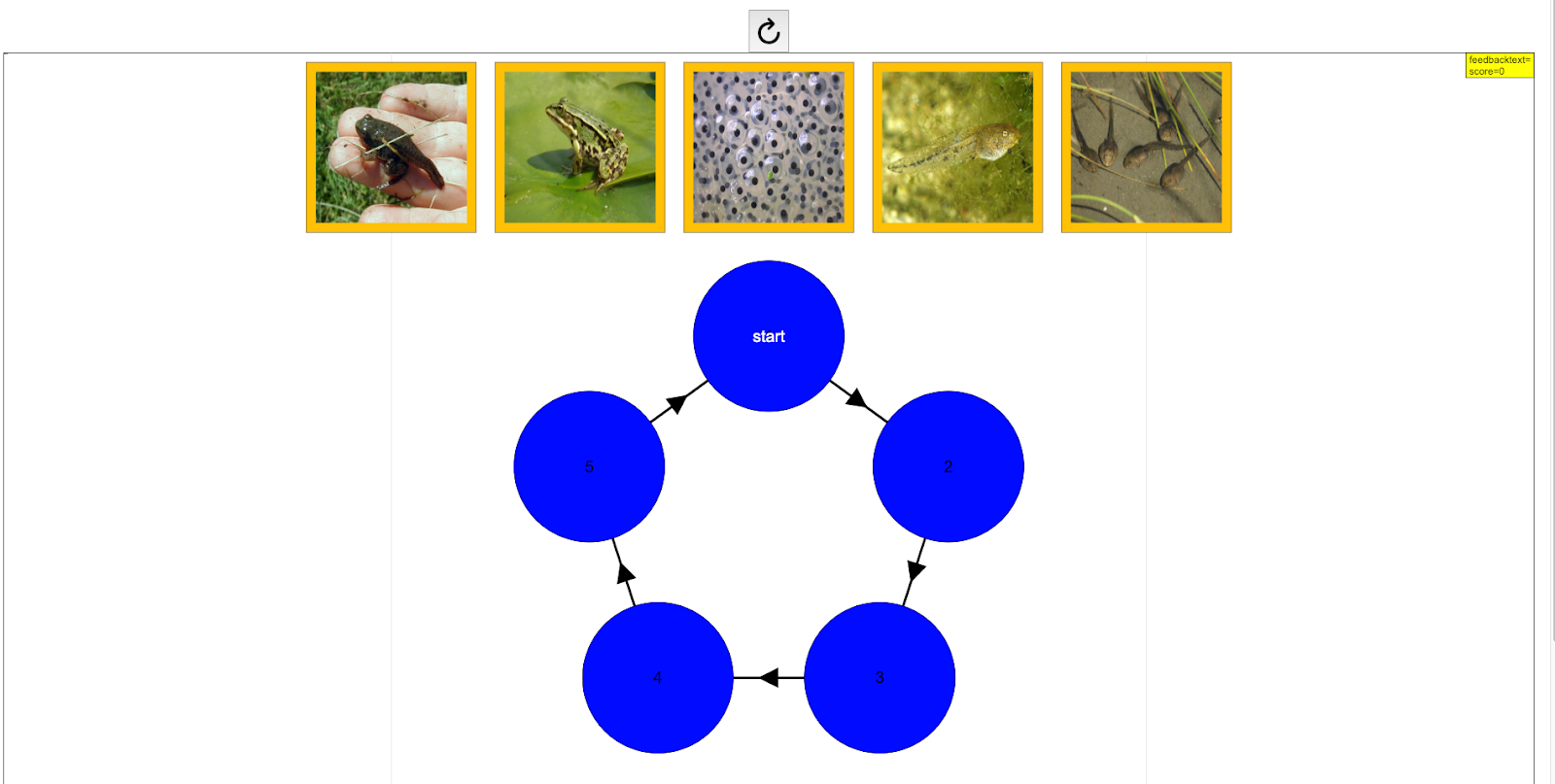
Life Cycle of Frog Drag and Drop Quiz HTML5
|
|
|
https://sg.iwant2study.org/ospsgx/index.php/interactive-resources/biology/846-lifecycleanimals |
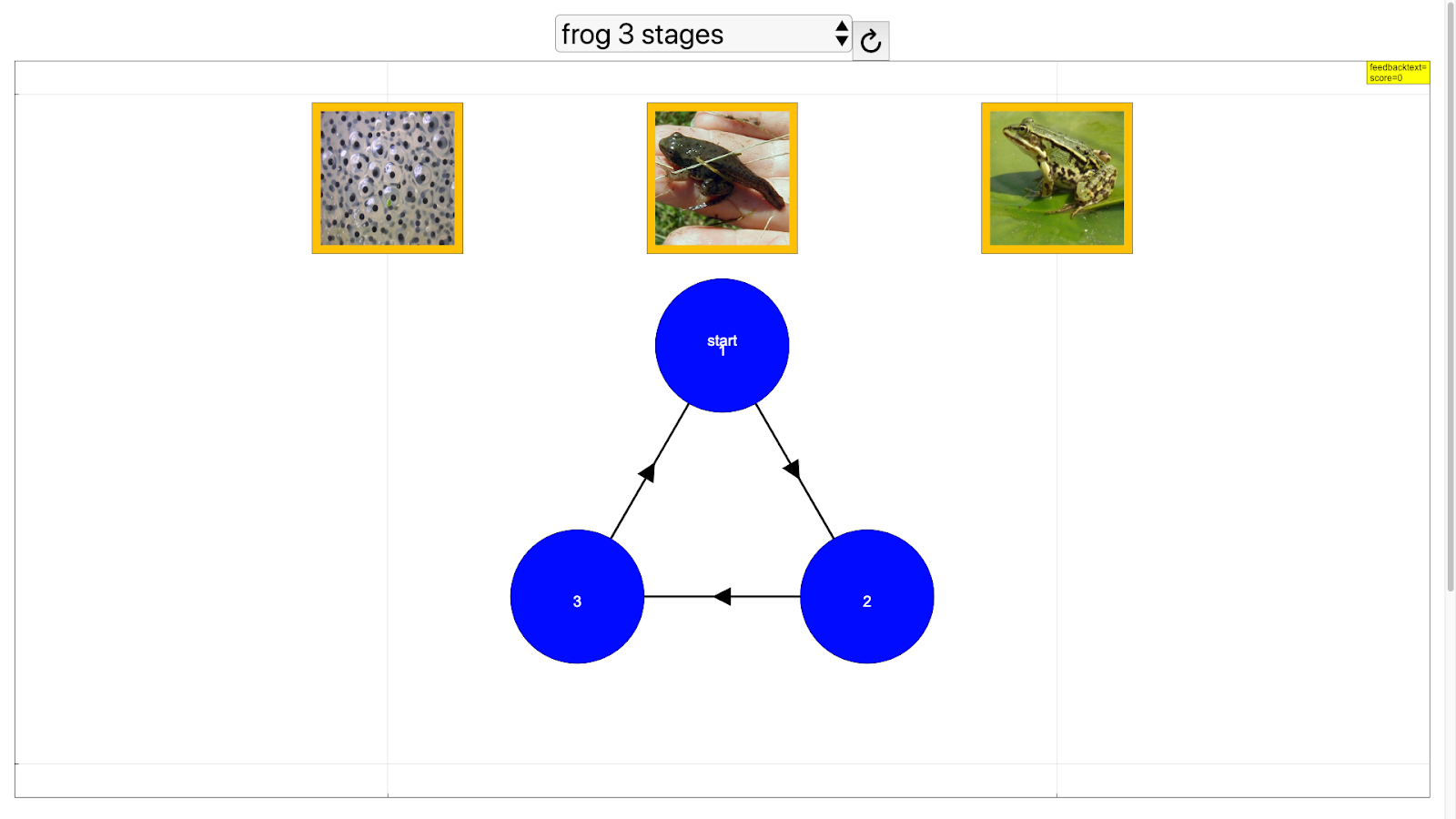 |
| The life cycle of the Frog Egg, Young and Adult https://sg.iwant2study.org/ospsgx/index.php/interactive-resources/biology/846-lifecycleanimals |
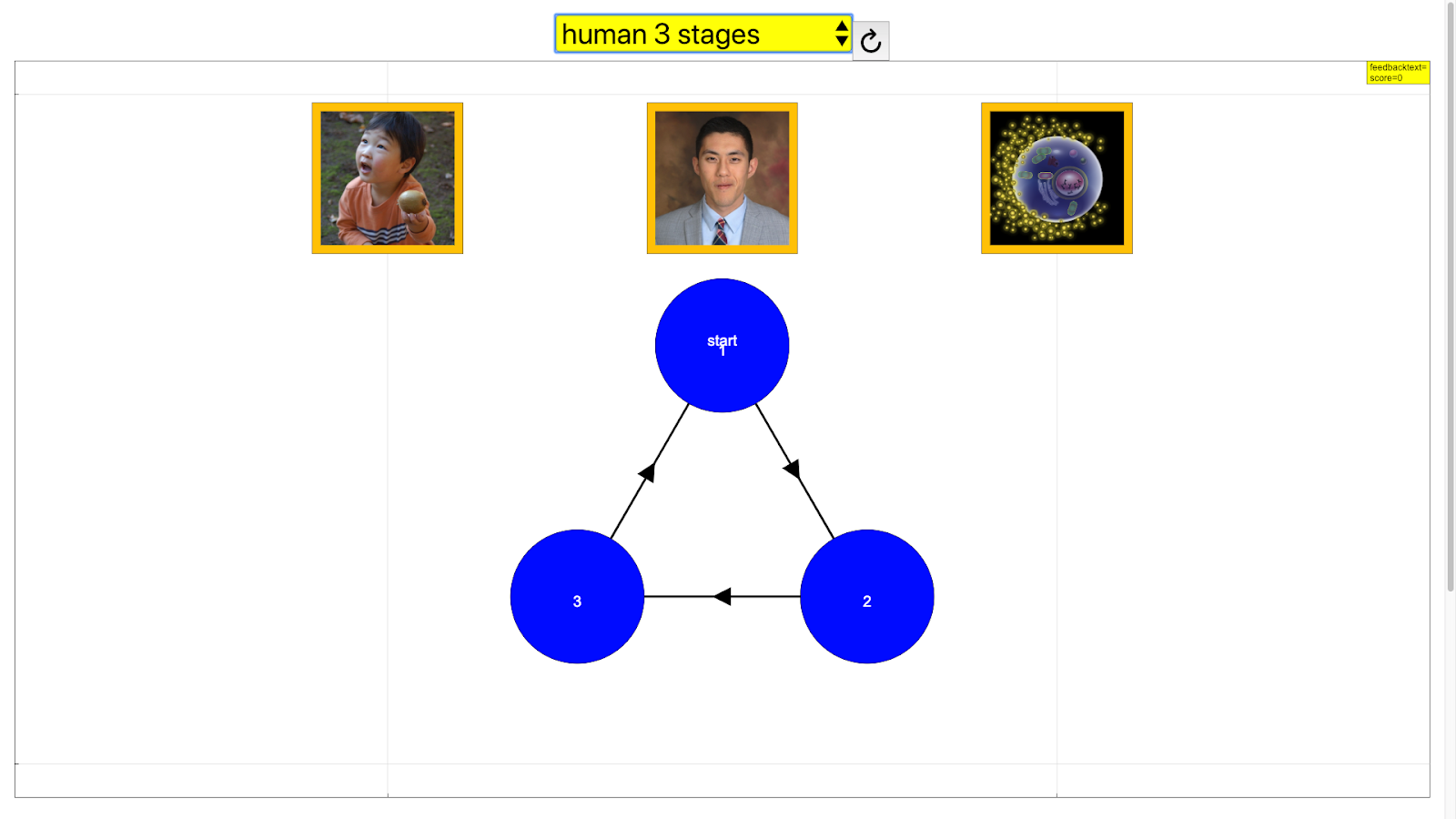 |
| The life cycle of the Human Egg, Young and Adult https://sg.iwant2study.org/ospsgx/index.php/interactive-resources/biology/846-lifecycleanimals |
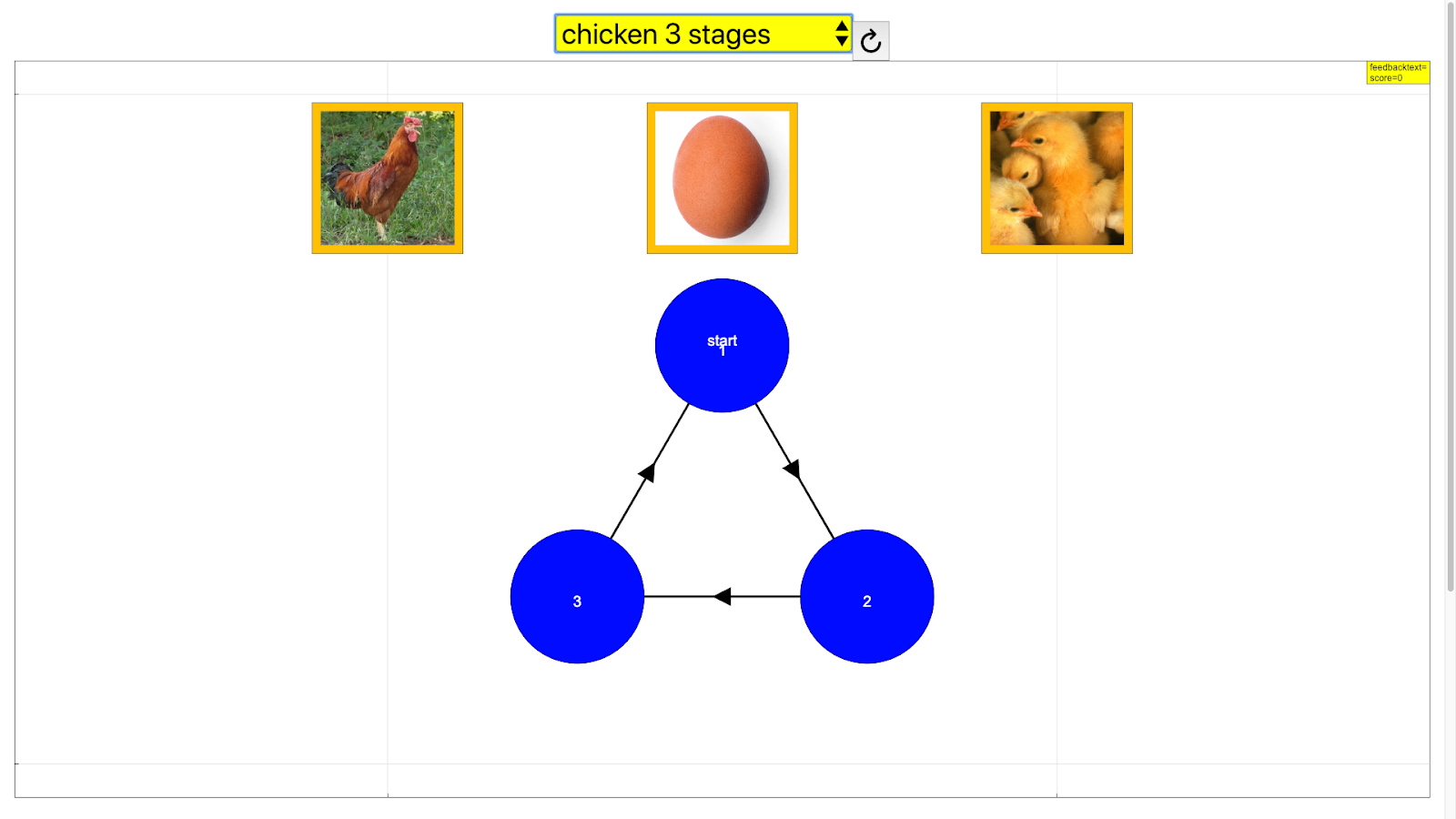 |
| The life cycle of the chicken Egg, Young and Adult https://sg.iwant2study.org/ospsgx/index.php/interactive-resources/biology/846-lifecycleanimals |
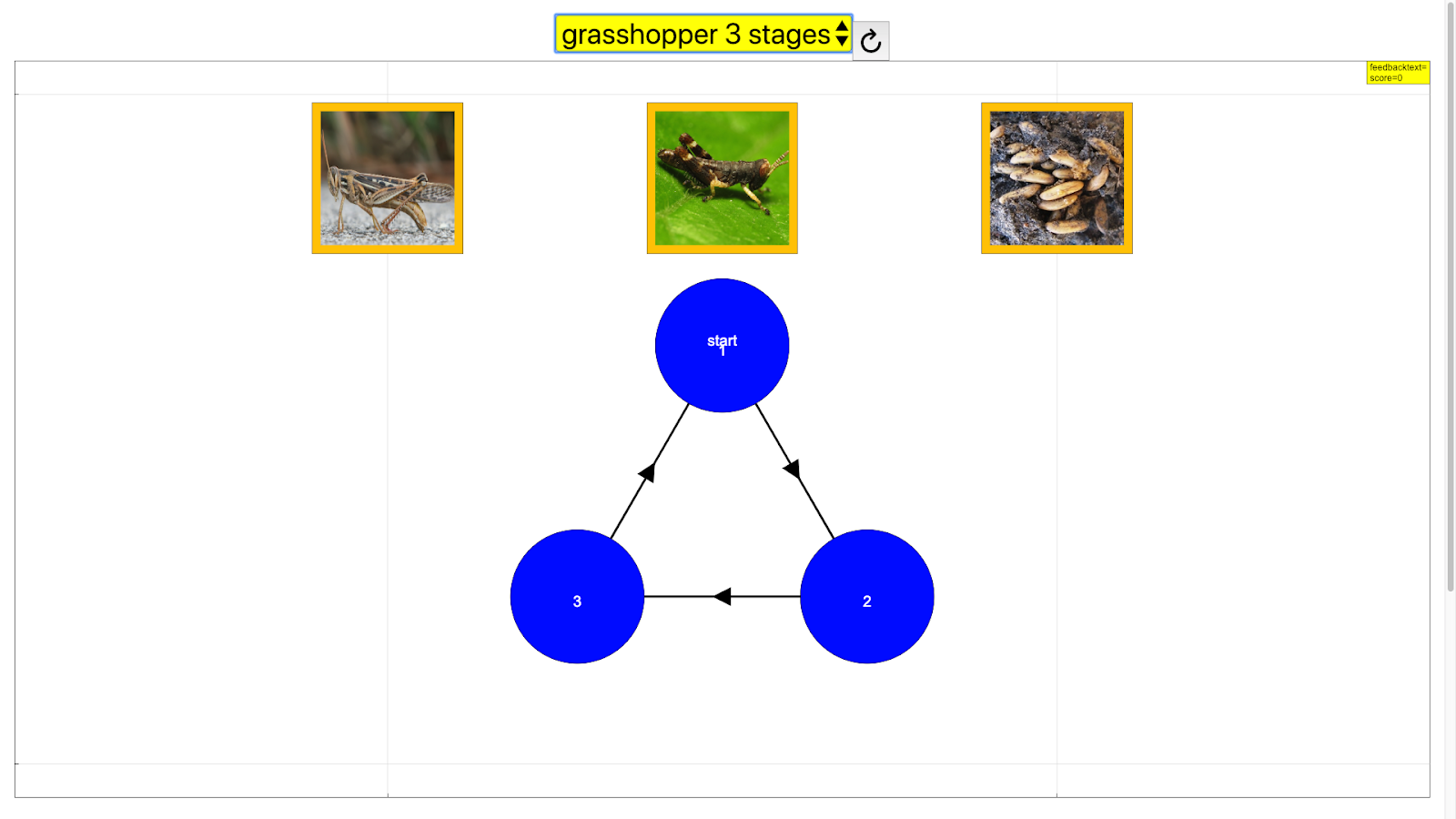 |
| The life cycle of the Grasshopper Egg, Nymph and Adult https://sg.iwant2study.org/ospsgx/index.php/interactive-resources/biology/846-lifecycleanimals |
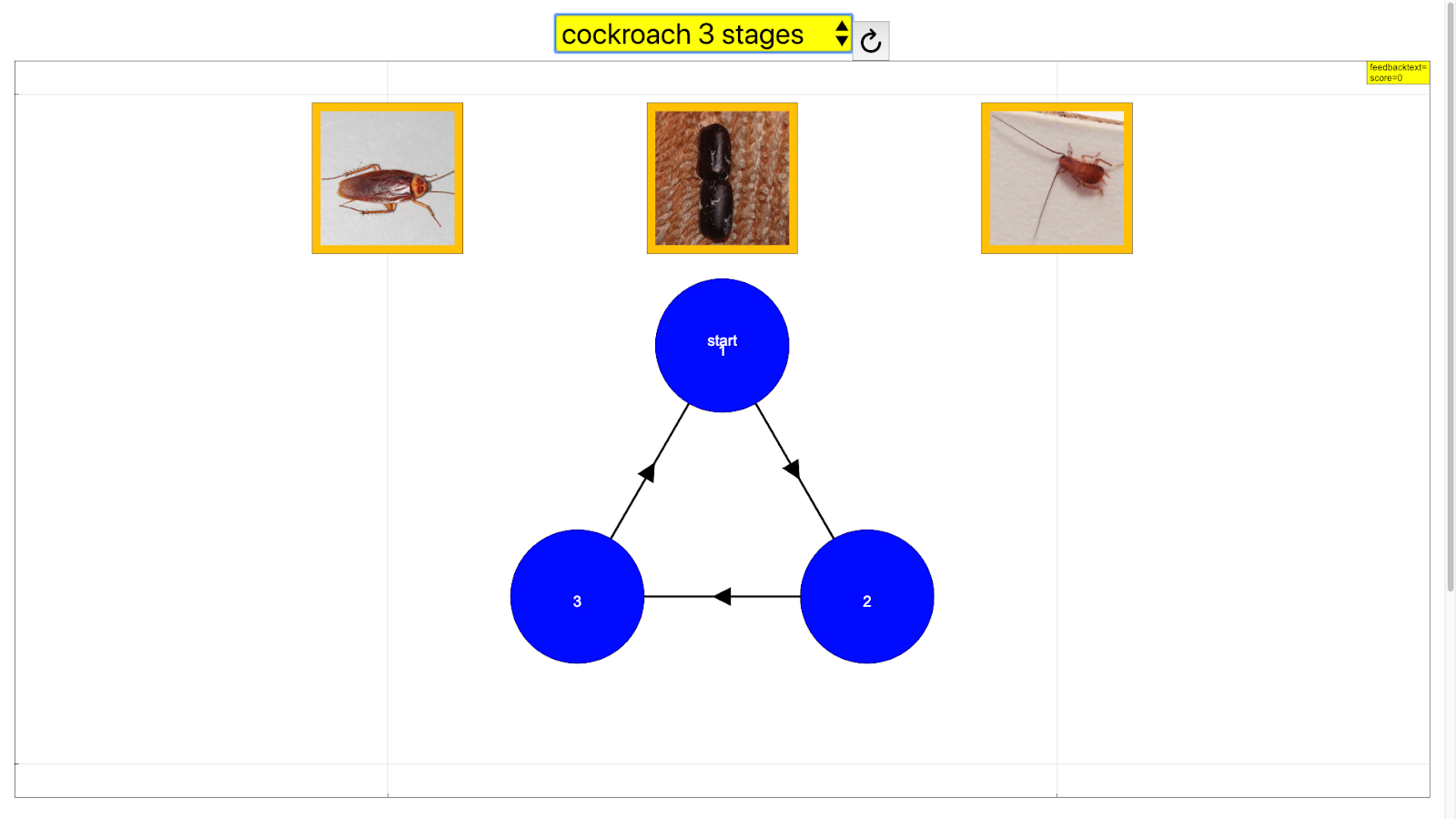 |
| The life cycle of the Cockroach Egg, Nymph and Adult https://sg.iwant2study.org/ospsgx/index.php/interactive-resources/biology/846-lifecycleanimals |
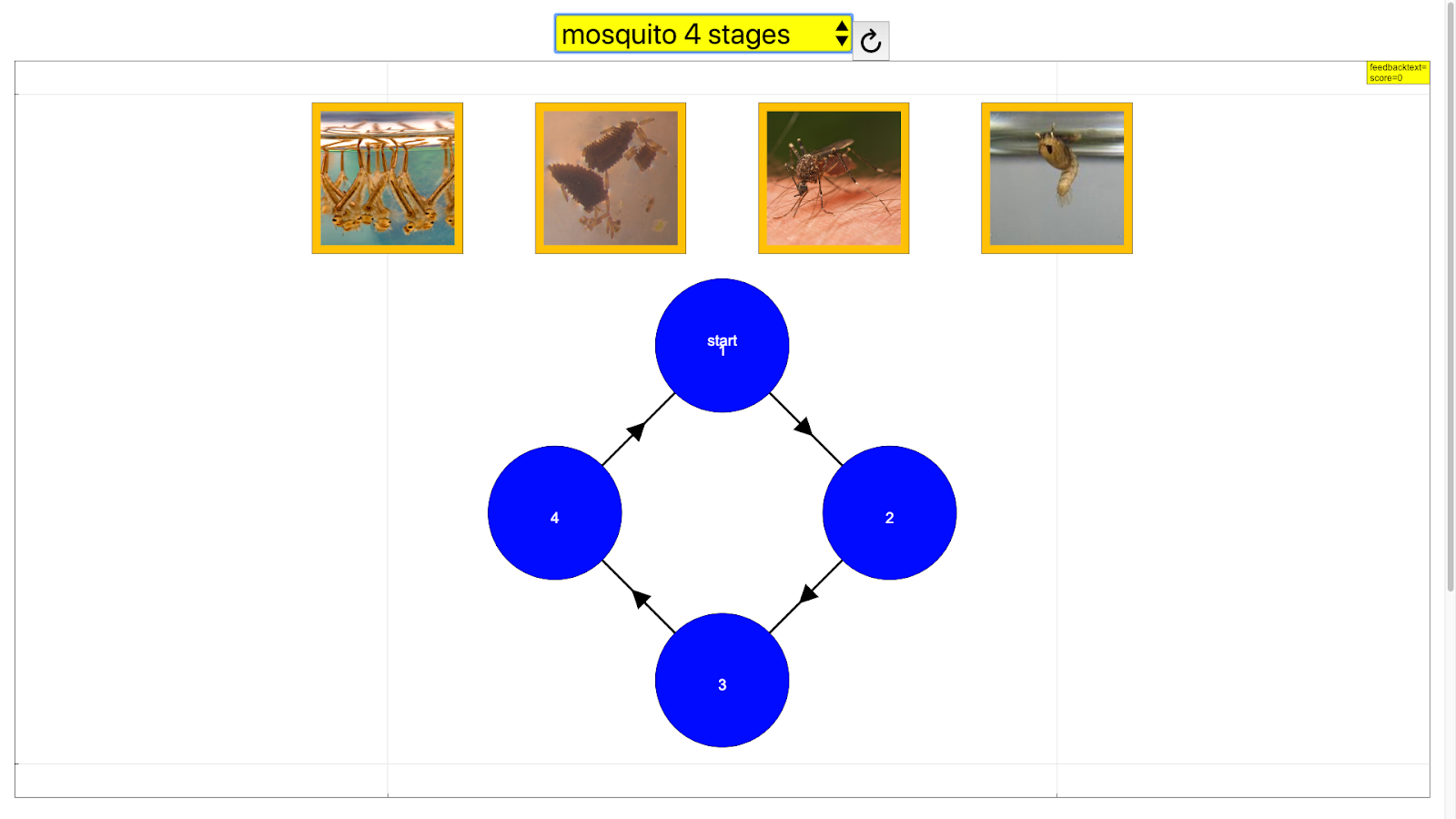 |
| The life cycle of the mosquito Egg, Nymph and Adult https://sg.iwant2study.org/ospsgx/index.php/interactive-resources/biology/846-lifecycleanimals |
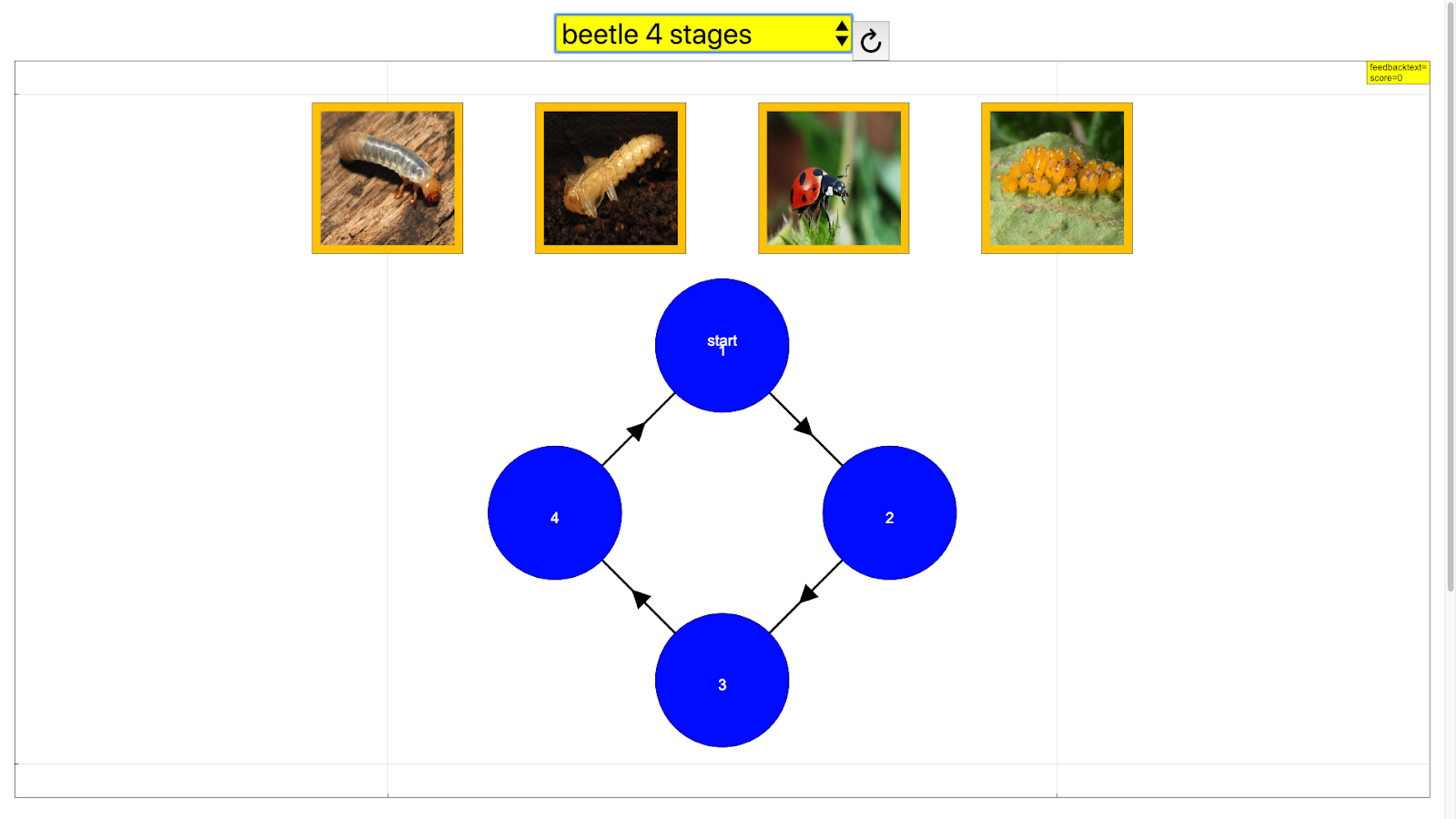 |
| The life cycle of the beetle Egg, Larva, Pupa and Adult https://sg.iwant2study.org/ospsgx/index.php/interactive-resources/biology/846-lifecycleanimals |
 |
| The life cycle of the butterfly Egg, Larva, Pupa and Adult https://sg.iwant2study.org/ospsgx/index.php/interactive-resources/biology/846-lifecycleanimals |
Research
[text]
Video
https://www.youtube.com/watch?v=p0RnVLP25vo {source}<iframe width="560" height="315" src="https://www.youtube.com/embed/p0RnVLP25vo" title="YouTube video player" frameborder="0" allow="accelerometer; autoplay; clipboard-write; encrypted-media; gyroscope; picture-in-picture" allowfullscreen></iframe>{/source}
Version:
Other Resources
https://www.geogebra.org/m/f29bmujQ
Frequently Asked Questions: Understanding Life Cycles
1. What is a life cycle in the context of nature? A life cycle refers to the series of stages that a living organism goes through during its lifetime, from its beginning to its reproduction. These stages often follow a repeated pattern, making them cyclical in nature. Examples include the development of a butterfly from an egg to a larva (caterpillar), then a pupa (chrysalis), and finally an adult butterfly, which can then reproduce, starting the cycle anew. Similarly, plants have life cycles involving seeds, seedlings, mature plants, and the production of new seeds. Understanding these cycles is fundamental to comprehending the natural world.
2. Why is understanding life cycles important? Understanding life cycles is crucial for several reasons. Firstly, it helps us predict events and processes in nature. For example, knowing the life cycle of a mosquito allows us to anticipate when their populations might increase and take preventive measures. Secondly, it fosters an appreciation for the Earth as a self-sustaining system, highlighting the interconnectedness of living things and their environment. Moreover, understanding the life cycles of plants and animals is essential in fields like agriculture, ecology, and conservation.
3. What are some examples of life cycles in nature besides those of animals? While animal life cycles, such as those of insects like mosquitoes, beetles, and butterflies, are common examples, other natural cycles exist. The water cycle, which involves evaporation, condensation, precipitation, and collection of water, is a vital non-biological cycle. Plant life cycles, from seed germination to flowering and seed production, are also significant. These repeated patterns of change are fundamental to how our planet functions.
4. What can we learn by observing and comparing the life cycles of different animals? Observing and comparing the life cycles of various animals, such as butterflies, beetles, mosquitoes, frogs, chickens, grasshoppers, and cockroaches, reveals the diversity of developmental processes in the natural world. We can learn about different stages of growth (e.g., egg, larva, pupa, nymph, adult), the timeframes involved in each stage, and the environmental factors that influence these cycles. Comparing these cycles highlights adaptations that different species have developed to survive and reproduce in their specific habitats.
5. What are the different stages in the life cycle of a butterfly, beetle, and mosquito? The butterfly and beetle share a four-stage life cycle known as complete metamorphosis:
- Egg: The first stage, where the life cycle begins.
- Larva: A growth stage characterized by eating and molting (shedding skin). In butterflies, this is the caterpillar stage, and in beetles, it's a grub.
- Pupa: A transformation stage where the larva develops into the adult form within a protective casing (chrysalis in butterflies, pupal cell in beetles).
- Adult: The final, reproductive stage.
The mosquito also undergoes metamorphosis, but in some contexts, its larval and pupal stages are considered aquatic nymph-like forms, leading to a description of its post-egg stages as larva, pupa, and adult. In a four-stage model:
- Egg: Laid in or near water.
- Larva: An aquatic, free-swimming stage that feeds and grows.
- Pupa: Another aquatic stage where transformation into the adult occurs.
- Adult: The terrestrial (flying) and reproductive stage (female mosquitoes also bite to obtain blood for egg development).
6. How can interactive resources like drag-and-drop quizzes help in learning about life cycles? Interactive resources, such as drag-and-drop quizzes focusing on the life cycles of animals, can make learning more engaging and effective. By actively participating in the learning process, students can reinforce their understanding of the different stages and their correct order. These tools often provide immediate feedback, allowing learners to identify and correct mistakes. The visual and interactive nature of such resources can cater to different learning styles and enhance retention of information, making learning more meaningful and enjoyable.
7. How does the study of cycles in nature relate to broader scientific understanding? The study of cycles in nature, including life cycles, is a fundamental aspect of biology and ecology. It connects to broader scientific principles such as growth, reproduction, adaptation, and the flow of energy and matter through ecosystems. Understanding cycles allows scientists to make predictions about natural phenomena, assess the impact of environmental changes, and develop strategies for conservation and sustainable resource management. The concept of cycles also extends to other scientific disciplines, such as the carbon cycle in environmental science and various cycles in physics and chemistry.
8. What role does curiosity and exploration play in understanding life cycles and the natural world? Curiosity and exploration are essential drivers in learning about life cycles and the natural world. By showing curiosity in exploring the plants and animals around them and questioning what they find, individuals can develop a deeper understanding of natural processes. This inquisitive approach encourages observation, critical thinking, and a lifelong interest in science. Hands-on activities and interactive resources can further foster this curiosity and make the process of discovery more engaging and rewarding.