{source}
<?php  require_once JPATH_SITE.'/TTcustom/TT_contentparser.php';\(parameters = array("topicname" => "02_newtonianmechanics_6pressure", "modelname" => "ejss_model_watersurface");echo generateSimHTML(\)parameters, "EJSS");
?>
{/source}
Briefing Document: "A Baffling Balloon Behavior JavaScript Simulation Applet HTML 5"
Source: Open Educational Resources / Open Source Physics @ Singapore website.
Main Theme: The document describes a JavaScript HTML5 applet simulation designed to model and explore "A Baffling Balloon Behavior." It's part of a larger collection of interactive physics resources aimed at education. The emphasis is on interactive, simulation-based learning, likely for physics concepts.
{source}<iframe style="border-radius:12px" src="https://open.spotify.com/embed/episode/1FzU3XaeAZ2tBzne6xz7E7?utm_source=generator" width="100%" height="352" frameBorder="0" allowfullscreen="" allow="autoplay; clipboard-write; encrypted-media; fullscreen; picture-in-picture" loading="lazy"></iframe>{/source}
Key Ideas and Facts:
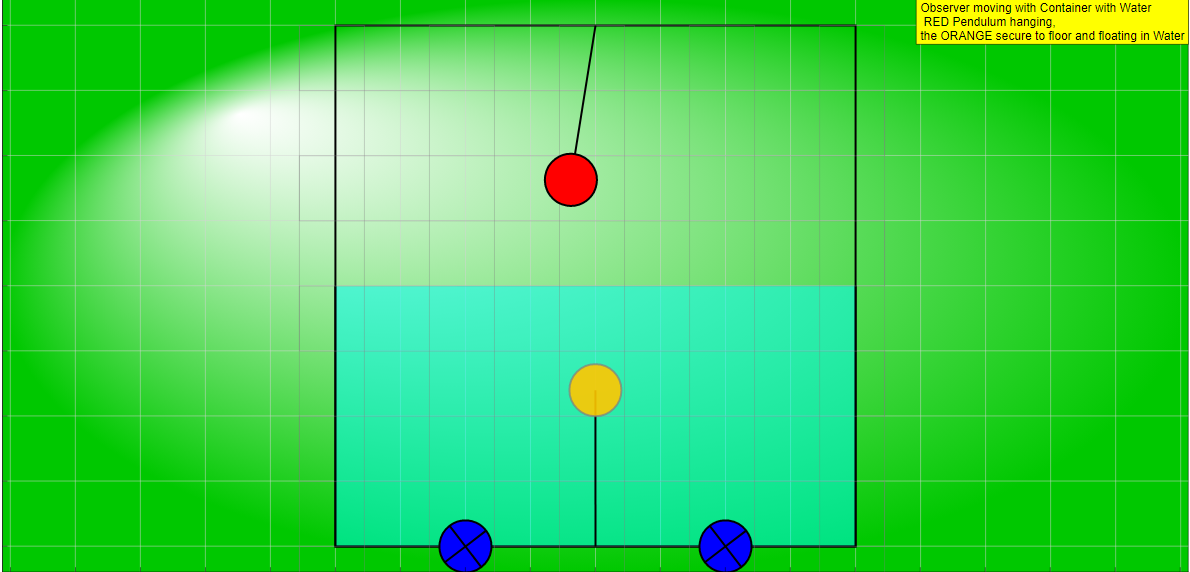
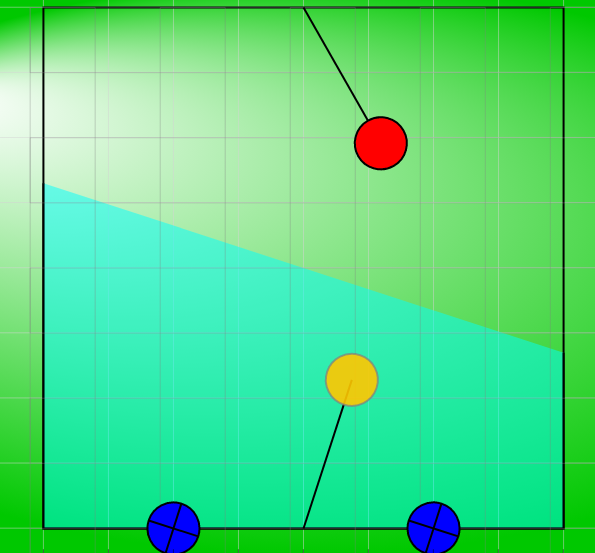
- Simulation Focus: The core of the document revolves around a specific simulation titled "A Baffling Balloon Behavior." It's not immediately clear what "baffling balloon behavior" refers to without interacting with the simulation itself. The simulation likely demonstrates physics principles related to pressure.
- Interactive Learning: The resource is presented as an "Applet Simulation," highlighting the interactive nature of the tool. Users can presumably manipulate variables and observe the resulting changes in the simulation.
- JavaScript HTML5: The applet is built using JavaScript and HTML5, making it accessible through web browsers without the need for plugins (like Flash). This ensures broad compatibility across different devices.
- Embeddable: The simulation can be embedded in other webpages using an iframe, as demonstrated by the provided code: <iframe width="100%" height="100%" src="https://iwant2study.org/lookangejss/02_newtonianmechanics_6pressure/ejss_model_watersurface/watersurface_Simulation.xhtml " frameborder="0"></iframe>
- Learning Goals: The document mentions "Sample Learning Goals," suggesting that the simulation is designed with specific educational objectives in mind. These goals are not explicitly stated but implied to be present.
- Teacher Resources: There's a section "For Teachers," indicating that the resource is intended to be used in a classroom setting. It includes "Instructions" on how to use the simulation, such as adjusting an "Acceleration Slider" and toggling full screen.
- Credits: The creators of the simulation are Fu-Kwun Hwang, Fremont Teng, and Loo Kang Wee.
- Open Educational Resource: The website and the simulation are part of the "Open Educational Resources / Open Source Physics @ Singapore" project. The content is licensed under the Creative Commons Attribution-Share Alike 4.0 Singapore License, promoting sharing and adaptation. Commercial use of the underlying EasyJavaScriptSimulations Library requires separate licensing.
- Related Resources: The document lists numerous other JavaScript HTML5 applet simulations covering a wide range of physics topics, such as "Buoyancy Force on Mass," "Push a Block," "Earth and Bar Magnet," "Faraday's Law," "Coriolis Effect," and many more. This highlights the extensive collection of educational simulations available from this source.
- Accessibility: The site provides options for translation, implying a commitment to making the resources accessible to a wider audience.
- Other functionalities: The applet provides the functionality to toggle to full screen and reset the simulation.
Quotes:
- "A Baffling Balloon Behavior JavaScript Simulation Applet HTML 5" - This is the title of the specific simulation.
- "Adjust the acceleration slider to get the tank moving (Starts moving as well.)" - Part of the instructions, giving an idea of the interactive elements.
- "Contents are licensed Creative Commons Attribution-Share Alike 4.0 Singapore License" - Highlights the open-source nature of the resource.
Inferences and Potential Use Cases:
- The resource is likely targeted at high school or early undergraduate physics students.
- Teachers could use the simulation as a demonstration tool in the classroom or as an interactive assignment for students to explore physics concepts.
- The simulation could be used as a supplementary learning tool for students studying fluid mechanics, pressure, or buoyancy.
- The "baffling balloon behavior" could relate to phenomena like the behavior of a balloon in an accelerating frame of reference or the pressure differences affecting a balloon submerged in a fluid. Further investigation with the applet would be needed to ascertain the nature of the baffling behavior.
A Baffling Balloon Behavior: An Interactive Physics Simulation Study Guide
I. Key Concepts and Simulation Elements
This simulation allows users to explore the physics principles governing a balloon's behavior in a moving tank of water. Here are the main elements and concepts to understand:
- Pressure: The force exerted per unit area, often by a fluid. In this simulation, the water pressure influences the balloon.
- Buoyancy: The upward force exerted by a fluid that opposes the weight of an immersed object. Archimedes' principle explains the magnitude of this force.
- Acceleration: The rate of change of velocity. The simulation includes an acceleration slider for the tank.
- Frame of Reference: The perspective from which motion is observed. The balloon's motion will appear different depending on whether the observer is inside or outside the accelerating tank.
- Newton's Laws of Motion: Especially the First Law (Inertia) and Second Law (F=ma), apply to the balloon and tank system.
- Simulation Controls: The user can adjust the acceleration of the tank and toggle full-screen mode.
II. Quiz
Answer the following questions in 2-3 sentences each.
- What is buoyancy, and how does it affect the balloon's behavior in the water tank?
- How does changing the acceleration of the tank influence the forces acting on the balloon?
- Explain how the balloon's behavior is related to inertia.
- What happens to the balloon when the tank is at rest (zero acceleration)?
- How does the pressure of the water affect the balloon's movement?
- Why is it important to consider the frame of reference when analyzing the balloon's motion?
- What are some real-world applications of the physics principles demonstrated in this simulation?
- Describe a scenario where this simulation could be used in an educational setting.
- How could the simulation be modified to include additional factors that affect the balloon's behavior?
- What prior physics knowledge should someone have before using this simulation?
III. Quiz Answer Key
- Buoyancy is the upward force exerted by a fluid that opposes the weight of an immersed object. It causes the balloon to float.
- Changing the acceleration of the tank introduces a fictitious force that appears to act on the balloon, influencing its apparent movement relative to the tank. The balloon will tend to move in the opposite direction of the acceleration.
- The balloon's behavior is directly linked to inertia, which is the tendency of an object to resist changes in its state of motion. When the tank accelerates, the balloon resists that change and tends to stay where it is.
- When the tank is at rest, the buoyant force acts on the balloon and it floats to the top of the tank.
- The pressure of the water surrounding the balloon is uniform and the balloon will float to the top.
- The frame of reference determines how we perceive the motion of the balloon. An observer inside the accelerating tank sees the balloon move differently than an observer outside the tank in a non-accelerating frame.
- Buoyancy is used to design boats. Pressure is used to create hydraulics.
- The simulation could be used to illustrate Newton's First Law and how a force will accelerate an object with mass.
- The simulation could be modified to include the size of the balloon to see how that affects the buoyancy, or include drag as a force to impact inertia.
- Someone using this simulation should have a basic understanding of buoyancy, pressure, Newton's Laws, and how acceleration affects motion.
IV. Essay Questions
Consider these questions, formulating well-structured essays with supporting arguments and examples from the simulation and broader physics concepts.
- Analyze the interplay between buoyancy, pressure, and inertia in determining the balloon's behavior within the accelerating water tank. How does each factor contribute to the observed motion, and what happens when one factor is significantly altered?
- Discuss the significance of choosing an appropriate frame of reference when interpreting motion, using the balloon simulation as a concrete example. How does the observed behavior of the balloon differ from the perspective of an observer inside the accelerating tank versus one outside?
- Using Newton's Laws of Motion as your foundation, explain the balloon's response to changes in the tank's acceleration. How does the concept of inertia relate to the observed behavior, and what are the limitations of applying Newton's Laws in this context?
- Explore the potential educational applications of the "Baffling Balloon Behavior" simulation. What specific physics concepts can it effectively illustrate, and how might it enhance student understanding compared to traditional teaching methods?
- Design a modified version of the simulation, including new parameters or interactive features, that would further enrich its educational value. Justify your design choices by explaining how the additions would address specific learning objectives or misconceptions related to the relevant physics principles.
V. Glossary of Key Terms
- Pressure: The force exerted per unit area, typically measured in Pascals (Pa).
- Buoyancy: An upward force exerted by a fluid that opposes the weight of an immersed object.
- Inertia: The tendency of an object to resist changes in its state of motion.
- Acceleration: The rate of change of velocity per unit time, measured in meters per second squared (m/s²).
- Frame of Reference: A coordinate system or perspective from which motion is observed and measured.
- Newton's First Law: An object at rest stays at rest and an object in motion stays in motion with the same speed and in the same direction unless acted upon by a force.
- Newton's Second Law: The acceleration of an object is directly proportional to the net force acting on the object, is in the same direction as the net force, and is inversely proportional to the mass of the object (F=ma).
- Simulation: A computer-based model used to replicate real-world phenomena for study and experimentation.
- Applet: A small application, often written in Java or JavaScript, that runs within another application, typically a web browser.
Sample Learning Goals
[text]
For Teachers
A Baffling Balloon Behavior JavaScript Simulation Applet HTML 5
Instructions:
Acceleration Slider

Toggling Full Screen
Reset Button

Research
[text]
Video
[text]
Version:
Other Resources
[text]
FAQ
- What is the "A Baffling Balloon Behavior" simulation about?
- Based on the information provided, it simulates a scenario related to pressure, potentially involving a tank and moving water surfaces. The acceleration slider allows users to get the tank moving, affecting the system within. However, the source does not describe what baffling balloon behavior is.
- What subjects can be taught through simulations available through Open Source Physics @ Singapore?
- The resources cover a wide range of subjects including Physics (Mechanics, Electromagnetism, Optics, Waves), Mathematics (Fractions, Graphing), Biology (Photosynthesis), Chemistry (Balancing Chemical Equations, Acid-Base Solutions), and even some interdisciplinary topics like Geography (Tides).
- What are some example simulations related to electricity and magnetism?
Examples include simulations of Electric Fields, Magnetic Fields from bar magnets and loops, Faraday's Law, circuits (series, parallel, AC/DC), and the Millikan Oil Drop Experiment. There are also simulations involving electric and magnetic forces on moving charges and applications of these forces in devices like velocity selectors and mass spectrometers.
- What features do the JavaScript HTML5 Applet Simulations have?
- Many of the simulations are interactive and offer features like adjustable sliders (e.g., for acceleration), toggling full screen mode, and reset buttons. Some simulations also allow for data export for analysis using spreadsheets.
- Are these simulations free to use for educational purposes?
- Yes, the contents are licensed under the Creative Commons Attribution-Share Alike 4.0 Singapore License, indicating they are free to use and share for educational purposes. However, the EasyJavaScriptSimulations Library is separately licensed, and commercial use requires contacting This email address is being protected from spambots. You need JavaScript enabled to view it..
- What tools are used to create these simulations?
Easy Java Simulations (EJS) is a key tool used to build many of these interactive physics simulations. There is also a more recent trend of using AI tools like GPTo1, GPTo3mini, Claude, and Google Gemini to enhance and even create interactive simulations.
- Who are the key contributors to these Open Source Physics simulations?
- Fu-Kwun Hwang, Fremont Teng, and Loo Kang Wee are explicitly credited as key contributors. Other individual authors and teams are mentioned within specific simulation descriptions, demonstrating a collaborative effort.
- What are some topics covered in the simulations relating to mechanics and motion?
- The simulations cover topics such as Newtonian mechanics, pressure, buoyancy, kinematics, projectile motion, collisions (elastic and inelastic), oscillations (SHM), rolling motion down inclined planes, freefall, the Galton Board, and the Coriolis effect. They incorporate tools like video trackers and data fitting for analysis.