{source}
<?php  require_once JPATH_SITE.'/TTcustom/TT_contentparser.php';\(parameters = array("topicname" => "02_newtonianmechanics_7gravity", "modelname" => "ejss_model_gravity01");echo generateSimHTML(\)parameters, "EJSS");
?>
{/source}
{source}<iframe style="border-radius:12px" src="https://open.spotify.com/embed/episode/31Uf1MWJSwEBjDcM2cKkot?utm_source=generator" width="100%" height="352" frameBorder="0" allowfullscreen="" allow="autoplay; clipboard-write; encrypted-media; fullscreen; picture-in-picture" loading="lazy"></iframe>{/source}🍎
Briefing Document: "7 Moon Phases with Sea Tides JavaScript HTML5 Applet Simulation Model"
1. Overview:
This document provides a comprehensive overview of an educational resource focused on gravitational fields, tidal forces, and orbital mechanics. The resource, a JavaScript-based HTML5 applet simulation, is designed to be interactive and accessible across multiple platforms. The primary goal of this resource is to deepen understanding of gravitational concepts and their effects on real-world phenomena like tides.
2. Main Themes and Learning Content:
The primary theme is the exploration of gravitational fields and their influence on celestial mechanics and Earth's tides. The learning content, designed for students of physics (specifically Higher 2 9749_2017), is structured around several key areas:
- Gravitational Field: The resource explores the concept of a gravitational field as a force field, emphasizing that forces can act at a distance, without physical contact.
- "How do two masses interact? Do they need to be in physical contact to do so?"
- "What do field lines represent? Do field lines represent similar things for gravitational fields and electric fields?"
- Newton's Law of Gravitation: Students are expected to understand and apply Newton's law of gravitation ( |F|= G M 1 M 2 / r 2) for point masses.
- "recall and use Newton’s law of gravitation in the form |F|= G M 1 M 2 r 2"
- Gravitational Field Strength: The relationship between gravitational force and field strength (g = GM/r^2) is examined, and students should be able to use this equation to solve problems.
- "derive, from Newton’s law of gravitation and the definition of gravitational field strength, the equation g = G M r 2"
- Gravitational Potential: This resource introduces the concept of gravitational potential, the work done to move a test mass from infinity to a point (ϕ = -GM/r).
- "define the gravitational potential at a point as the work done per unit mass in bringing a small test mass from infinity to that point."
- "solve problems using the equation ϕ = - GM r"
- Circular Orbits: The resource analyzes how gravitational force is related to centripetal acceleration in circular orbits, enabling students to understand the dynamics of satellites and planets.
- "analyse circular orbits in inverse square law fields by relating the gravitational force to the centripetal acceleration it causes."
- Geostationary Orbits: Students are expected to understand the concept and application of geostationary orbits.
- "show an understanding of geostationary orbits and their application."
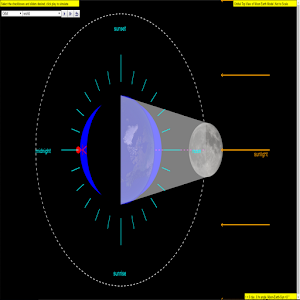
- Tides: The resource connects the gravitational forces of the moon and sun to tidal changes.
- "For instance, the ocean tides are caused by the gravitational attraction of both the Moon and Sun on the Earth’s oceans."
- "So it can be explained why in approximately one day ( t = 0, 6,12,18 and 24 hours), the combined gravitational forces of the Moon and the Sun give rise to the tidal changes ( high - low - high - low and high respectively)."
- "So, gravity physics helps provide a way to formulate an explanation for the formation of tidal changes on Earth."
3. Learning Activities and Experiences:
The learning experience is designed to be active and engaging, encouraging students to:
- Visualize Gravitational Fields: Students will examine the representation of gravitational fields using field lines and discuss their limitations and misconceptions.
- "Examine the representation used in gravitation. Examine how field lines are useful as a representation of the gravitational field to help in visualising, communicating and deepening the understanding of concepts in gravitation."
- Model Newton's Law: Students are encouraged to build models for Newton's law of gravitation using the simulations.
- "Build a model for Newton’s law of gravitation using a simulation"
- Investigate Free Fall: Students will conduct experiments to determine the value of 'g' (acceleration due to gravity).
- "Investigate the value of g through experiments"
- Explore Orbital Motion: Students will engage with thought experiments like Newton’s Cannon to understand orbital motion and escape velocity.
- "Explore Newton’s mountain thought experiment on a cannon ball fired at right angles to the Earth’s gravitational field to come to an explanation for orbital motion and escape velocity."
- Analyze Satellite Data: The resource also touches on real-world applications, such as using satellite data for monitoring the haze in Singapore, weather prediction and the differences between geostationary and polar orbit satellites.
- "Explore how data from satellites is used in Singapore, making reference to the work of the Centre for Remote Imaging, Sensing and Processing (CRISP) and Changi Meteorological Station."
4. Key Features and Resources:
- Interactive Simulation: The core element is the JavaScript/HTML5 applet which allows for direct manipulation and exploration.
- "You may interact with the simulations using the EJSS below link (require internet) or just below if you are using the epub3 reader such as Gitden Reader(Android) or iBook(Apple)."
- Accessibility: The resource is designed to be accessible on various devices, including laptops, desktops, tablets, and smartphones.
- "Android/iOS including handphones/Tablets/iPads"
- "Windows/MacOSX/Linux including Laptops/Desktops"
- "ChromeBook Laptops"
- Embedded Model: The simulation can be embedded directly into web pages using an iframe tag.
- "Embed this model in a webpage: "
- Video Tutorials: Links to YouTube videos provide additional explanations of concepts like tides and seasons.
- "How do tides work? https://youtu.be/5ohDG7RqQ9I"
- "Reasons for the Seasons https://youtu.be/Pgq0LThW7QA"
- "What Physics Teachers Get Wrong About Tides! | Space Time | PBS Digital Studios https://youtu.be/pwChk4S99i4"
- Worksheets: Supplementary worksheets are available for further practice.
- "Worksheets RVHS Lim Ai Phing P09 Gravity ebook (tr)20160517.docx P09 Gravity ebook (tr).docx P09 Gravity ebook (st).docx"
5. Connections to Real-World Applications:
The resource emphasizes the real-world applications of gravity and physics, such as:
- Tides: The simulation demonstrates how the gravitational forces of the Sun and Moon create high and low tides.
- Falling Objects: It highlights how gravity causes objects to fall towards Earth.
- Planetary Motion: It explains how gravitational force keeps Earth and other planets in orbit around the Sun.
- Satellites: The resource touches on the use of satellites for real world applications in Singapore.
6. Intended Audience:
- The primary audience is physics students, specifically at the "Higher 2 9749_2017" level, which suggests a junior college or advanced high school level.
- It appears to be used by teachers and students in Singapore but also referenced by international researchers and institutions.
7. Potential Limitations:
- While the simulation is interactive, the reliance on an applet might pose access issues if the technology becomes outdated or unsupported by browsers.
- The resource appears to be specific to the Singaporean context as some data points are related to Singapore, which might require some adaptation for international audiences.
8. Conclusion:
This resource represents a comprehensive approach to teaching gravitational concepts, effectively combining theoretical foundations with real-world phenomena. The interactive simulation, along with supplementary materials, offers students a valuable learning experience. The emphasis on visualizations, modeling, and experimentation makes this a pedagogically sound resource for educators looking to make abstract physics concepts more accessible and engaging.
Gravitational Fields and Tides Study Guide
Quiz
Instructions: Answer the following questions in 2-3 sentences each.
- What is a gravitational field, and how is its strength defined?
- Explain Newton's Law of Gravitation.
- How does the gravitational field strength change as you move away from a point mass?
- What does it mean to say that the gravitational field is approximately constant near the surface of the Earth?
- Define gravitational potential.
- Describe the relationship between gravitational force and centripetal acceleration in a circular orbit.
- What is a geostationary orbit, and what are some of its applications?
- Explain how the gravitational forces of the Moon and Sun contribute to tides on Earth.
- What is syzygy, and how does it relate to tidal changes?
- In the context of the source, what is Newton's mountain thought experiment and what does it illustrate?
Quiz Answer Key
- A gravitational field is a force field that exists around any mass, and it exerts a force on other masses within its range. Gravitational field strength at a point is defined as the gravitational force exerted per unit mass placed at that point.
- Newton's Law of Gravitation states that every point mass attracts every other point mass with a force that is directly proportional to the product of their masses and inversely proportional to the square of the distance between their centers. The law is given by the formula |F| = G(M1M2)/r².
- The gravitational field strength decreases as you move away from a point mass. Specifically, it is inversely proportional to the square of the distance from the point mass (g = GM/r²).
- Near the surface of the Earth, the gravitational field is approximately constant because the variation in distance from the Earth's center is very small; this means that the acceleration due to gravity (g) is approximately constant at 9.8 m/s².
- Gravitational potential at a point is defined as the work done per unit mass in bringing a small test mass from infinity to that point. It is a measure of the potential energy a mass has due to its position in a gravitational field.
- In a circular orbit, the gravitational force between the orbiting object and the central body acts as the centripetal force. This force is what keeps the object in its circular path, causing the object to accelerate towards the center of the orbit.
- A geostationary orbit is a circular orbit around the Earth where the satellite orbits at the same rate as the Earth rotates, appearing stationary relative to a point on Earth. This type of orbit is commonly used for communication and weather satellites.
- The gravitational pull of the Moon and Sun on the Earth's oceans causes tides. When the Moon and Sun align (syzygy), their combined gravitational forces produce the highest tides (spring tides), while perpendicular alignment results in lower tides (neap tides).
- Syzygy is the alignment of three celestial bodies, such as the Sun, Earth, and Moon in a straight line. This condition occurs during new and full moons, resulting in stronger gravitational forces and high spring tides.
- Newton's mountain thought experiment explores the concept of orbital motion. It illustrates that if an object is launched horizontally with enough speed it will fall around the curvature of the earth rather than falling directly to the ground, ultimately entering orbit.
Essay Questions
Instructions: Answer the following essay questions in a well-organized and detailed essay format.
- Discuss the significance of gravitational fields in understanding both everyday phenomena and large-scale astronomical processes. How do the concepts of field lines help in this understanding, and what limitations do they possess?
- Analyze the quantitative aspects of gravitational force by explaining how Newton's Law of Gravitation is derived and utilized in the context of various gravitational problems, including those related to orbital mechanics.
- Compare and contrast the concepts of gravitational field strength and gravitational potential. How are these concepts related to each other, and how are they used in understanding and solving problems in gravitational fields?
- Describe the real-world applications of our understanding of gravitational fields and orbits, specifically focusing on the examples discussed in the provided source. Explain the types of satellites used and the purposes they serve for a nation like Singapore.
- Explain how the simulation model can be used to deepen a student's conceptual understanding of gravitational fields and tidal forces. What are some learning experiences a student might engage in to further explore these concepts?
Glossary of Key Terms
Centripetal Acceleration: The acceleration of an object moving in a circular path, directed towards the center of the circle.
Geostationary Orbit: A circular orbit around the Earth where a satellite appears stationary relative to a point on the Earth, achieved by matching the satellite's orbital period with Earth's rotation.
Gravitational Field: A force field that exists in the space around any mass and exerts a force on other masses within it.
Gravitational Field Strength: The gravitational force experienced per unit mass at a specific point in the gravitational field.
Gravitational Force: The force of attraction between two masses, described by Newton's Law of Gravitation.
Gravitational Potential: The work done per unit mass in bringing a small test mass from infinity to a specific point in a gravitational field.
Newton's Law of Gravitation: States that the gravitational force between two point masses is directly proportional to the product of their masses and inversely proportional to the square of the distance between their centers.
Spring Tides: Tides with the largest tidal range, occurring when the Earth, Sun, and Moon are aligned (syzygy).
Syzygy: The alignment of three celestial bodies, typically the Sun, Earth, and Moon.
Tides: The periodic rise and fall of sea levels, caused by the gravitational forces of the Moon and Sun on Earth's oceans.
Apps
Worksheets
RVHS Lim Ai Phing
YouTube
{source}
<iframe width="560" height="315" src="https://www.youtube.com/embed/Z0WpkXh6cZk" frameborder="0" allowfullscreen></iframe>
{/source} by lookang lawrence wee
https://notebooklm.google.com/notebook/df2acf0a-0df7-4848-a014-78c42b70e22c/audio
Research
An Approach for Totally Blind Learners about Day and Night Concepts, M. Şahin BÜLBÜL, Kafkas University / TURKEY
We are happy that
-
bonnie of GIBSON GROUP NEW ZEALAND, working withOtago Museum is going to use this resource. Otago Museum to create an exhibition about the Otago region and the science behind the seasons throughout the year. To create the scenes in the exhibition we need visual content, and we would really like to include your Spring Tide image here: https://en.wikipedia.org/wiki/Tide#/media/File:High_tide_sun_moon_same_side_beginning.png

Other Resources
https://www.geogebra.org/m/A5zD7vJB by Lew W.S.
Timeline of Main Events & Concepts
- Ancient Times (Implicit): Humans have observed and been influenced by tides, and planetary movements, leading to early understandings of gravity. These form the basis for later scientific inquiry.
- ~1687: Isaac Newton formulates his law of universal gravitation, which explains the attractive force between any two masses (mentioned indirectly via Newton's law of gravitation, cannon thought experiment)
- Modern Physics - Pre 2017: The concept of the gravitational field is established as an area of force, and used to explain weight, tides and planetary orbits. This includes understanding that gravity doesn't require physical contact between masses.
- 2017: The Singaporean Physics Higher 2 9749 syllabus (referenced in the document's Learning Content section) is updated to include the following topics related to gravitational fields:
- Gravitational field as a force field.
- Gravitational force between point masses.
- Gravitational field of a point mass.
- Gravitational field near the surface of the Earth.
- Gravitational potential.
- Circular orbits.
- 2016-2024 Development of the "7 Moon Phases with Sea Tides JavaScript HTML5 Applet Simulation Model" educational resource, based around the 2017 syllabus, and includes:
- Interactive simulations of tidal changes over days and lunar cycles.
- Exploration of Newton's law of gravitation through a simulation.
- A thought experiment of Newton's cannon.
- Links to youtube tutorials relating to tides and seasons.
- Worksheets created by Lim Ai Phing of RVHS.
- Usage of the simulation by Bonnie from Gibson Group and Otago Museum in New Zealand.
- A focus on real-world applications, such as the use of satellite data in Singapore (e.g., by CRISP and Changi Meteorological Station).
- The creation of multiple resources leveraging the Easy JavaScript Simulation toolkit, spanning multiple topics in the Physics and STEM curricula.
- Present Day (2024): The applet and its related resources are actively used in education and are publicly accessible online as part of the Open Educational Resources / Open Source Physics @ Singapore project. It's being shared and adapted internationally, including in New Zealand by Gibson Group and Otago Museum. The educational platform is continuing to be updated with new tools and resources.
Cast of Characters
- Isaac Newton: (Historical Figure) A pivotal scientist and mathematician, credited with developing the law of universal gravitation and other laws of motion. His theories form the basis for understanding gravitational fields.
- Todd Timberlake: (Individual) A developer, one of the credits listed for the HTML5 simulation, and likely contributed to the physics modelling behind the tool.
- lookang (Lawrence Wee): (Individual) The primary contributor to the development of this educational resource, and most of the resources on the site. This individual also has a youtube channel dedicated to physics education.
- Lim Ai Phing: (Individual) Educator at RVHS (Raffles Institution) who created supporting worksheets for the gravitational field topic and simulation.
- bonnie (of GIBSON GROUP NEW ZEALAND): (Individual) Uses simulation and resources for exhibition work at Otago Museum.
- M. Şahin BÜLBÜL: (Individual) Researcher from Kafkas University (Turkey) investigating learning about day and night concepts for blind learners. This seems tangentially related as tides and the movement of bodies are relevant to the daily cycle.
- Francisco Esquembre and Félix J. García Clemente: (Individuals) Supporting members behind the "Web EJS beta Workshop", indicating a collaborative spirit behind the EJS platform.
This timeline and cast should give you a good understanding of the content and its creators and users based on the provided source material. Let me know if you have any other questions!
Frequently Asked Questions on Gravitational Fields and Tides
- How do two masses interact gravitationally? Do they need to be touching? Two masses interact through a gravitational force, which is an attractive force. This force exists even when the masses are not in physical contact. Gravity is a field force, meaning its effects extend through space and act on objects at a distance, as opposed to a contact force which requires direct contact. This principle is fundamental to understanding the motion of planets, stars, and everyday objects falling to the ground.
- What do field lines represent in a gravitational field? How do they compare to electric field lines? Field lines are a way to visually represent a field, and they illustrate the direction and strength of the field. In a gravitational field, field lines point towards the center of the mass creating the field, indicating the direction a force would act on another mass. The closer the lines, the stronger the field. Gravitational and electric field lines share qualitative and quantitative similarities, and both represent how fields exert forces, but gravitational fields act on mass and electric fields act on electric charge. In terms of direction, gravitational fields are always attractive while electric fields can be either attractive or repulsive depending on the charges involved.
- How is the gravitational field strength defined? Gravitational field strength at a specific point is defined as the gravitational force exerted per unit mass placed at that point. This means the strength of the gravitational field of a large body is measured by placing a small, test mass at a particular location and measuring the force on that test mass and dividing by the test mass's value. This value is often represented by the symbol "g" and also is equal to the acceleration of free fall near the surface of Earth.
- What is Newton's Law of Gravitation, and how does it relate to gravitational field strength? Newton's Law of Gravitation states that the force of gravity between two point masses is directly proportional to the product of their masses and inversely proportional to the square of the distance between their centers. Mathematically it is represented as |F|= G M 1 M 2 / r 2, where G is the gravitational constant, M1 and M2 are the two masses, and r is the distance between them. From this, the equation for gravitational field strength g = GM / r^2 can be derived. It defines how the field strength is affected by the mass of the source and the distance from the source.
- What is gravitational potential and how is it different from gravitational field strength? Gravitational potential at a point is the work done per unit mass in bringing a small test mass from infinity to that point. It's a scalar quantity, whereas gravitational field strength is a vector. While gravitational field strength describes the force experienced by a mass, gravitational potential is related to the energy of the mass within the field. Gravitational potential is always a negative value, with increasing negative values as one gets closer to the mass. The formula for gravitational potential is ϕ = -GM / r.
- How does gravity explain the motion of planets and satellites in circular orbits? Gravity provides the centripetal force necessary to keep planets and satellites in circular orbits. The gravitational force between the planet and the sun (or a satellite and a planet) acts as the force that constantly pulls the orbiting body towards the center of the circle, preventing it from flying off in a straight line. For a stable orbit, the gravitational force matches the required centripetal force for the circular motion.
- What are geostationary orbits and what are their applications? A geostationary orbit is a circular orbit around the Earth that is approximately 36,000 kilometers above the equator. A satellite in this orbit appears stationary relative to a point on Earth because its orbital period matches the Earth’s rotation period, 24 hours. Geostationary satellites are essential for communication, broadcasting, and weather monitoring because their constant position makes it easy for ground antennas to track them.
- How do gravity and the moon contribute to tides on Earth? Tides on Earth are primarily caused by the gravitational pull of the Moon and the Sun on the Earth’s oceans. The Moon's influence is stronger than the Sun's because the Moon is much closer to the Earth, but the sun also plays a major role. When the Sun, Moon, and Earth align (during new and full moon phases), their gravitational forces combine to produce spring tides (high high tides and low low tides). Conversely, when the Sun and Moon are at right angles relative to the Earth, we experience neap tides with a smaller difference between high and low tides. The tidal changes go from high-low-high-low in a 24 hour period due to the rotation of the Earth. The moon orbits around the earth every 29.5 days, causing the different phases of the moon which affects the tide changes through that cycle.