{source}
<?php  require_once JPATH_SITE.'/TTcustom/TT_contentparser.php';\(parameters = array("topicname" => "02_newtonianmechanics_6circle", "modelname" => "ejss_model_rotateDiskwee");echo generateSimHTML(\)parameters, "EJSS");
?>
{/source}
Briefing Document: Rotation of Solid Sphere and Thin Shell JavaScript Simulation Applet HTML5
1. Overview:
This document analyzes an online resource hosted by Open Educational Resources / Open Source Physics @ Singapore, specifically focusing on a JavaScript HTML5 simulation applet related to the rotation of a solid sphere and a thin shell. The resource appears to be designed for educational purposes, aimed at physics instruction and exploration of rotational motion.
{source}<iframe style="border-radius:12px" src="https://open.spotify.com/embed/episode/0jlLokSlFdMHGfe108two2?utm_source=generator" width="100%" height="352" frameBorder="0" allowfullscreen="" allow="autoplay; clipboard-write; encrypted-media; fullscreen; picture-in-picture" loading="lazy"></iframe>{/source}
2. Main Themes and Ideas:
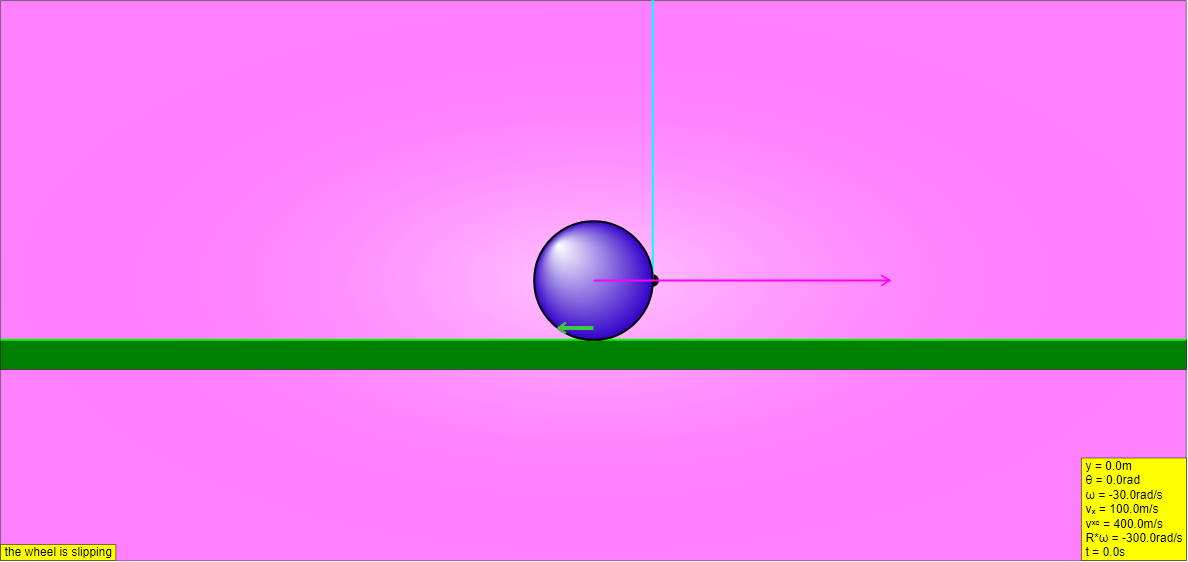
- Interactive Physics Learning: The core concept is to provide an interactive and visual learning tool for understanding the principles of rotational motion. The applet allows users to manipulate parameters and observe the resulting behavior of a solid sphere and a thin shell.
- Open Educational Resource: The resource is explicitly identified as an Open Educational Resource (OER), meaning it is intended to be freely accessible and reusable for educational purposes.
- Simulation-Based Learning: The resource emphasizes learning through simulation. This allows students to experiment with different scenarios and visualize abstract concepts in a dynamic way.
- Accessibility and Embeddability: The simulation is designed to be easily embedded within webpages using an <iframe> tag. This promotes seamless integration into online learning platforms and educational websites.
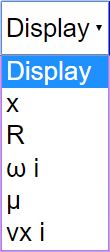
- Versatility and Customization: The simulation offers various options through a combo box and toggling displays, allowing customization of the learning experience.
- Breadth of Simulations Offered: It's not just about this specific simulation. The page serves as a repository for many physics and science simulations, covering topics from mechanics and electromagnetism to optics and waves.
3. Key Features and Functionality (Based on Limited Information):
- Combo Box: Allows users to select different options or scenarios related to the solid sphere and thin shell. "Toggling through the combo box will give you their respective options."
- Toggling Display: Allows users to customize the visualization by showing or hiding specific parameters or elements. "Toggling display will give you their respective check boxes."
- Sliders: Used to adjust numerical parameters within the simulation, allowing for quantitative exploration. "Toggling the rest will give you sliders."
- Play/Pause/Step/Reset Buttons: Standard controls for managing the simulation's execution. "Plays/Pauses, steps and resets the simulation respectively."
- Full Screen Toggle: Enhances the user experience by allowing the simulation to be viewed in full screen. "Double click anywhere in the panel to toggle full screen."
- Wide range of other simulations: The page offers simulations in Electricity and Magnetism, Buoyancy, Inclined Planes, Pulley systems, Projectile Motion, Wave Mechanics, Electromagnetic Waves, Optics, Thermodynamics, Quantum Mechanics, and more, indicating a comprehensive suite of resources.
4. Target Audience:
- Students: Primarily aimed at students learning about rotational motion and related physics concepts.
- Teachers: The resource is designed to be used by teachers as a demonstration or interactive tool in their classrooms.
- Curriculum Developers: The OER nature makes it suitable for integration into online courses and curricula.
5. Credits:
- The applet was created by Fu-Kwun Hwang (National Taiwan Normal University), remixed by lookang, Fremont Teng, and Loo Kang Wee. This information helps to attribute the work and provides potential points of contact for further information.
6. Potential Learning Goals:
- The resource mentions "Sample Learning Goals," suggesting that it is structured to support specific learning objectives. (The actual text of those goals is not provided, but the existence of this element indicates a focus on pedagogical effectiveness.)
7. Related resources:
- The site features a plethora of other simulations including many related to mechanics such as "Buoyancy Force on Mass JavaScript Simulation Applet HTML5", "Push a Block JavaScript Simulation Applet HTML5", "Multiple Objects ( solid ball , football disc, car ) Rolling Down Inclined Plane JavaScript Simulation Applet HTML5 with Export Function for Analysis on SpreadSheets", "Falling Rod JavaScript Simulation Applet HTML5", and many more.
- The site also features simulations on a large variety of other STEM topics.
8. License Information:
- The content is licensed under a Creative Commons Attribution-Share Alike 4.0 Singapore License. Commercial use of the EasyJavaScriptSimulations Library requires a separate license from This email address is being protected from spambots. You need JavaScript enabled to view it.. "Contents are licensed Creative Commons Attribution-Share Alike 4.0 Singapore License . Separately, for commercial use of EasyJavaScriptSimulations Library, please read https://www.um.es/fem/EjsWiki/Main/EJSLicense and contact This email address is being protected from spambots. You need JavaScript enabled to view it. directly."
9. Conclusion:
The "Rotation of Solid Sphere and Thin Shell JavaScript Simulation Applet HTML5" resource provides a valuable tool for interactive physics education. Its open nature, embeddability, and focus on simulation-based learning make it a useful asset for students and educators seeking to explore the concepts of rotational motion. Furthermore, it is one of many simulations hosted on the site which cover a wide variety of STEM topics.
Study Guide: Rotation of Solid Sphere and Thin Shell
Key Concepts:
- Moment of Inertia (I): A measure of an object's resistance to rotational acceleration about a particular axis. It depends on both the mass distribution and the location of the axis of rotation.
- Angular Velocity (ω): The rate of change of angular displacement, measured in radians per second (rad/s). It describes how quickly an object is rotating.
- Angular Acceleration (α): The rate of change of angular velocity, measured in radians per second squared (rad/s²). It describes how quickly the rotational speed of an object is changing.
- Torque (τ): A rotational force that causes an object to rotate or change its rotational motion. It is the product of the force applied and the lever arm (the perpendicular distance from the axis of rotation to the line of action of the force).
- Rotational Kinetic Energy (K_rot): The kinetic energy of an object due to its rotation, given by the formula K_rot = (1/2)Iω².
- Parallel Axis Theorem: A theorem that allows for the calculation of the moment of inertia of an object about any axis parallel to an axis passing through its center of mass, given that the moment of inertia about the center of mass is known. The theorem states: I_parallel = I_cm + Md², where M is the mass of the object and d is the distance between the two parallel axes.
- Solid Sphere: A three-dimensional object where mass is distributed uniformly throughout its volume.
- Thin Shell (Spherical Shell): A three-dimensional object where mass is distributed uniformly over its surface, with negligible thickness compared to its radius.
Focus Areas for Review:
- Understand the definitions and units of all key concepts listed above.
- Be able to qualitatively describe how mass distribution affects the moment of inertia.
- Understand the difference in mass distribution between a solid sphere and a thin shell and how this difference leads to different moments of inertia.
- Be familiar with the general formulas for the moment of inertia of a solid sphere and a thin shell about an axis passing through their center of mass. (Note: The provided source excerpts do not explicitly state these formulas, so recall them from general physics knowledge).
- Understand the relationship between torque, moment of inertia, and angular acceleration (τ = Iα).
- Be able to apply the concepts of rotational kinetic energy in problem-solving.
- Understand the concept and application of the parallel axis theorem (though the provided excerpt doesn't explicitly detail it, it's a related concept in rotational motion).
Quiz: Short Answer Questions
- What is moment of inertia, and what two factors does it primarily depend on for a rigid object?
- Explain the physical difference in mass distribution between a solid sphere and a thin spherical shell of the same mass and radius.
- How does the distribution of mass relative to the axis of rotation affect an object's resistance to changes in its rotational motion?
- Define angular velocity and provide its standard unit of measurement.
- What is torque, and what is its role in causing rotational motion?
- State the relationship between torque, moment of inertia, and angular acceleration in equation form and in words.
- Describe rotational kinetic energy and provide the formula used to calculate it.
- In a qualitative sense, why would a thin hoop have a larger moment of inertia than a solid disk of the same mass and radius when rotating about their central axes?
- If the same torque is applied to both a solid sphere and a thin shell of equal mass and radius (rotating about their centers), which one will experience a greater angular acceleration? Explain your reasoning.
- How does the moment of inertia relate to an object's rotational stability or tendency to maintain its rotational state?
Answer Key for Quiz:
- Moment of inertia is a measure of an object's resistance to rotational acceleration about a specific axis. It primarily depends on the object's mass and the distribution of that mass relative to the axis of rotation.
- A solid sphere has its mass distributed uniformly throughout its entire volume, from the center to the surface. A thin spherical shell has its mass concentrated on a thin spherical surface, with negligible mass in its interior.
- The farther the mass is distributed from the axis of rotation, the greater the moment of inertia and thus the greater the resistance to changes in rotational motion. Mass concentrated closer to the axis contributes less to the moment of inertia.
- Angular velocity is the rate at which an object rotates or revolves relative to a central point, usually expressed in radians per second (rad/s). It describes how quickly the angular position of an object is changing.
- Torque is a rotational force that tends to cause an object to rotate about an axis. It plays the role of instigating or changing an object's rotational motion, analogous to how linear force causes linear acceleration.
- The relationship is given by the equation τ = Iα, where τ represents torque, I represents moment of inertia, and α represents angular acceleration. In words, the torque acting on an object is equal to the product of its moment of inertia and its angular acceleration.
- Rotational kinetic energy is the energy an object possesses due to its rotation. It depends on the object's moment of inertia and its angular velocity, and it is calculated using the formula K_rot = (1/2)Iω².
- A thin hoop has a larger moment of inertia because all of its mass is located at the maximum distance (the radius) from the central axis of rotation. In contrast, a solid disk has mass distributed at various distances from the center, including closer to the axis.
- The solid sphere will experience a greater angular acceleration. Since angular acceleration (α = τ/I) is inversely proportional to the moment of inertia, and a solid sphere has a smaller moment of inertia than a thin shell of the same mass and radius, the solid sphere will have a larger angular acceleration under the same applied torque.
- A larger moment of inertia indicates a greater resistance to changes in rotational motion. Therefore, an object with a larger moment of inertia is more rotationally stable in the sense that it requires a greater torque to start rotating, stop rotating, or change its angular velocity.
Essay Format Questions:
- Discuss the concept of moment of inertia and explain how the distribution of mass affects the moment of inertia of both a solid sphere and a thin spherical shell.
- Compare and contrast the rotational motion of a solid sphere and a thin spherical shell of equal mass and radius when subjected to the same net torque. Consider their angular acceleration and resistance to rotational changes.
- Explain the analogy between linear motion (mass and force) and rotational motion (moment of inertia and torque). How does the concept of moment of inertia parallel the concept of mass in Newton's laws of motion?
- Describe the relationship between torque, moment of inertia, and angular acceleration. Provide real-world examples where understanding this relationship is crucial in the design or operation of mechanical systems involving rotating objects.
- Explain how the rotational kinetic energy of a solid sphere and a thin spherical shell changes if they roll down an incline without slipping, starting from the same height. Consider the conservation of energy and the role of their respective moments of inertia.
Glossary of Key Terms:
- Angular Displacement (θ): The angle through which a point or line has been rotated in a specified direction about an axis. Measured in radians.
- Axis of Rotation: An imaginary line about which an object rotates.
- Conservation of Angular Momentum: The total angular momentum of a closed system remains constant if no external torques act on it.
- Rigid Body: An idealized object that does not deform or change shape under the influence of applied forces or torques. The relative positions of its constituent particles remain fixed.
- Tangential Velocity (v_t): The linear velocity of a point on a rotating object, tangent to the circular path of rotation. It is related to angular velocity by v_t = rω, where r is the distance from the axis of rotation.
Sample Learning Goals
[text]
For Teachers
Rotation of Solid Sphere and Thin Shell JavaScript Simulation Applet HTML5
Instructions
Combo Box and Functions






Toggling Full Screen
Play/Pause, Step and Reset Buttons
Research
[text]
Video
[text]
Version:
Other Resources
[text]
FAQ
- What is the "Rotation of Solid Sphere and Thin Shell JavaScript Simulation Applet HTML5"?
- It is an interactive, web-based simulation that allows users to explore the rotational motion of solid spheres and thin shells. The applet is designed as an open educational resource.
- Where can I find the "Rotation of Solid Sphere and Thin Shell JavaScript Simulation Applet HTML5"?
- The simulation can be found on the Open Educational Resources / Open Source Physics @ Singapore website. The simulation is embeddable within a webpage via an iframe. The example URL is https://iwant2study.org/lookangejss/02_newtonianmechanics_6circle/ejss_model_rotateDiskwee/rotateDiskwee_Simulation.xhtml.
- Who created the simulation, and who contributed to it?
- The simulation was originally created by Fu-Kwun Hwang (National Taiwan Normal University). The simulation was remixed by lookang, Fremont Teng, and Loo Kang Wee.
- What are the intended learning goals of the simulation?
- While the specific learning goals are not detailed, the simulation aims to assist in learning about rotational motion of solid spheres and thin shells.
- How can teachers use the simulation in the classroom?
- Teachers can use the simulation as a visual aid to demonstrate and explain the principles of rotational motion. The ability to toggle through options using combo boxes and use sliders to adjust parameters allows for interactive explorations of the concepts. The applet can be embedded directly into a webpage for easy use.
- What functionalities does the simulation offer?
- The simulation offers combo boxes for different options, toggles for display preferences, sliders for adjusting parameters, a full-screen toggle, and play/pause, step, and reset buttons.
- Are there other simulations or resources available on the Open Educational Resources / Open Source Physics @ Singapore website?
- Yes, the website offers a wide variety of simulations covering topics like buoyancy, collisions, oscillations, electromagnetism, optics, mechanics, waves and many more.
- What license applies to the resources on the Open Educational Resources / Open Source Physics @ Singapore website?
- The contents are licensed under the Creative Commons Attribution-Share Alike 4.0 Singapore License. Commercial use of the EasyJavaScriptSimulations Library requires a separate license from the University of Murcia (um.es).