{source}
<?php  require_once JPATH_SITE.'/TTcustom/TT_contentparser.php';\(parameters = array("topicname" => "04waves_13light", "modelname" => "ejss_model_emcircularpolarizer");echo generateSimHTML(\)parameters, "EJSS");
?>
{/source}
Briefing Document: Circular Electromagnetic Wave 3 Polarizer JavaScript Simulation Applet
This briefing document summarizes the key information about the "Circular Electromagnetic Wave 3 Polarizer JavaScript Simulation Applet HTML 5" resource provided by Open Educational Resources / Open Source Physics @ Singapore. This applet is designed to visually demonstrate the polarization of electromagnetic waves as they pass through multiple polarizers.
{source}<iframe style="border-radius:12px" src="https://open.spotify.com/embed/episode/2iX4rRKqpZT2Nagny75Qpo?utm_source=generator" width="100%" height="352" frameBorder="0" allowfullscreen="" allow="autoplay; clipboard-write; encrypted-media; fullscreen; picture-in-picture" loading="lazy"></iframe>{/source}
Main Themes:
- Visualization of Light Polarization: The applet's primary goal is to provide a visual representation of how light is polarized when it passes through one or more polarizers. It shows how the orientation of the polarizers affects the light's intensity.
- Interactive Learning: The simulation offers users the ability to manipulate parameters like polarizer angles and positions, allowing them to explore the principles of light polarization firsthand.
- Electromagnetic Wave Properties: The simulation allows users to explore underlying properties of electromagnetic waves such as the electric and magnetic field magnitudes and phase differences.
- Open Educational Resource: This is a freely available educational tool intended for use in physics education.
Most Important Ideas and Facts:
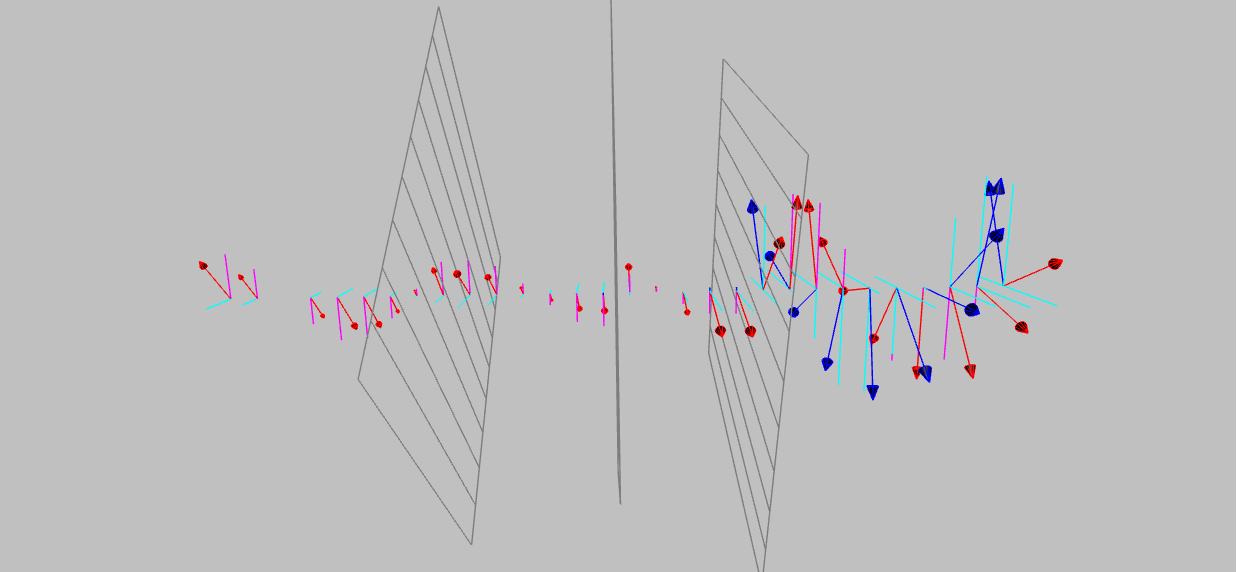
- Elliptical/Circular Polarization: The simulation starts with an elliptically (or circularly) polarized electromagnetic wave. "An more general elliptical (circular is a special case where Ex=Ez) polarized Electromagnetic Wave travels from left to right."
- Linear Polarization: When an electromagnetic wave passes through a polarizer, it becomes linearly polarized along the direction of the polarizer. "After passing through the first polarizer, the Electromagnetic Wave now is linearly polarized along the direction of the polarizer, θ₁ .This is usually how linearly polarized light is formed."
- Polarizer Angle Impact: The relative angles between polarizers determine how much light passes through. When polarizers are aligned (θ₂=θ₁), light passes through unchanged. When they are perpendicular (θ₂-θ₁=90 degrees), the light is blocked. "If θ₂=θ₁, the light passes through without any difference. If θ₂-θ₁=90 degree, the light passes through is completely blocked." The three-polarizer setup demonstrates more complex scenarios: "If θ₃ = θ₂= θ₁,the linearly polarized light passes through without any difference. If θ₃-θ₂=90 degree and θ₂-θ₁=0 degree, light inbetween polarizer 2 and 3 is unchanged, still linearly polarized, but light after polarizer 3 is completely blocked."
- Visual Representation:
- Electric field is represented by red segments.
- Magnetic field is represented by blue segments.
- Polarizers are represented by orange, green, and magenta colors.
- Adjustable Parameters: The simulation allows users to control the following parameters:
- θ₁, θ₂, θ₃: Angles of the first, second, and third polarizers, respectively.
- yp₁, yp₂, yp₃: Positions of the polarizers.
- Ex, Ez: Electric field magnitudes in the x and z directions.
- phase: Phase difference between the electric and magnetic fields.
- vy: Wave velocity.
- T: Period of the wave.
- wavelength: Length of one cycle of the wave.
- Electric and Magnetic Field Phase: The simulation notes that "E/B field are in phase when electromagnetic is travel in vacuum."
- Instructional Components: The resource includes instructions on using the simulation applet, including how to use the combo boxes to select visible fields and the purpose of the play, pause, and reset buttons.
Key Quotes:
- "An more general elliptical (circular is a special case where Ex=Ez) polarized Electromagnetic Wave travels from left to right."
- "After passing through the first polarizer, the Electromagnetic Wave now is linearly polarized along the direction of the polarizer, θ₁ .This is usually how linearly polarized light is formed."
- "If θ₂=θ₁, the light passes through without any difference. If θ₂-θ₁=90 degree, the light passes through is completely blocked."
- "If θ₃ = θ₂= θ₁,the linearly polarized light passes through without any difference. If θ₃-θ₂=90 degree and θ₂-θ₁=0 degree, light inbetween polarizer 2 and 3 is unchanged, still linearly polarized, but light after polarizer 3 is completely blocked."
- "Electric Field is represented as Red color segments. Magnetic Field is represented as Blue color segments."
- "Please notice that E/B field are in phase when electromagnetic is travel in vacuum."
Circular Electromagnetic Wave Polarization: A Study Guide
Key Concepts
- Electromagnetic Waves: Oscillating electric and magnetic fields that propagate through space, carrying energy.
- Polarization: The direction of the electric field oscillation in an electromagnetic wave.
- Linear Polarization: When the electric field oscillates along a single line.
- Circular Polarization: When the electric field vector rotates in a circle as the wave propagates.
- Polarizer: A device that only allows light waves with a specific polarization direction to pass through.
- Angle of Polarization: The angle between the polarizer's transmission axis and a reference direction.
- Intensity: The power of the electromagnetic wave per unit area.
- Malus's Law: Describes the reduction in intensity of light passing through a polarizer.
- JavaScript Simulation Applet: An interactive computer program written in JavaScript that simulates a physical phenomenon.
Quiz
Answer the following questions in 2-3 sentences each.
- What is the orientation of the electric field after an elliptically polarized electromagnetic wave passes through the first polarizer?
- If the first polarizer is oriented vertically and the second polarizer is oriented horizontally, what happens to the light? Explain.
- How do the electric and magnetic fields relate to each other in phase when an electromagnetic wave travels in a vacuum?
- What does the red color represent in the visualization of the simulation?
- What is the effect of setting θ₂ - θ₁ = 90 degrees when the light wave passes through the second polarizer?
- What parameters can be modified using the combobox in the simulation? Give at least 2 examples.
- If θ₁ = θ₂ = θ₃ in the simulation, what happens to the linearly polarized light as it passes through the polarizers?
- What does the blue color represent in the visualization of the simulation?
- Briefly describe the purpose of the "Play, Pause, and Reset" buttons.
- What does vy imply about Ez and Bx in the simulation?
Quiz Answer Key
- After passing through the first polarizer, the electromagnetic wave becomes linearly polarized. The electric field now oscillates along the direction of the first polarizer's transmission axis (θ₁).
- The light is completely blocked. Because the polarizers are perpendicular to each other (90 degrees), the light that passes through the first polarizer is blocked by the second.
- In an electromagnetic wave traveling in a vacuum, the electric and magnetic fields are in phase. This means they reach their maximum and minimum values at the same time and location.
- The red color represents the electric field segments. The segments visualize the direction and magnitude of the electric field at different points in space.
- Setting θ₂ - θ₁ = 90 degrees completely blocks the light. This is because the second polarizer is now oriented perpendicular to the polarization direction of the light emerging from the first polarizer.
- The combobox allows users to modify parameters such as the angles of the polarizers (θ₁, θ₂, θ₃) and select which fields (electric, magnetic) are visible.
- If θ₁ = θ₂ = θ₃, the linearly polarized light passes through without any change. Since all polarizers are aligned, they do not alter the polarization of the light.
- The blue color represents the magnetic field segments. The segments visualize the direction and magnitude of the magnetic field at different points in space.
- The Play button starts the simulation, the Pause button stops it, and the Reset button returns the simulation to its initial state.
- vy (wave velocity) implies that Ez/Bx=vy. This means that the ratio of the electric field magnitude in the z-direction to the magnetic field magnitude in the x-direction is equal to the wave velocity.
Essay Questions
- Explain how the interactive simulation can be used to demonstrate Malus's Law. How can you verify the relationship between intensity and angle using the simulation's controls?
- Describe the difference between linearly polarized and circularly polarized light. How does the simulation allow you to visualize these differences, and what parameters in the simulation control the type of polarization?
- Discuss the role of polarizers in manipulating electromagnetic waves. Explain, using examples from the simulation, how multiple polarizers can be used to control the intensity and polarization of light.
- How does the simulation demonstrate the wave nature of light? Explain how the electric and magnetic field visualizations contribute to understanding the propagation of electromagnetic waves.
- Explain the relationship between the electric and magnetic fields in an electromagnetic wave. How does the simulation help visualize this relationship, and what happens to this relationship when the wave passes through a polarizer?
Glossary of Key Terms
- Electromagnetic Wave: A form of energy that propagates through space as oscillating electric and magnetic fields.
- Polarization: The property of electromagnetic waves describing the direction of the electric field's oscillation.
- Linear Polarizer: A device that transmits only the component of light waves that oscillate in a specific direction, blocking all light waves oscillating in the perpendicular direction.
- Circular Polarization: A state in which the electric field of an electromagnetic wave rotates in a circle as the wave propagates through space.
- Intensity: The power of an electromagnetic wave per unit area, representing the amount of energy the wave carries.
- Wavelength: The distance between two consecutive crests or troughs of a wave.
- Electric Field (E): A vector field that describes the electric force exerted on a charged particle at a given point in space.
- Magnetic Field (B): A vector field that describes the magnetic force exerted on a moving charged particle at a given point in space.
- Phase: The position of a point in time (an instant) on a waveform cycle.
- Simulation: A computer program that models a physical system or process, allowing users to explore its behavior under different conditions.
For Teachers
Circular Electromagnetic Wave Polarizer JavaScript Simulation Applet HTML 5
Instructions on using Simulation Applet
Combo Boxes


Play, Pause and Reset Buttons

Version:
Video
https://www.youtube.com/watch?v=ZXZOLscuyE8 by xmtutor {source}
<iframe width="560" height="315" src="https://www.youtube.com/embed/ZXZOLscuyE8" frameborder="0" allow="accelerometer; autoplay; encrypted-media; gyroscope; picture-in-picture" allowfullscreen></iframe>
{/source}
Other Resources
FAQ: Circular Electromagnetic Wave Polarizer Simulation
- What is the purpose of this simulation?
- This simulation demonstrates how a circularly polarized electromagnetic wave behaves as it passes through multiple polarizers. It visually illustrates how the polarization of light changes after each polarizer and how the intensity of the light can be controlled or blocked based on the angles of the polarizers.
- How is the electric and magnetic field visualized in the simulation?
- The electric field is represented by red color segments, and the magnetic field is represented by blue color segments. This visual representation helps users understand the relationship and orientation of these fields in an electromagnetic wave.
- What parameters can be adjusted in the simulation?
- The simulation allows you to modify the angles of the three polarizers (θ₁, θ₂, θ₃), and their positions (yp₁, yp₂, yp₃). Advanced variables such as the electric field magnitudes in the x and z directions (Ex, Ez), the phase difference between the E and B fields, wave velocity (vy), period (T), and wavelength can also be explored.
- How does the first polarizer affect the electromagnetic wave?
- When a circularly polarized electromagnetic wave passes through the first polarizer, the wave becomes linearly polarized along the direction of the polarizer (θ₁). This is a common method for creating linearly polarized light.
- What happens when the angle between two consecutive polarizers is 90 degrees?
- If the angle between the second polarizer and the first polarizer (θ₂ - θ₁) is 90 degrees, the light is completely blocked after passing through the second polarizer. This demonstrates the principle of cross-polarization.
- How does adding a third polarizer affect the outcome?
- The third polarizer further linearly polarizes the light. If θ₃ = θ₂ = θ₁, the light passes through the three polarizers without change. If θ₃ - θ₂ = 90 degrees and θ₂ - θ₁ = 0 degrees, the light is blocked after the third polarizer, even though it passed through the second polarizer.
- What does it mean that the E and B fields are in phase when electromagnetic waves travel in a vacuum?
- When an electromagnetic wave travels through a vacuum, the electric (E) and magnetic (B) fields reach their maximum and minimum values at the same time and location. This "in-phase" relationship is a fundamental characteristic of electromagnetic waves in a vacuum.
- Where can I find additional resources and information related to this simulation? The simulation is available at iwant2study.org. The youtube video https://www.youtube.com/watch?v=ZXZOLscuyE8 provides more information about this simulation.