{source}
<?php  require_once JPATH_SITE.'/TTcustom/TT_contentparser.php';\(parameters = array("topicname" => "04waves_13light", "modelname" => "ejss_model_polarizer");echo generateSimHTML(\)parameters, "EJSS");
?>
{/source}
Briefing Document: 2 or 3 Polarizers Simulator
Subject: Analysis of the "2 or 3 Polarizers Simulator JavaScript Simulation Applet HTML5" resource from Open Educational Resources / Open Source Physics @ Singapore.
{source}<iframe style="border-radius:12px" src="https://open.spotify.com/embed/episode/5bGCfwcVASWgiDWqpIzLQr?utm_source=generator" width="100%" height="352" frameBorder="0" allowfullscreen="" allow="autoplay; clipboard-write; encrypted-media; fullscreen; picture-in-picture" loading="lazy"></iframe>{/source}
Executive Summary:
This document provides a brief overview of an interactive simulation applet designed to demonstrate the principles of light polarization. The simulation allows users to manipulate polarizers and observe the resulting changes in light intensity. It highlights the effects of adding a third polarizer between two crossed polarizers, a counterintuitive phenomenon. This resource is aimed at physics education, specifically to help students visualize and understand the behavior of light as it passes through polarizing filters.
Main Themes and Important Ideas:
- Light Polarization: The core concept is the polarization of light and how polarizing filters affect light intensity.
- Interactive Simulation: The resource is an interactive JavaScript simulation that allows users to manipulate parameters (polarizer angles) and observe the resulting changes in light intensity in real-time. This promotes active learning and exploration.
- Malus's Law (Implicit): Although not explicitly stated, the simulation demonstrates the principles of Malus's Law, which describes the relationship between the intensity of polarized light and the angle of the polarizer.
- Counterintuitive Phenomenon: A key aspect of the simulation is demonstrating that inserting a third polarizer between two crossed polarizers (which initially block all light) can increase the light intensity.
- Educational Resource: The resource is designed for educational purposes, specifically for physics students and teachers. It aims to provide a visual and interactive way to learn about polarization.
Key Features and Functionality:
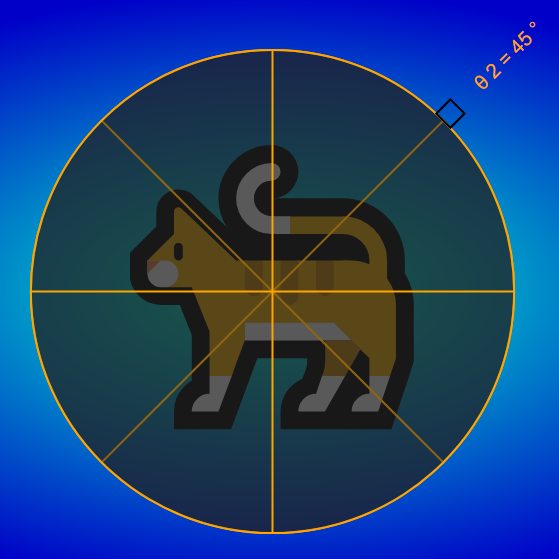
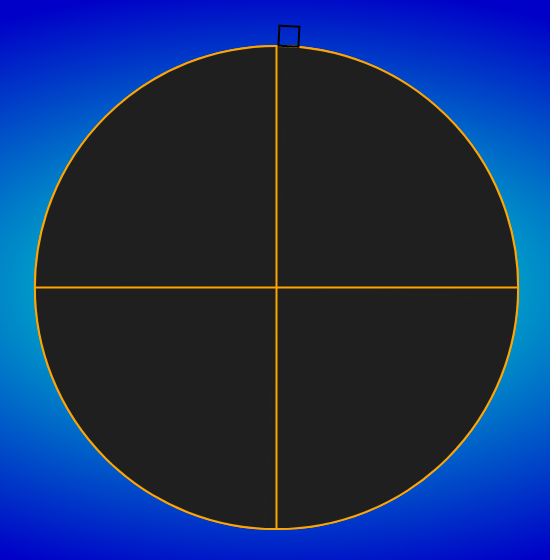
- Two Polarizers: The simulation starts with two polarizers. The user can adjust the angle between them by dragging a rectangle area. "The intensity of light pass through the polarizer will vary as you change the angle between them."
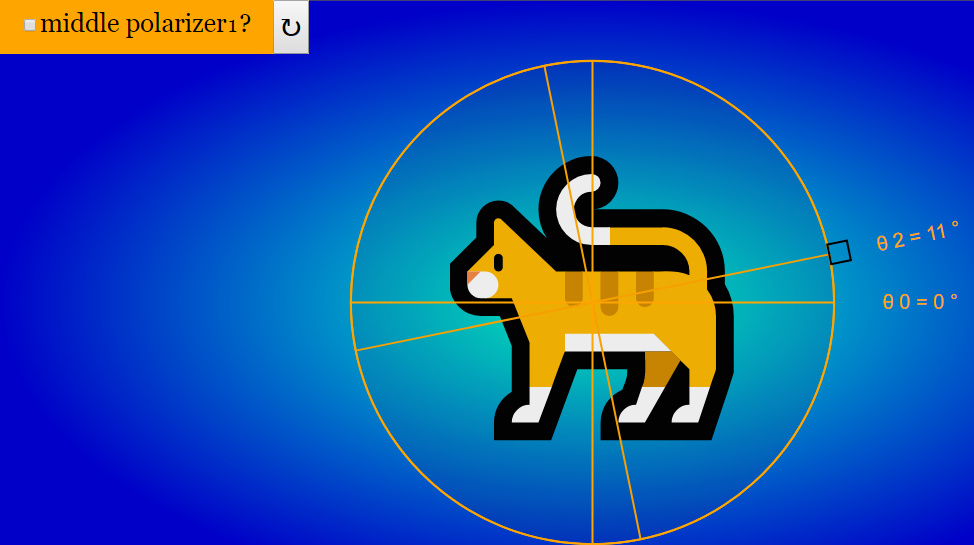
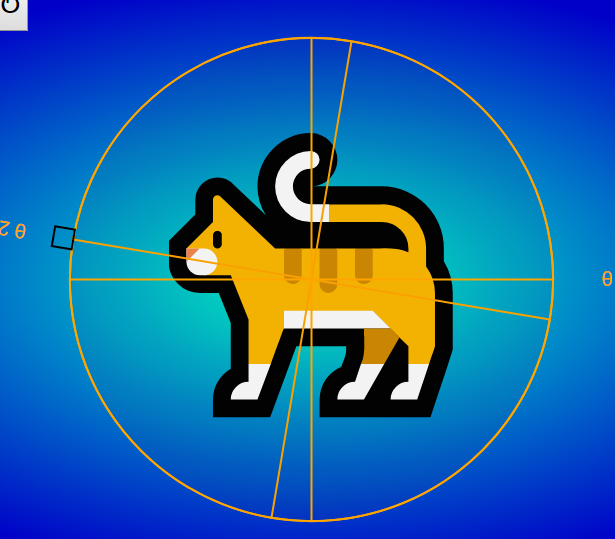
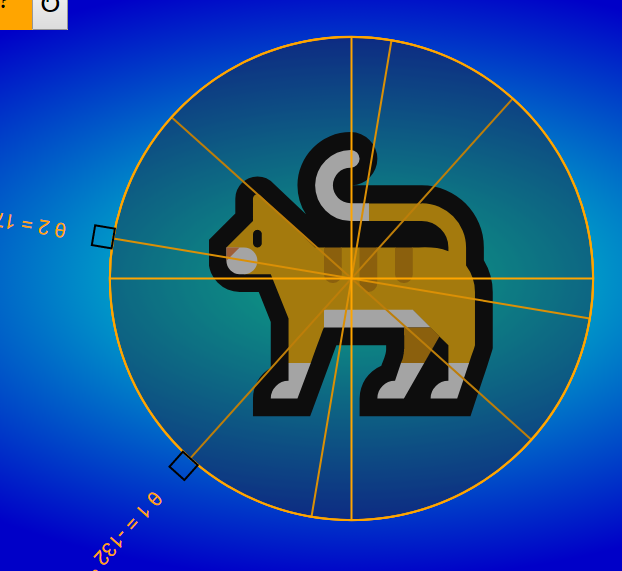
- Middle Polarizer Option: A checkbox allows the user to add a third polarizer between the first two. "However, if you click the "middle piece" check box -- to add another polarizer between those two. You will be able to see the image if you adjust the angle of the middle polarizer."
- Draggable Polarizers: Users can drag the polarizers to adjust their angles. "Moving the box round the circle will vary the contrast of the image."
- Reset Button: Resets the simulation to its initial state.
- Embeddable: The simulation can be embedded in other webpages using an iframe.
Target Audience:
- Physics students (high school, undergraduate)
- Physics teachers
Potential Learning Goals:
- Visualize the concept of light polarization.
- Understand how polarizers affect light intensity.
- Explore the relationship between polarizer angle and light intensity.
- Grasp the counterintuitive effect of adding a third polarizer between two crossed polarizers.
Supporting Materials:
- Video: A YouTube video (https://www.youtube.com/watch?v=ZXZOLscuyE8) provides further explanation (by xmtutor).
Credits:
- The simulation was created by Fu Kwun Hwang, Fremont Teng, and lookang.
Related Resources:
The page includes a long list of other interactive simulations and resources related to physics, mathematics, and other STEM subjects. This indicates that the "2 or 3 Polarizers Simulator" is part of a larger collection of open educational resources.
License:
The content is licensed under a Creative Commons Attribution-Share Alike 4.0 Singapore License. Commercial use of the EasyJavaScriptSimulations Library requires a separate license from the University of Murcia (um.es).
Polarizer Simulation Study Guide
Quiz
Answer the following questions in 2-3 sentences each.
- What happens to the intensity of light as you change the angle between two polarizers in the simulation?
- What condition must be met for no light to pass through two polarizers?
- How can you add a third polarizer in the simulation?
- What is the effect of adding a middle polarizer and adjusting its angle?
- What does the "Reset" button do in the simulation?
- Can you describe one learning goal that could be achieved by using this simulation?
- What is the purpose of having a drag-able polarizer?
- What is the format of the simulation (e.g., applet, HTML5)? Why is this significant?
- Besides polarization, what other physics concepts are associated with this simulation (think broadly)?
- How might this simulation be used in a distance learning environment?
Quiz Answer Key
- As the angle between the two polarizers changes, the intensity of the light passing through them varies. The intensity is greatest when the polarizers are aligned and lowest when they are perpendicular.
- No light will pass through two polarizers when they are oriented perpendicular to each other (i.e., at a 90-degree angle).
- A third polarizer can be added to the simulation by clicking the "middle piece" checkbox.
- Adding a middle polarizer allows light to pass through even when the first and last polarizers are perpendicular if the middle polarizer is oriented at an angle between them. The amount of light passing through depends on the angle of the middle polarizer.
- The "Reset" button returns the simulation to its initial state, resetting the polarizer angles and any other adjustments made by the user.
- A learning goal could be to understand how the angle between polarizers affects the intensity of transmitted light and to explore Malus's Law qualitatively.
- Having drag-able polarizers allows the user to interactively explore the relationship between polarizer angle and light intensity, enhancing understanding through direct manipulation.
- The simulation is in HTML5 format which makes it accessible across different devices and browsers without the need for plugins like Flash, increasing accessibility for users.
- Associated concepts include wave properties of light, electromagnetic waves, and the interaction of light with matter.
- This simulation can be embedded in online learning platforms, allowing students to experiment with polarization independently and visualize the effects of changing polarizer angles without physical equipment.
Essay Questions
- Discuss how the polarizer simulation can be used to demonstrate and explain Malus's Law. Include a description of Malus's Law in your discussion.
- Explain the wave nature of light and how the polarizer simulation provides evidence for this nature.
- Describe the limitations of the polarizer simulation as a tool for understanding polarization, and suggest ways to overcome these limitations.
- Compare and contrast the polarizer simulation with a real-world experiment involving polarizers. Discuss the advantages and disadvantages of each approach.
- Analyze the educational benefits of using interactive simulations like the polarizer simulation in physics education, particularly in the context of wave optics.
Glossary of Key Terms
- Polarizer: A device that selectively transmits light waves oscillating in a specific direction, blocking light waves oscillating in other directions.
- Polarization: The phenomenon in which light waves oscillate in a single plane, rather than randomly in all directions.
- Intensity: The power of light per unit area, often perceived as brightness.
- Malus's Law: A law stating that the intensity of light passing through a polarizer is proportional to the square of the cosine of the angle between the polarizer's transmission axis and the polarization direction of the incident light.
- Transmission Axis: The direction in which a polarizer allows light waves to pass through.
- HTML5: The latest version of Hypertext Markup Language, used for structuring and presenting content on the web. It supports interactive elements without requiring plugins.
- Simulation: A computer-based model that imitates a real-world process or system, allowing users to explore and experiment.
- Wave Nature of Light: The concept that light exhibits properties of waves, including oscillation, interference, and diffraction.
- Open Educational Resource (OER): Teaching, learning, and research materials that are freely available for everyone to use, adapt, and share.
- Applet: A small application designed to run within another application, typically a web browser.
Sample Learning Goals
[text]
For Teachers
Polarizer Simulator JavaScript Simulation Applet HTML5
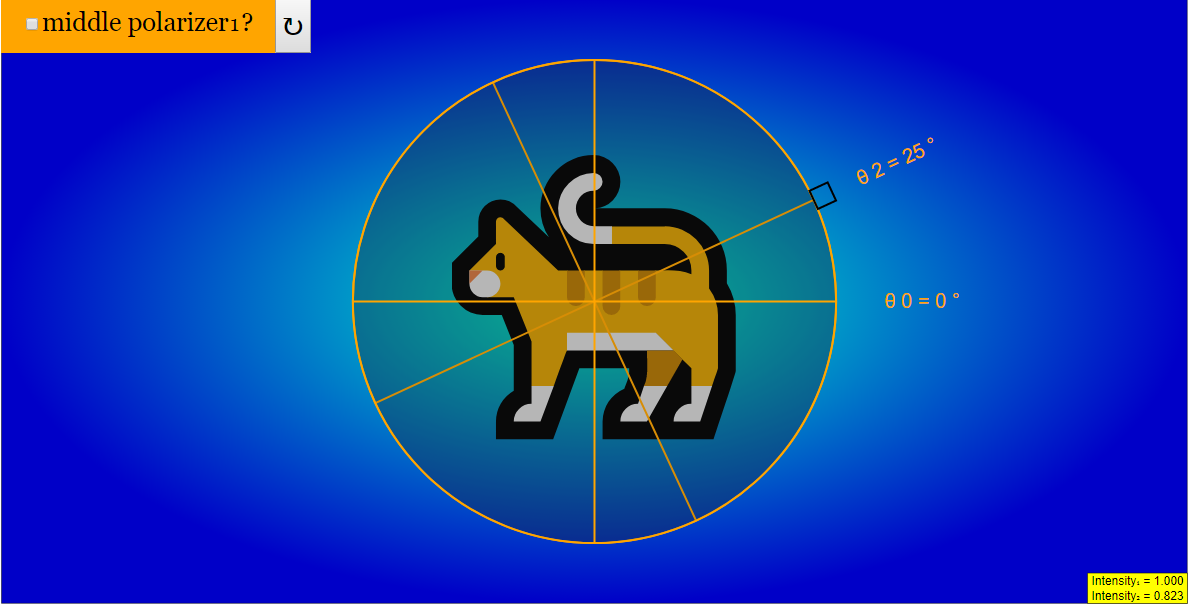
Instructions on using Simulation Applet
Middle Polarizer Check Box

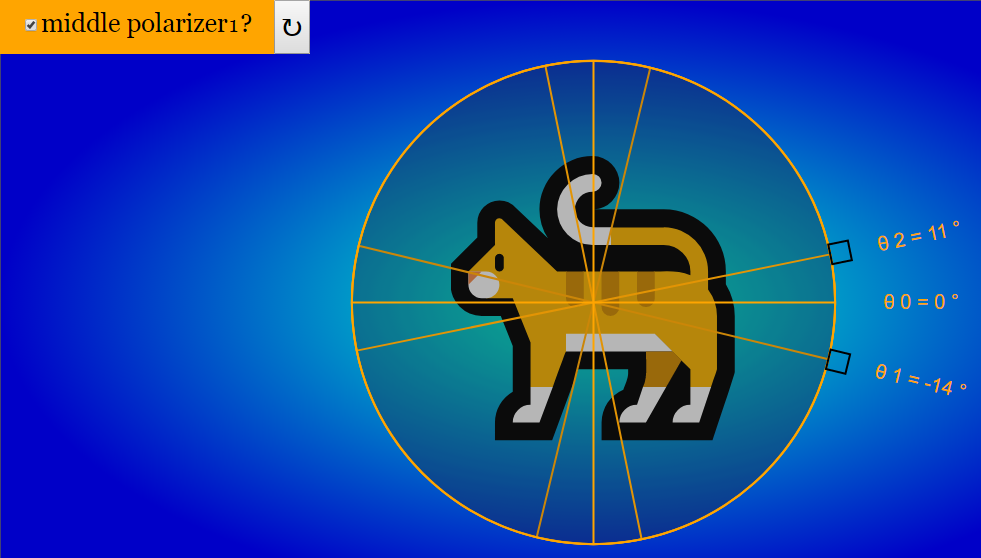
Drag-able Polarizer
Reset Button

Research
[text]
Video
https://www.youtube.com/watch?v=ZXZOLscuyE8 by xmtutor {source}
<iframe width="560" height="315" src="https://www.youtube.com/embed/ZXZOLscuyE8" frameborder="0" allow="accelerometer; autoplay; encrypted-media; gyroscope; picture-in-picture" allowfullscreen></iframe>
{/source}
Version:
Other Resources
[text]
Polarizers FAQ
- What is a polarizer?
- A polarizer is a device that selectively transmits light waves of a specific polarization, blocking light waves of other polarizations. Light is an electromagnetic wave and can be described as oscillating electric and magnetic fields. The direction of the electric field determines the polarization of the light. A polarizer allows light waves vibrating in a specific direction to pass through, while absorbing or reflecting those vibrating in other directions.
- How does the polarizer simulator work?
- The simulator models the behavior of light passing through one, two, or three polarizers. The user can adjust the angle of the polarizer(s) and observe how the intensity of the light changes. By dragging the rectangle area the angle between those two polarizers can be changed. The simulator demonstrates how the intensity of light transmitted is affected by the relative angles between polarizers.
- What happens when two polarizers are perpendicular to each other?
- When two polarizers are oriented with their polarization axes perpendicular to each other (crossed polarizers), ideally, no light will pass through. The first polarizer allows only light of a certain polarization to pass. Because the second polarizer is perpendicular, it blocks all of the light that made it through the first polarizer.
- What happens when a third polarizer is placed between two crossed polarizers?
- Adding a third polarizer between two crossed polarizers allows some light to pass through, provided the middle polarizer's axis is not aligned with either of the outer polarizers. This is counterintuitive, as one might expect adding another polarizer would block even more light. The middle polarizer effectively "rotates" the polarization of the light, allowing a component of it to pass through the final polarizer.
- How can I adjust the angle of the polarizers in the simulation?
- You can adjust the angle of the polarizers by dragging the small rectangle area around the circle. This will change the orientation of the polarization axis of the polarizer. The intensity of light passing through will vary as you change the angle between them.
- What is the "Middle Polarizer Check Box" for?
- The "Middle Polarizer Check Box" toggles the presence of a third polarizer between the first two. By default, this middle polarizer is off. Activating it allows you to investigate the effect of adding an intermediate polarizer on the intensity of transmitted light.
- Where can I find other physics simulations and resources?
- The Open Educational Resources / Open Source Physics @ Singapore website offers a large collection of interactive physics simulations, including those covering kinematics, electromagnetism, optics, and more. These resources are designed for educational use and cover a wide range of physics topics.
- Are these simulations available for embedding in webpages?
- Yes, many of the simulations, including the polarizer simulator, can be embedded in webpages. The site provides embed codes (iframe) that can be used to integrate the simulation into a website or online learning platform.