{source}
<?php  require_once JPATH_SITE.'/TTcustom/TT_contentparser.php';\(parameters = array("topicname" => "05electricitynmagnetism_11efield", "modelname" => "ejss_model_chargeMoving");echo generateSimHTML(\)parameters, "EJSS");
?>
{/source}
1. Overview
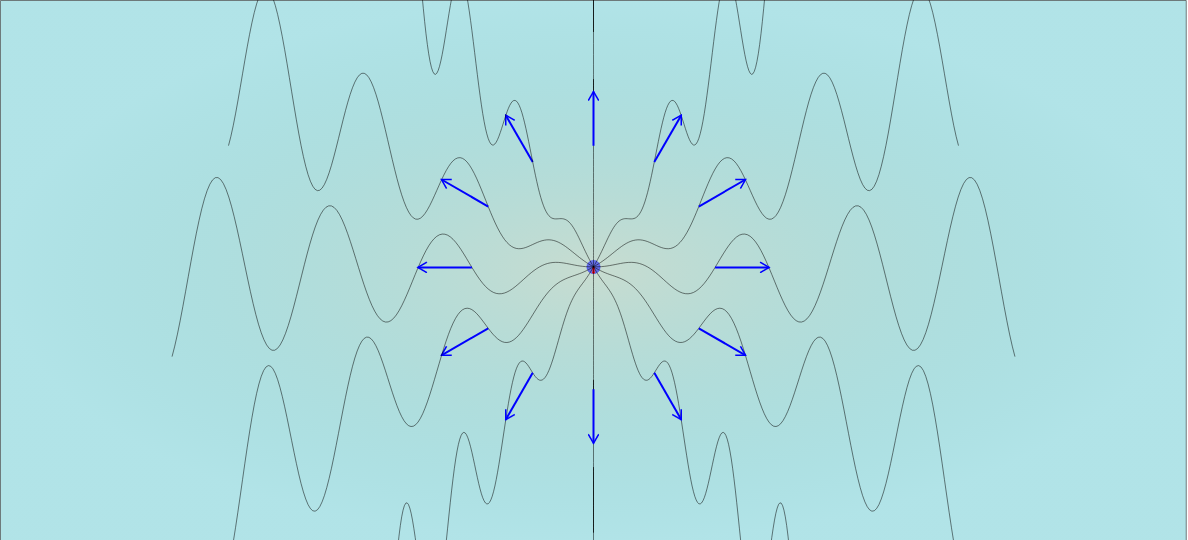
This resource is a JavaScript simulation applet designed to visualize the electromagnetic waves generated by a moving charge. It is part of a larger collection of interactive resources for physics education offered by Open Source Physics @ Singapore. The simulation is built using HTML5, making it accessible on a variety of devices and platforms.
{source}<iframe style="border-radius:12px" src="https://open.spotify.com/embed/episode/55zvPRHjYViJfT1MK0F4RR?utm_source=generator" width="100%" height="352" frameBorder="0" allowfullscreen="" allow="autoplay; clipboard-write; encrypted-media; fullscreen; picture-in-picture" loading="lazy"></iframe>{/source}
2. Key Features and Functionalities
- Interactive Simulation: The core of the resource is an interactive simulation that allows users to visualize the electric field generated by a moving charge.
- Control Panel: The applet features a control panel with several adjustable parameters:
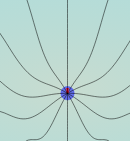
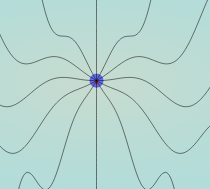
- "The respective check boxes for show toggle their visibility" - Allows users to control the visibility of different elements within the simulation.
- "The oscillation check box toggles if the particle oscillates or not" - Enables or disables the oscillatory motion of the charged particle.
- "The k slider determines the amplitude of the force of the particle moving." - Controls the amplitude of the force driving the particle's movement.
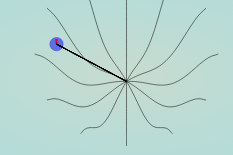
- Drag-able Particle: "You can drag the position of the particle to influence it's oscillation" The user can directly manipulate the position of the charged particle, influencing its oscillation and the resulting electromagnetic wave.
- Toggle Full Screen: "Double click anywhere on the panel to toggle full screen" - Allows users to view the simulation in full-screen mode for better visibility.
- Play/Pause, Step and Reset Buttons: Standard controls for managing the simulation's progression.
3. Intended Use and Learning Goals
The resource is designed for educational purposes, primarily for teaching and learning about electromagnetism.
- Sample Learning Goals: While the specific learning goals aren't explicitly listed, they can be inferred. The simulation is designed to help students understand the relationship between the motion of a charged particle and the generation of electromagnetic waves. It allows them to visualize concepts such as:
- The electric field lines emanating from a charge.
- How the motion of a charge creates a changing electric field.
- The relationship between oscillation frequency and the resulting electromagnetic wave.
- For Teachers: This resource provides teachers with an interactive tool to demonstrate abstract concepts in electromagnetism. It can be embedded into webpages using an iframe: <iframe width="100%" height="100%" src="https://iwant2study.org/lookangejss/05electricitynmagnetism_11efield/ejss_model_chargeMoving/chargeMoving_Simulation.xhtml " frameborder="0"></iframe>
4. Credits and Authorship
The simulation was developed by:
- Fu-Kwun Hwang
- Fremont Teng
- lookang
5. Related Resources and Context
The resource is part of a larger collection of Open Educational Resources (OER) related to physics, including simulations covering topics such as:
- Kinematics (e.g., "Tracker Air puck constant velocity Tracker model")
- Relativity (e.g., "Bus in Garage Relativity Length Lorentz Transformation JavaScript Simulation Applet HTML 5")
- Circuits (e.g., "Understanding Series Circuits JavaScript Simulation Applet HTML5")
- Waves (e.g., "Student Learning Space Two Source Ripple Tank JavaScript HTML5 Applet Simulation Model")
- Quantum Mechanics (e.g., "⚛️Bohr's Theory of the Hydrogen Atom JavaScript HTML5 Applet Simulation Model")
It is often integrated with the Singapore Student Learning Space (SLS), evidenced by resources listed like "Student Learning Space Two Source Ripple Tank JavaScript HTML5 Applet Simulation Model".
6. Technical Details and Access
- The simulation is implemented using JavaScript and HTML5.
- It can be accessed and embedded via the provided iframe code.
- Commercial use of the EasyJavaScriptSimulations Library requires contacting This email address is being protected from spambots. You need JavaScript enabled to view it. directly for licensing information.
7. Potential Uses
- Classroom demonstrations of electromagnetic wave generation.
- Interactive learning activities for students to explore the relationship between charge motion and EM waves.
- Virtual lab exercises for distance learning.
- Supplement to textbook explanations of electromagnetism.
8. License "Contents are licensed Creative Commons Attribution-Share Alike 4.0 Singapore License"
9. Conclusion
The "Moving Charge Electromagnetic Wave Visualisation JavaScript Simulation Applet HTML5" is a valuable resource for physics educators and students. Its interactive nature and adjustable parameters provide a hands-on approach to understanding the fundamental principles of electromagnetism. The resource's availability as an open educational resource makes it accessible to a wide audience.
Moving Charge Electromagnetic Wave Simulation Study Guide
I. Key Concepts
- Electromagnetic Wave Generation: Understanding how a moving charge creates an electromagnetic wave. This involves the interplay between electric and magnetic fields. The simulation allows users to visualize this relationship.
- Oscillation: A repetitive variation, typically in time, of some measure about a central value (often a point of equilibrium) or between two or more different states. The simulation allows control over whether the charged particle oscillates.
- Amplitude: The maximum extent of a vibration or oscillation, measured from the position of equilibrium. The 'k slider' in the simulation controls the amplitude of the force causing the particle to move, directly influencing the wave's amplitude.
- Visualization: The process of creating visual representations of data or phenomena. The applet provides a visual representation of an electromagnetic wave, making it easier to understand.
- Interactive Simulations: These simulations allow users to manipulate parameters and observe the effects, aiding in a deeper understanding of the concepts. This is a hands-on approach to learning.
- JavaScript Applet: A small application written in JavaScript, designed to run within a web browser.
- Open Educational Resources (OER): Freely accessible, openly licensed text, media, and other digital assets that are useful for teaching, learning, and assessing, as well as for research purposes.
II. Quiz
Answer the following questions in 2-3 sentences each.
- What is the purpose of the "Moving Charge Electromagnetic Wave Visualisation JavaScript Simulation Applet HTML5"?
- How can users control the amplitude of the force acting on the moving charge in the simulation?
- Explain how dragging the particle in the simulation can influence its oscillation.
- What does the "oscillation" checkbox in the simulation control?
- How does the simulation help in understanding the relationship between a moving charge and the generation of electromagnetic waves?
- What is the significance of this simulation being an Open Educational Resource (OER)?
- What are some other simulations available on the Open Source Physics @ Singapore website?
- How would the appearance of the electromagnetic wave change if the force amplitude (controlled by the 'k' slider) is increased?
- Explain one benefit of using interactive simulations for learning physics concepts like electromagnetic waves.
- What types of users or learning groups are likely to benefit from this simulation?
III. Quiz Answer Key
- The applet visualizes how a moving charge creates an electromagnetic wave, allowing users to observe the relationship between the charge's motion and the generated wave. It helps learners understand the abstract concept of electromagnetic wave generation.
- Users can control the amplitude of the force acting on the moving charge by using the "k slider" within the simulation's control panel. Adjusting this slider changes the amplitude of the force.
- Dragging the particle allows users to manually change its position, which directly influences the subsequent oscillation pattern by altering the initial conditions of the motion. This allows investigation of how initial position can alter the resultant wave formation.
- The "oscillation" checkbox toggles whether the particle will oscillate back and forth or remain stationary, allowing users to compare wave generation with and without oscillation. The default settings of the applet either permit or prevent oscillation, which users can alter.
- The simulation provides a visual representation of how the electric and magnetic fields change as the charge moves, making it easier to understand the link between the charge's motion and the resulting electromagnetic wave. This direct visualization clarifies how electromagnetic radiation is related to charged particle movement.
- As an OER, the simulation is freely accessible and can be used, adapted, and shared by educators and learners without cost or permission barriers. This promotes wider access to quality physics education resources.
- The website has a variety of simulations such as "Bus in Garage Relativity Length Lorentz Transformation JavaScript Simulation Applet HTML 5", "Student Learning Space Two Source Ripple Tank JavaScript HTML5 Applet Simulation Model," and "Bohr's Theory of the Hydrogen Atom JavaScript HTML5 Applet Simulation Model". These various options offer an interactive way to investigate different concepts in physics.
- If the force amplitude is increased, the amplitude of the electromagnetic wave will also increase, leading to a wave with larger oscillations in the electric and magnetic fields. The visualization will reflect more "intense" peaks and troughs of the wave.
- Interactive simulations allow for hands-on exploration of concepts, enabling students to manipulate variables and observe immediate effects, which promotes deeper understanding and engagement compared to passive learning methods. They allow experimentation in a virtual environment.
- This simulation would benefit high school and undergraduate physics students, as well as educators looking for visual aids to teach electromagnetism. It is useful for anyone who wants to develop an intuitive understanding of electromagnetic wave generation.
IV. Essay Questions
- Discuss the advantages and disadvantages of using interactive simulations, like the "Moving Charge Electromagnetic Wave Visualisation" applet, in physics education. Consider factors such as accessibility, learning outcomes, and potential limitations.
- Explain how the parameters of the simulation (e.g., the "k slider," oscillation checkbox, draggable particle) relate to the physical properties of electromagnetic waves. How does manipulating these parameters change the characteristics of the visualized wave?
- Compare and contrast the "Moving Charge Electromagnetic Wave Visualisation" applet with traditional methods of teaching electromagnetic wave generation (e.g., textbook descriptions, lectures). What are the strengths and weaknesses of each approach?
- Analyze the role of Open Educational Resources (OER) in promoting accessible and equitable science education. How does the availability of resources like this applet contribute to broader learning opportunities?
- Design an experiment or activity that could be used in conjunction with the "Moving Charge Electromagnetic Wave Visualisation" applet to enhance student learning. Clearly outline the objectives, procedures, and expected outcomes of your proposed activity.
V. Glossary of Key Terms
- Electromagnetic Wave: A form of energy that propagates through space as oscillating electric and magnetic fields.
- Charge: A fundamental property of matter that causes it to experience a force when placed in an electromagnetic field.
- Electric Field: A region of space around an electrically charged object in which a force would be exerted on other electrically charged objects.
- Magnetic Field: A region of space around a magnet or current-carrying wire in which a force would be exerted on other magnets or moving charges.
- Amplitude: The maximum displacement or extent of a vibration or oscillation, measured from the position of equilibrium.
- Frequency: The number of occurrences of a repeating event per unit of time. In wave phenomena, it represents the number of complete wave cycles that pass a point in a given time.
- Wavelength: The distance between successive crests of a wave, especially points in a sound wave or electromagnetic wave.
- Oscillation: A repetitive variation, typically in time, of some measure about a central value or between two or more different states.
- Simulation: A representation of a real-world process or system, often implemented using computer software, to study its behavior.
- Applet: A small application, often written in Java or JavaScript, that runs within a web browser.
- Open Educational Resources (OER): Teaching, learning, and research materials that reside in the public domain or have been released under an open license that permits no-cost access, use, adaptation, and redistribution by others with no or limited restrictions.
- HTML5: The latest evolution of the standard that defines HTML.
- JavaScript: A programming language commonly used to create interactive effects within web browsers.
Sample Learning Goals
[text]
For Teachers
Moving Charge Electromagnetic Wave Visualisation JavaScript Simulation Applet HTML5
Instructions to using Simulation Applet
Control Panel

Drag-able Particle

Toggle Full Screen
Play/Pause, Step and Reset Buttons

Research
[text]
Video
[text]
Version:
Other Resources
[text]
FAQ on Open Educational Resources / Open Source Physics @ Singapore
- What is the main focus of the Open Educational Resources / Open Source Physics @ Singapore website?
- The website serves as a repository and platform for interactive physics simulations, applets, and other educational resources designed to enhance physics learning and teaching, primarily through open-source and freely accessible materials. It aims to leverage technology, specifically JavaScript and HTML5, to create engaging and effective learning experiences.
- What types of interactive resources are available on the platform?
- The platform offers a wide range of interactive resources, including simulations of electromagnetism (e.g., moving charge electromagnetic wave visualization), kinematics (e.g., air puck motion), circuits, optics, mechanics (e.g., projectile motion, collisions), waves (e.g., ripple tank, superposition), quantum physics (e.g., Bohr's Theory of the Hydrogen Atom) and many others. These simulations are designed to be manipulated and explored by students to gain a deeper understanding of physics concepts. There are also some interactive Math resources.
- How can teachers use the resources in their classrooms?
- Teachers can embed the simulations into their webpages, use them for demonstrations, assign them as interactive exercises, or use them as starting points for inquiry-based learning activities. The website also provides sample learning goals and resources for teachers to guide their use of the simulations. Some simulations are designed specifically to integrate with learning management systems like the Singapore Student Learning Space (SLS).
- What is Easy JavaScript Simulations (EJS), and how is it related to the resources on this platform?
- Easy JavaScript Simulations (EJS) is a modeling tool that allows users to create and modify interactive simulations without extensive programming knowledge. Many of the simulations on the Open Source Physics @ Singapore platform were created using EJS and then converted to JavaScript/HTML5 for wider accessibility on web browsers.
- Are the resources on the platform free to use?
- Yes, the resources are generally free to use for educational purposes. The content is licensed under the Creative Commons Attribution-Share Alike 4.0 Singapore License. However, commercial use of the EasyJavaScriptSimulations Library requires a separate license obtained by contacting This email address is being protected from spambots. You need JavaScript enabled to view it..
- How can I find specific simulations or resources on the website?
- You can browse through the categories listed on the homepage (e.g. Physics, Motion & Forces, etc.) or use the search function to find resources related to specific physics topics. The site also features tags that help organize content.
- What are the control features available in the Moving Charge Electromagnetic Wave Visualisation JavaScript Simulation Applet HTML5?
- In this simulation, users can toggle the visibility of various elements using checkboxes. They can control the oscillation of the charge and adjust the amplitude of the force affecting the particle's motion using a slider ('k' slider). The particle's position can be dragged to influence its oscillation. Full-screen mode can be toggled by double-clicking. Play/Pause, Step, and Reset buttons are also available.
- What are some of the projects and awards associated with the Open Source Physics @ Singapore initiative?
- The Open Source Physics at Singapore initiative has received several awards, including the Ministry of Education GOLD Innergy Award (2016), the Public Service 21 Distinguished Star Service Award (2014), and the UNESCO King Hamad Bin Isa Al-Khalifa Prize for the Use of ICTs in Education (2015-6). It's also associated with various research projects focused on modeling-inquiry enabled interactive textbooks and teacher learning communities.