{source}
<?php  require_once JPATH_SITE.'/TTcustom/TT_contentparser.php';\(parameters = array("topicname" => "05electricitynmagnetism_21electromagnetism", "modelname" => "ejss_model_mirrorfieldwee");echo generateSimHTML(\)parameters, "EJSS");
?>
{/source}
Main Themes and Important Ideas/Facts:
- Simulation Tool: The primary subject is a JavaScript-based HTML5 simulation applet designed to model a Helmholtz coil setup. This is explicitly stated in the titles of both sources: "Helmholtz Coil Simulator JavaScript Simulation Applet HTML5" and "Helmholtz coil Simulator".
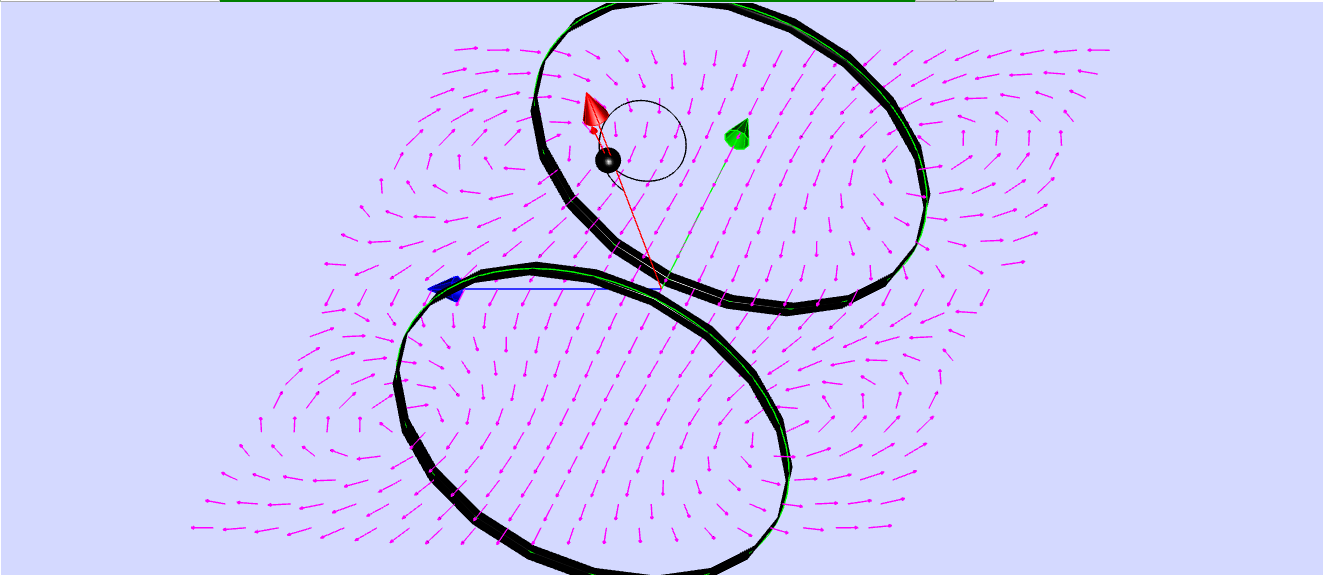
- Functionality: The simulator allows users to manipulate key parameters of a Helmholtz coil, specifically the "radius or distance between two coil". A core functionality of the simulation is to demonstrate the creation of a "magnetic mirror field" using the coils.
- Magnetic Mirror Field and Particle Trapping: A significant application of the simulated Helmholtz coil is the demonstration of how the generated magnetic field can be used to trap charged particles between the two coils. The description in the "About" section explicitly states: "The field can trapped charged particle between two coils". The second source's title also highlights this: "charged particle trapped in magnetic mirror field".
- Interactive Learning Resource: The applet is presented as an "Interactive Resource" within the "Physics" section of the Open Educational Resources / Open Source Physics @ Singapore website. This suggests its primary purpose is educational, allowing users to visually and interactively explore the principles of Helmholtz coils and magnetic mirror fields.
- Embeddable Model: The platform offers the functionality to "Embed this model in a webpage" using an iframe. This highlights its potential for integration into online learning platforms and educational materials.
- User Interface Elements: The description mentions interactive elements such as a "Combo Box and Sliders" for adjusting parameters, a "Toggling Full Screen" option via double-clicking, and "Play/Pause and Reset Buttons" for controlling the simulation. These indicate a user-friendly interface designed for exploration and experimentation.
- Learning Goals and Teacher Resources: The presence of "Sample Learning Goals" and a section "For Teachers" suggests that the applet is specifically designed to support physics education. While the exact learning goals are not provided in the excerpts, their inclusion signifies an intention to guide learning with the simulation.
- Credits and Versioning: The sources acknowledge the creators: "Fu-Kwun Hwang; Fremont Teng; Loo Kang Wee" and provide version information (though the specific version is not detailed in these excerpts). This establishes authorship and allows for tracking updates.
- Open Educational Resource: The platform is explicitly identified as "Open Educational Resources / Open Source Physics @ Singapore", and the content is licensed under a "Creative Commons Attribution-Share Alike 4.0 Singapore License". This indicates that the resource is freely available for use and adaptation, provided proper attribution is given and any derivative works are shared under a similar license. The second source also mentions the release under "a license" (though the specific type is not repeated).
- Related Resources: The extensive list of other JavaScript Simulation Applets HTML5 on the website suggests a broader commitment to interactive physics education, covering a wide range of topics from waves and sound to electromagnetism and quantum mechanics. This context positions the Helmholtz coil simulator within a larger collection of educational tools.
- Video Resource: A related YouTube video, "Particle Physics: 'Electrons in a Uniform Magnetic Field' 1959 Educational Services" (https://www.youtube.com/watch?v=QmWosUB6NTg), is listed, suggesting supplemental materials that could enhance understanding of the concepts explored in the simulation.
Quotes from Original Sources:
- "You can change the radius or distance between two coil and set up a magnetic mirror field." (Helmholtz Coil Simulator JavaScript Simulation Applet HTML5 - About Intro Page)
- "The field can trapped charged particle between two coils" (Helmholtz Coil Simulator JavaScript Simulation Applet HTML5 - About Intro Page 2)
- "Embed this model in a webpage:" (Helmholtz Coil Simulator JavaScript Simulation Applet HTML5)
- "Toggling the combo box will give you their respective sliders." (Helmholtz Coil Simulator JavaScript Simulation Applet HTML5 - Instructions Combo Box and Sliders)
- "Double clicking anywhere on the panel will toggle full screen." (Helmholtz Coil Simulator JavaScript Simulation Applet HTML5 - Instructions Toggling Full Screen)
- "Plays/Pauses and resets the simulation." (Helmholtz Coil Simulator JavaScript Simulation Applet HTML5 - Instructions Play/Pause and Reset Buttons)
- "Helmholtz coil Simulator/ charged particle trapped in magnetic mirror field" (Helmholtz coil Simulator/ charged particle trapped in magnetic mirror field - Title)
- "© 2018, Fu-Kwun Hwang; Fremont Teng; Loo Kang Wee." (Helmholtz coil Simulator/ charged particle trapped in magnetic mirror field)
- "Contents are licensed Creative Commons Attribution-Share Alike 4.0 Singapore License ." (Helmholtz Coil Simulator JavaScript Simulation Applet HTML5 - Footer)
Conclusion:
The Helmholtz Coil Simulator JavaScript Simulation Applet is a valuable interactive tool for learning about Helmholtz coils and the creation of magnetic mirror fields. Its user-friendly interface, embeddability, and association with learning goals and teacher resources make it a useful asset for physics education. The open educational resource nature of the platform further enhances its accessibility and potential for wider adoption. The simulation's focus on trapping charged particles highlights a key application of Helmholtz coils, relevant to various fields of physics. The provided sources offer a clear introduction to the applet's functionality, intended use, and the context within the Open Educational Resources / Open Source Physics @ Singapore project.
Helmholtz Coil Simulation Study Guide
Overview
This study guide focuses on the Helmholtz Coil Simulator JavaScript Simulation Applet HTML5 provided by Open Educational Resources / Open Source Physics @ Singapore. The simulator allows users to explore the magnetic field generated by Helmholtz coils and how this field can be used to trap charged particles in a magnetic mirror configuration.
Key Concepts
- Helmholtz Coils: A specific arrangement of two identical circular magnetic coils placed a distance apart equal to their radius. This configuration produces a region of nearly uniform magnetic field in the space between the coils.
- Magnetic Field: A vector field that describes the magnetic influence on moving electric charges, electric currents, and magnetic materials.
- Uniform Magnetic Field: A magnetic field that has the same magnitude and direction throughout a given region of space.
- Magnetic Mirror: A magnetic field configuration used to trap charged particles. The field lines converge at two regions, reflecting the particles back and forth between these "mirrors."
- Charged Particle Motion in Magnetic Fields: When a charged particle moves in a magnetic field, it experiences a force perpendicular to both its velocity and the magnetic field direction (Lorentz force). This force causes the particle's trajectory to curve.
- Trapping of Charged Particles: Specific magnetic field configurations, like magnetic mirrors created by Helmholtz coils with adjusted parameters, can trap charged particles by reversing the component of their velocity parallel to the field lines.
- Simulation: A computational model that mimics a real-world system, allowing users to manipulate parameters and observe the resulting behavior.
- JavaScript Applet HTML5: A small application written in JavaScript that runs within a web browser, leveraging HTML5 capabilities for interactive simulations.
- Open Educational Resources (OER): Educational materials offered freely and openly for anyone to use, adapt, and share.
- Open Source Physics (OSP): A project dedicated to creating and disseminating open-source computational tools and resources for physics education.
Using the Simulator
- Accessing the Simulator: The simulator can be embedded in a webpage using the provided iframe code: <iframe width="100%" height="100%" src="https://iwant2study.org/lookangejss/05electricitynmagnetism_21electromagnetism/ejss_model_mirrorfieldwee/mirrorfieldwee_Simulation.xhtml " frameborder="0"></iframe>
- Interactive Elements:Combo Box and Sliders: These allow users to adjust parameters such as the radius of the coils and the distance between them. Toggling the combo box will reveal the corresponding sliders.
- Full Screen Toggle: Double-clicking on the panel will switch between full-screen mode and the embedded view.
- Play/Pause and Reset Buttons: These buttons control the simulation's execution and allow users to return to the initial settings.
- Experimentation: Users can change the coil radius and distance to observe how these parameters affect the magnetic field configuration and the trapping of charged particles. Setting up a "magnetic mirror field" is mentioned as a specific capability.
Sample Learning Goals
The provided text includes "[texthttps://www.youtube.com/watch?v=QmWosUB6NTg Particle Physics: 'Electrons in a Uniform Magnetic Field' 1959 Educational Services". This video may provide relevant background information on charged particle behavior in magnetic fields.
- Related Simulations: A long list of other JavaScript simulation applets HTML5 is provided, covering various physics topics. While not directly related to Helmholtz coils, they showcase the breadth of interactive resources available from Open Educational Resources / Open Source Physics @ Singapore.
Quiz
Answer the following questions in 2-3 sentences each.
- What is the defining geometric characteristic of a Helmholtz coil setup?
- What is the primary advantage of using a Helmholtz coil configuration compared to a single loop coil when trying to generate a magnetic field?
- According to the text, what specific capability does this Helmholtz Coil Simulator offer regarding the magnetic field?
- What happens to a charged particle when it moves in a magnetic field, and what determines the direction of the force?
- Explain the basic principle behind how a magnetic mirror field can trap charged particles.
- What user interface elements are mentioned for controlling the Helmholtz Coil Simulator?
- What programming language is the simulation applet written in, and in what type of document is it embedded for web use?
- What is the general aim of Open Educational Resources (OER) initiatives like the one providing this simulator?
- Besides the simulator itself, what external resource is directly linked in the "Video" section that might be relevant to understanding the concepts?
- What can users adjust within the simulator to set up a magnetic mirror field?
Answer Key
- A Helmholtz coil setup consists of two identical circular magnetic coils placed a distance apart equal to their radius. This specific spacing is crucial for creating a region of nearly uniform magnetic field between the coils.
- The primary advantage of a Helmholtz coil configuration is its ability to produce a region of relatively uniform magnetic field in the space between the two coils. A single loop coil generates a non-uniform field that varies significantly with distance from the loop's center.
- The Helmholtz Coil Simulator allows users to change the radius or distance between the two coils and set up a magnetic mirror field. This field configuration can then be used to trap charged particles between the two coils.
- When a charged particle moves in a magnetic field, it experiences a force (Lorentz force) that is perpendicular to both the particle's velocity and the direction of the magnetic field. The direction of the force is determined by the right-hand rule for positive charges (or left-hand rule for negative charges).
- A magnetic mirror field traps charged particles by having regions where the magnetic field lines converge. As charged particles move into these regions of stronger field, the component of their velocity parallel to the field lines slows down and can eventually reverse, causing them to be reflected back.
- The user interface of the Helmholtz Coil Simulator includes a combo box and sliders for adjusting parameters, play/pause and reset buttons for controlling the simulation, and the ability to toggle full screen by double-clicking the panel.
- The simulation applet is written in JavaScript and is implemented using HTML5 technology, as indicated by the title "Helmholtz Coil Simulator JavaScript Simulation Applet HTML5." It is embedded within a webpage.
- Open Educational Resources (OER) initiatives aim to provide free and openly accessible educational materials that can be used, adapted, and shared by anyone. This promotes wider access to knowledge and learning opportunities.
- The directly linked external resource is a YouTube video titled "Particle Physics: 'Electrons in a Uniform Magnetic Field' 1959 Educational Services." This video likely provides foundational knowledge about how charged particles behave in magnetic fields, which is relevant to understanding the simulator.
- Users can adjust the radius of the two coils and, more importantly for this specific function, the distance between the two coils within the simulator to set up a magnetic mirror field capable of trapping charged particles.
Essay Format Questions
- Discuss the importance of uniform magnetic fields in physics research and explain how a Helmholtz coil configuration approximates such a field. Analyze the role of the adjustable parameters in the provided simulator in achieving and modifying this uniformity.
- Explain the concept of a magnetic mirror and how it can be created using Helmholtz coils. Describe the principles behind the trapping of charged particles in such a magnetic field and discuss potential applications of this phenomenon.
- Evaluate the effectiveness of using interactive JavaScript simulations like the Helmholtz Coil Simulator as a tool for physics education. Consider the advantages and limitations of such resources in helping students understand abstract concepts in electromagnetism.
- Based on the information provided and your understanding of electromagnetism, propose a specific experiment or investigation that a student could conduct using the Helmholtz Coil Simulator. Outline the procedure, the variables being explored, and the expected observations.
- The provided text lists numerous other JavaScript simulation applets. Discuss the broader context of Open Educational Resources (OER) in physics education, highlighting the potential benefits of freely available interactive tools for both students and educators, using the Helmholtz Coil Simulator as a specific example.
Glossary of Key Terms
- Helmholtz Coils: A set of two identical, circular coils placed parallel to each other and separated by a distance equal to their radius. They are used to create a region of nearly uniform magnetic field.
- Magnetic Field: A vector field in the space around a magnet, electric current, or moving electric charge that describes the magnetic influence on other moving charges, currents, and magnetic materials.
- Uniform Magnetic Field: A region in space where the magnetic field has the same magnitude and direction at every point.
- Magnetic Mirror: A magnetic field configuration that can trap charged particles by reflecting them back and forth between regions of stronger magnetic field.
- Charged Particle: A subatomic or atomic particle that carries an electric charge, either positive or negative. Examples include electrons, protons, and ions.
- Lorentz Force: The force on a point charge due to electromagnetic fields. It is the vector sum of the electric and magnetic forces.
- Trajectory: The path followed by a moving object. In the context of charged particles in magnetic fields, the trajectory is often curved due to the Lorentz force.
- Simulation: A model or representation of a real-world system or process, often implemented using computer software, that allows for experimentation and observation.
- JavaScript Applet: A small application written in the JavaScript programming language that can be embedded in HTML pages and run within a web browser.
- HTML5: The latest evolution of the standard Hypertext Markup Language, used for structuring and presenting content on the World Wide Web. It includes features that support multimedia and interactive elements without the need for external plugins.
- Open Educational Resources (OER): Teaching, learning, and research materials in any medium, digital or otherwise, that reside in the public domain or have been released under an open license that permits no-cost access, use, adaptation, and redistribution by others with no or limited restrictions.
- Open Source Physics (OSP): A project that promotes the use and development of open-source computational tools and resources for physics education.
Sample Learning Goals
[text]
For Teachers
Helmholtz Coil Simulator JavaScript Simulation Applet HTML5
Instructions
Combo Box and Sliders




Toggling Full Screen
Play/Pause and Reset Buttons

Research
[text]
Video
- https://www.youtube.com/watch?v=QmWosUB6NTg Particle Physics: "Electrons in a Uniform Magnetic Field" 1959 Educational Services
Version:
Other Resources
[text]
Frequently Asked Questions: Helmholtz Coil Simulator
1. What is the purpose of the Helmholtz Coil Simulator?
The Helmholtz Coil Simulator is an interactive tool that allows users to explore the magnetic field generated by a pair of Helmholtz coils. It enables visualization of the field and demonstrates how charged particles can be trapped between two such coils, creating a magnetic mirror field. Users can manipulate parameters like the radius and distance between the coils to observe the resulting changes in the magnetic field configuration.
2. How can I interact with the Helmholtz Coil Simulator?
The simulator offers several interactive elements. Users can typically adjust parameters such as the radius of the coils and the distance between them using sliders or combo boxes. There are also controls to play/pause and reset the simulation. Double-clicking on the panel often toggles full-screen mode for better visualization.
3. What is a magnetic mirror field, and how does this simulation demonstrate it?
A magnetic mirror field is a configuration of magnetic fields designed to trap charged particles. The Helmholtz Coil Simulator allows users to set up a magnetic mirror field by adjusting the properties of the two coils. The simulation visually demonstrates how the resulting magnetic field lines can cause charged particles to oscillate back and forth between the regions of stronger magnetic field near each coil, effectively trapping them.
4. What are Helmholtz coils?
Helmholtz coils are a specific arrangement of two identical circular magnetic coils that are placed a distance apart equal to their radius. This configuration is designed to create a region of very uniform magnetic field in the space between the two coils. The simulator allows users to explore variations of this standard arrangement by changing the distance and radius.
5. What can I learn about electromagnetism using this simulator?
Through this simulator, users can gain a better understanding of the magnetic fields produced by current-carrying coils and how these fields interact. They can observe how changing the physical arrangement of the coils affects the strength and uniformity of the resulting magnetic field. Furthermore, it provides a visual representation of the principles behind magnetic trapping and magnetic mirror fields, which are important concepts in plasma physics and other fields.
6. Is this simulator suitable for educational purposes?
Yes, the Helmholtz Coil Simulator is explicitly identified as an Open Educational Resource designed for learning about electromagnetism. Its interactive nature and visual representations make it a valuable tool for students and educators to explore the properties of magnetic fields and the concept of magnetic confinement. The inclusion of "Sample Learning Goals" further supports its educational utility.
7. Can I embed this simulation in a webpage?
Yes, the provided HTML iframe code allows users to easily embed the Helmholtz Coil Simulator into other webpages. This feature makes it convenient for educators and content creators to integrate the interactive simulation into their online learning materials.
8. Who developed this Helmholtz Coil Simulator?
The Helmholtz Coil Simulator was developed by Fu-Kwun Hwang, Fremont Teng, and Loo Kang Wee. They are credited under the "Credits" section of the resource