{source}
<?php  require_once JPATH_SITE.'/TTcustom/TT_contentparser.php';\(parameters = array("topicname" => "05electricitynmagnetism_21electromagnetism", "modelname" => "ejss_model_chargeinNScyclotronwee");echo generateSimHTML(\)parameters, "EJSS");
?>
{/source}
1. Introduction:
This briefing document reviews the provided excerpts from the Open Educational Resources / Open Source Physics @ Singapore website, specifically focusing on the documentation for the "Cyclotron Simulator JavaScript Simulation Applet HTML5." The document outlines the main themes, important ideas, and key functionalities of the simulation as described in the source. The simulation is presented as an interactive tool for learning about the principles and applications of a cyclotron.
2. Main Themes and Important Ideas:
- How a Cyclotron Works: The central theme is the operational principle of a cyclotron. The documentation clearly explains the roles of both the magnetic field (Bz) and the electric field (Ey) in accelerating charged particles.
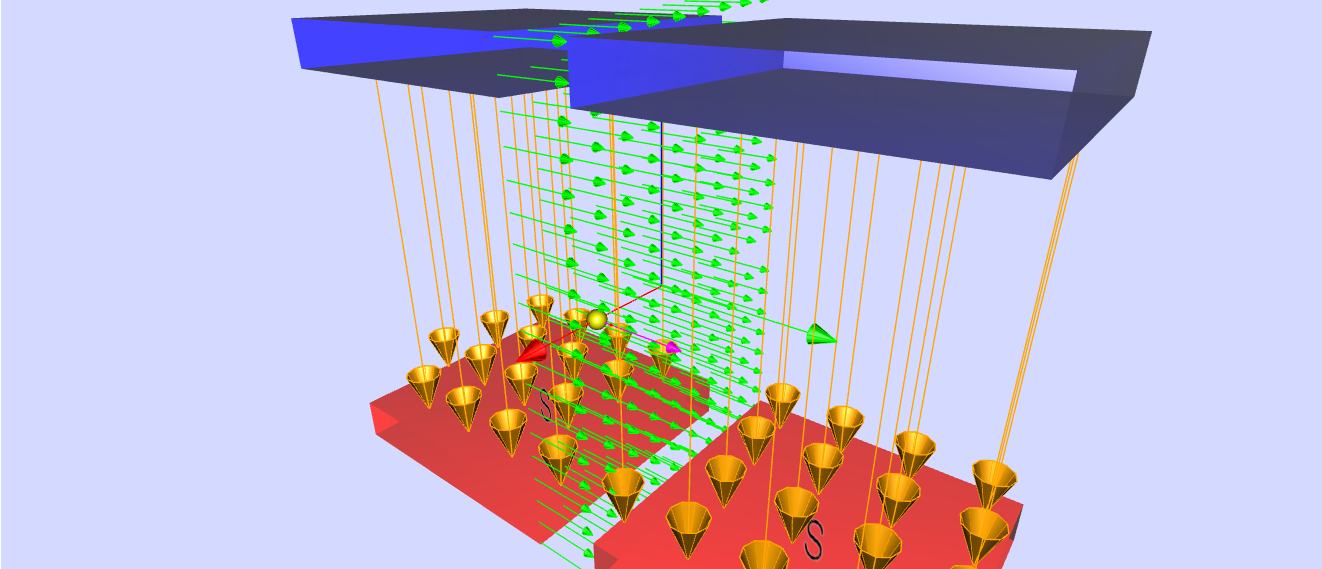
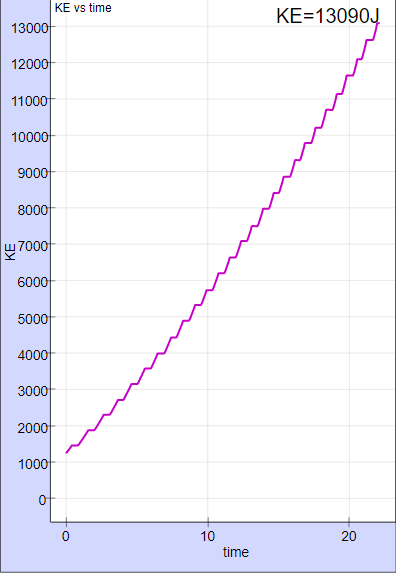
- "The charged particles, injected near the center of the magnetic field Bz, accelerate only when passing through the gap between the electric field Ey electrodes with increase in kinetic energy. The perpendicular magnetic field Bz bends moving charges into a semicircular path between the magnets with no increase in kinetic energy."
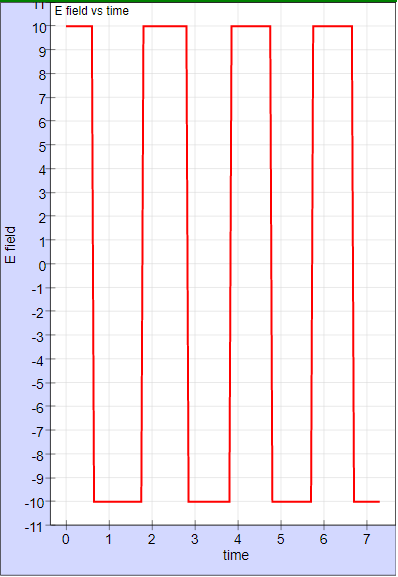
- The alternating nature of the electric field in the gap ("While the charge is in the gap the electric field Ey is reversed...") is crucial for continuous acceleration as the particles traverse the gap repeatedly.
- The increasing radius of the particle's path is a direct consequence of the increasing kinetic energy gained with each pass through the electric field. "This causes the half-circles in the dees to increase in radius, and eventually the charge emerges from the cyclotron at high speed."
- The overall motion is described as a "spiral path" resulting from the combined effects of the electric field increasing energy and the magnetic field bending the trajectory.
- Advantages of Cyclotrons: The document highlights the benefits of cyclotrons over linear accelerators.
- "Cyclotrons accelerate particles in a spiral path. Therefore, a compact accelerator can contain much more distance than a linear accelerator, with more opportunities to accelerate the particles." This addresses the problem of requiring long linear paths in older accelerators.
- "Cyclotrons produce a continuous stream of particles at the target, so the average power is relatively high."
- "The compactness of the device reduces other costs, such as its foundations, radiation shielding, and the enclosing building."
- Uses of Cyclotrons: The practical applications of cyclotrons are mentioned, emphasizing their significance in various fields.
- "For several decades, cyclotrons were the best source of high-energy beams for nuclear physics experiments; several cyclotrons are still in use for this type of research."
- "Cyclotrons can be used to treat cancer. Ion beams from cyclotrons can be used, as in proton therapy, to penetrate the body and kill tumors by radiation damage, while minimizing damage to healthy tissue along their path."
- Simulation Features: The documentation details the components and interactive elements of the JavaScript simulation.
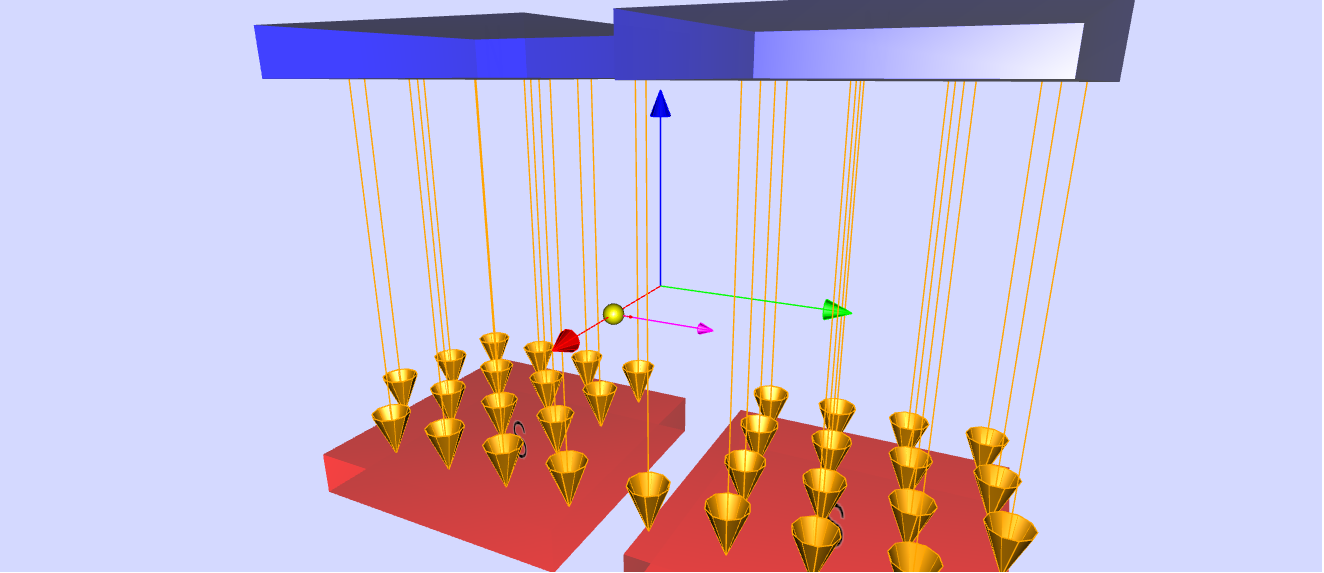
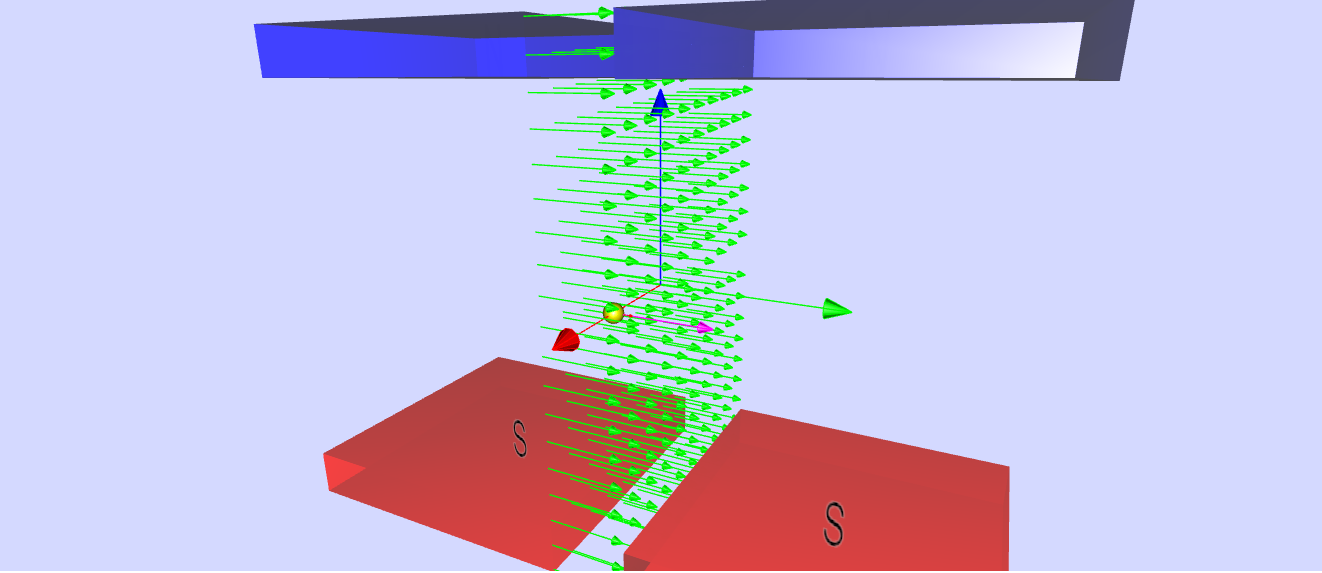
- The main view consists of "2 Magnets to provide for the magnetic field Bz," "A gap between the 2 magnets in the y direction," "An alternating electric field Ey," and "a charged particle."
- Users can embed the model in a webpage using an iframe.
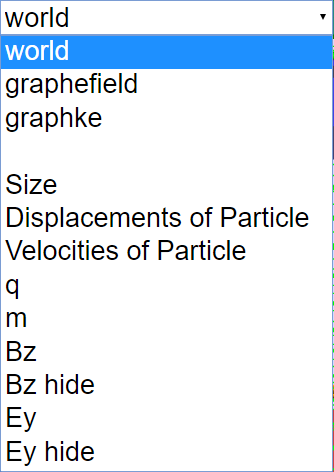
- Interactive controls include "Play/Pause, Step and Reset Buttons," as well as sliders to adjust parameters like "Bz," "Ey," and initial velocities ("vx, vy, vz"). Sliders for charge (q), mass (m), and radius of the dee (R) are also available.
- The simulation displays real-time values for "radius of circular path r," "kinetic energy of particle KE," "resultant velocity vr," and "resultant force F."
- Users can explore the effect of setting Bz or Ey to zero to understand the individual effects of each field. For instance, setting Bz and Ey to zero demonstrates Newton's First Law.
- Learning Activities: The document includes a series of "Exercises" designed to guide users in exploring the simulation and understanding the underlying physics. These exercises range from basic observations to more analytical tasks, including:
- Observing the particle's motion under different field conditions.
- Identifying the physics principles demonstrated.
- Understanding the role of the alternating electric field.
- Proposing the logic for timing the switching of Ey.
- Quantifying the change in kinetic energy as the particle crosses the gap and moves within the dees.
- Evaluating the effectiveness of increasing the electric or magnetic field to increase the final speed of the particles.
- Underlying Physics: The documentation touches upon the fundamental physics principles governing the cyclotron's operation, including the force on a charged particle in a magnetic field (F = qvB), circular motion, and the work done by the electric field, leading to a change in kinetic energy. The relationship between the radius of the circular path and the particle's momentum and the magnetic field is also mentioned: "r = mv/Bq." The final kinetic energy is related to the dee radius and the magnetic field strength: "KE = 1/2. R^2q^2B^2/m."
- Credits and Resources: The document provides information about the creators of the simulation (Fu-Kwun Hwang, Loo Kang Wee), the tools used (Easy Java Simulations - EJS), and links to additional resources, including Wikipedia articles on cyclotrons, related simulations, and video introductions.
3. Key Facts and Quotes:
- Cyclotron Acceleration: "The charged particles... accelerate only when passing through the gap between the electric field Ey electrodes with increase in kinetic energy."
- Magnetic Field's Role: "The perpendicular magnetic field Bz bends moving charges into a semicircular path between the magnets with no increase in kinetic energy."
- Alternating Electric Field: "While the charge is in the gap the electric field Ey is reversed, so the charge is once again accelerated across the gap."
- Spiral Path: "This results in a spiral path of which the particles than emerged at a higher speed than when it was injected into the center of the magnetic field Bz."
- Advantage over Linear Accelerators: "Therefore, a compact accelerator can contain much more distance than a linear accelerator, with more opportunities to accelerate the particles."
- Continuous Particle Stream: "Cyclotrons produce a continuous stream of particles at the target, so the average power is relatively high."
- Cancer Treatment Application: "Ion beams from cyclotrons can be used, as in proton therapy, to penetrate the body and kill tumors by radiation damage..."
- Kinetic Energy Change in Magnetic Field: "In the dee(magnetic field) the force on the charge comes from the magnetic field, so the force is perpendicular to the velocity. The speed, and hence the kinetic energy, stays constant, so the change is zero."
- Final Kinetic Energy Formula: "KE = 1/2 mv2 = 1/2. m. (RBq/m)^2 = 1/2. R^2q^2B^2/m"
4. Conclusion:
The documentation for the Cyclotron Simulator JavaScript Simulation Applet HTML5 provides a comprehensive overview of the simulation's purpose, functionality, and the underlying physics of a cyclotron. The interactive nature of the simulation, coupled with the guided exercises, makes it a valuable tool for students to engage with the concepts of electromagnetism and particle acceleration. The document effectively highlights the historical significance, practical applications, and advantages of cyclotrons. The inclusion of credits and links to further resources enhances the educational value of this open educational resource.
Cyclotron Operation and Applications Study Guide
Quiz:
- Describe the primary function of the magnetic field in a cyclotron. How does it achieve this?
- Explain why an alternating electric field is necessary for the continuous acceleration of charged particles in a cyclotron. What happens if the electric field is constant?
- How does the kinetic energy of a charged particle change as it moves through the magnetic field regions (the dees) of a cyclotron? Explain your reasoning.
- What causes the spiral path of charged particles within a cyclotron? Relate this path to the changing properties of the particle.
- What was the main limitation of linear accelerators that the cyclotron was designed to overcome? How does the cyclotron achieve a more compact design for high-energy acceleration?
- Give two applications of cyclotrons mentioned in the source material, highlighting the unique capabilities of cyclotrons that make them suitable for these uses.
- Explain the role of the "gap" between the magnetic field electrodes (dees) in the acceleration process of a cyclotron. What type of field exists in this region?
- According to the simulation exercises, what happens to the motion of a charged particle if the magnetic field (Bz) is set to zero while there is an initial velocity (vy)? What physics principle does this illustrate?
- In the context of the simulation, what is the relationship between the radius of the circular path of a charged particle in the dees and its velocity? How does this relationship contribute to the cyclotron's operation?
- What are the two main fields present in a cyclotron, and what is the primary effect of each field on the charged particles being accelerated?
Answer Key:
- The primary function of the magnetic field (Bz) is to bend the moving charged particles into a semicircular path. This is achieved because the magnetic force is perpendicular to the velocity of the charged particle, causing it to move in a circular trajectory without changing its speed.
- An alternating electric field (Ey) is necessary to ensure that the charged particles are accelerated each time they cross the gap between the dees. If the electric field were constant, the particles would only be accelerated in one direction across the gap and then decelerated on the subsequent crossing.
- The kinetic energy of a charged particle remains constant as it moves through the magnetic field regions (the dees). This is because the magnetic force is always perpendicular to the velocity, meaning the magnetic force does no work on the particle, and thus its speed and kinetic energy do not change.
- The spiral path is caused by the increasing kinetic energy of the charged particles as they are accelerated across the electric field gap. With each acceleration, the particle's velocity increases, leading to a larger radius of its semicircular path within the magnetic field. This continuous increase in radius results in a spiral trajectory.
- The main limitation of linear accelerators was the requirement for a very long linear path to achieve high particle energies. The cyclotron overcomes this by using a magnetic field to bend the particles into a circular or spiral path, allowing for repeated acceleration within a compact device.
- Two applications of cyclotrons are nuclear physics research, where they serve as a source of high-energy beams for experiments, and cancer treatment (proton therapy), where ion beams are used to target and destroy tumors with minimal damage to surrounding healthy tissue.
- The "gap" between the dees is where an alternating electric field (Ey) exists. This electric field accelerates the charged particles as they pass through it, increasing their kinetic energy. The reversal of the electric field ensures acceleration each time the particle crosses the gap.
- If the magnetic field (Bz) is zero, the charged particle will move in a straight line in the y-direction with a constant velocity (vy). This illustrates Newton's first law of motion, which states that an object in motion will continue in motion with the same velocity unless acted upon by a net force (in this case, the magnetic force is absent).
- The radius (r) of the circular path of a charged particle in the dees is directly proportional to its velocity (v), as given by the relationship r = mv/Bq. As the particle accelerates and its velocity increases, the radius of its path also increases, causing it to move in larger semicircles.
- The two main fields in a cyclotron are the magnetic field (Bz), which causes the charged particles to move in circular paths, and the alternating electric field (Ey) in the gap, which accelerates the charged particles, increasing their kinetic energy.
Essay Format Questions:
- Discuss the fundamental principles of physics that govern the operation of a cyclotron. Explain how the interplay between electric and magnetic fields enables the acceleration of charged particles to high energies.
- Compare and contrast the advantages and disadvantages of using a cyclotron versus a linear accelerator for producing high-energy particle beams. Consider factors such as size, cost, continuity of beam, and achievable energy levels.
- Evaluate the significance of the cyclotron in the history of nuclear physics research. Describe its contributions to our understanding of the atomic nucleus and nuclear reactions.
- Explain how the design features of a cyclotron, such as the alternating electric field and the perpendicular magnetic field, contribute to its ability to accelerate charged particles efficiently. Analyze the importance of the frequency of the alternating electric field in relation to the particle's motion.
- Based on the provided text and your understanding, discuss the potential future applications of cyclotron technology, particularly in fields like medicine and materials science. What advancements might be necessary to further expand their utility?
Glossary of Key Terms:
- Charged Particle: A subatomic particle (such as a proton, electron, or ion) that carries an electric charge, causing it to experience a force when in an electric or magnetic field.
- Magnetic Field (Bz): A region of space around a magnet or electric current in which a magnetic force is exerted on moving charged particles. In the cyclotron, the magnetic field is oriented perpendicular to the plane of the dees.
- Electric Field (Ey): A region of space around an electrically charged object in which an electric force is exerted on other charged objects. In the cyclotron, an alternating electric field is present in the gap between the dees.
- Kinetic Energy (KE): The energy possessed by an object due to its motion. In the cyclotron, the kinetic energy of the charged particles increases each time they are accelerated by the electric field.
- Dees: Two D-shaped, hollow electrodes inside a cyclotron that are subjected to an alternating voltage, creating the electric field in the gap between them and providing a magnetic field region for the particles to travel in semicircles.
- Alternating Electric Field: An electric field that periodically reverses its direction. This is crucial in a cyclotron to ensure continuous acceleration of the charged particles as they cross the gap.
- Semicircular Path: The half-circle trajectory followed by charged particles within the dees of a cyclotron due to the force exerted by the perpendicular magnetic field.
- Spiral Path: The trajectory of the charged particles in a cyclotron, which is a result of the increasing radius of their semicircular paths due to the gain in kinetic energy with each acceleration across the gap.
- Linear Accelerator: A type of particle accelerator that accelerates charged particles in a straight line using a series of oscillating electric potentials.
- Proton Therapy: A type of radiation therapy that uses a beam of protons to target and destroy cancerous tumors. Cyclotrons are used to produce these high-energy proton beams.
Sample Learning Goals
[text]
For Teachers
Cyclotron Simulator JavaScript Simulation Applet HTML5
Instructions
Combo Box and Functions






Toggling Full Screen
Play/Pause, Step and Reset Buttons

Research
[text]
Video
- https://youtu.be/xO4Dtz9vkiI {source}
<iframe width="560" height="315" src="https://www.youtube.com/embed/xO4Dtz9vkiI" frameborder="0" allow="autoplay; encrypted-media" allowfullscreen></iframe>
{/source} An Introduction to the K500 Cyclotron by nsclmedia
Version:
- https://weelookang.blogspot.com/2018/04/cyclotron-simulator-javascript.html
- http://iwant2study.org/lookangejss/05electricitynmagnetism_21electromagnetism/ejs/ejs_model_chargeinNScyclotron.jar
Other Resources
- http://www.cyberphysics.co.uk/topics/atomic/Accelerators/Cyclotron/Cyclotron%20.htm
- http://physics.bu.edu/~duffy/HTML5/cyclotron.html
Frequently Asked Questions: Cyclotron Operation and Features
- How does a cyclotron accelerate charged particles? A cyclotron uses a combination of a magnetic field and an electric field to accelerate charged particles. The magnetic field (Bz) is perpendicular to the motion of the particles, causing them to move in semicircular paths within two D-shaped electrodes (dees). An alternating electric field (Ey) is applied across the gap between the dees. Each time a charged particle passes through this gap, the electric field accelerates it, increasing its kinetic energy and the radius of its circular path. The frequency of the alternating electric field is synchronized with the time it takes for the particles to traverse each semicircle, ensuring they are always accelerated as they cross the gap. This process repeats, causing the particles to spiral outwards with increasing speed until they exit the cyclotron at a high energy.
- What are the key components of the cyclotron model presented? The cyclotron model simulation features two magnets that generate a magnetic field (Bz) to bend the moving charged particles into semicircular paths. There is a gap between these magnets where an alternating electric field (Ey) is applied to accelerate the charged particle. The simulation also includes controls and displays for parameters such as the magnetic field strength, electric field strength, initial velocity components of the charged particle (vx, vy, vz), charge (q), mass (m), and the radius of the dees (R). Users can observe the particle's trajectory, kinetic energy (KE), radius of its circular path (r), resultant velocity (vr), and the resultant force (F) acting on it.
- Why is the electric field in a cyclotron alternating? The electric field (Ey) across the gap between the dees must be alternating to ensure that the charged particles are always accelerated as they cross the gap. When a particle exits one dee and enters the gap, it needs to be accelerated by the electric field. By the time it completes its semicircular path in the other dee and returns to the gap, the direction of its motion has reversed relative to the gap. Therefore, the electric field must also have reversed direction to provide another acceleration in the same direction of motion, further increasing the particle's energy.
- What is the role of the magnetic field in a cyclotron? The magnetic field (Bz), oriented perpendicular to the velocity of the charged particles, exerts a magnetic force on them that is also perpendicular to their velocity. This force causes the particles to move in a circular path (or a semicircle within each dee). The magnetic field does not do any work on the charged particles and thus does not change their kinetic energy. Its primary role is to bend the path of the particles back towards the gap between the dees after each acceleration by the electric field, allowing for repeated acceleration and a spiral trajectory.
- What limits the maximum energy achievable by a cyclotron? While the provided text doesn't explicitly detail the limitations, based on general cyclotron principles, the maximum energy achievable is related to several factors. One key factor is the radius of the dees. As the particles gain energy, the radius of their circular path increases (r = mv/Bq). When the radius of the path approaches the physical radius of the dees, the particles can no longer be contained and will exit. Relativistic effects, which become significant at very high speeds, can also cause the particles' mass to increase, leading to a decrease in the angular frequency and a loss of synchronization with the alternating electric field.
- How does the cyclotron improve upon linear accelerators? Cyclotrons overcome the need for very long accelerating structures, which is a limitation of linear accelerators. By using a magnetic field to bend the path of the charged particles into a spiral, a cyclotron allows for repeated acceleration over a much longer effective path within a compact device. This means that a cyclotron can impart significantly more energy to particles than a linear accelerator of comparable size. Additionally, cyclotrons produce a continuous stream of particles at the target, resulting in a relatively high average power.
- What are some of the applications of cyclotrons? Cyclotrons have several important applications. In nuclear physics research, they serve as a source of high-energy ion beams for various experiments. They are also used in medicine, particularly in cancer treatment through proton therapy. Ion beams from cyclotrons can penetrate the body to target and destroy tumors with minimal damage to surrounding healthy tissue. Furthermore, cyclotrons are used to produce radioisotopes for medical imaging and other research purposes.
- How can the included JavaScript simulation be used for learning about cyclotrons? The JavaScript simulation provides an interactive way to visualize and understand the principles of cyclotron operation. Users can adjust various parameters, such as the strength of the electric and magnetic fields, the initial velocity and properties of the charged particle, and observe the resulting motion. By exploring these parameters and observing the changes in the particle's trajectory, kinetic energy, and other variables, users can gain a deeper intuitive understanding of how the magnetic field bends the path, how the alternating electric field accelerates the particle, and how these factors contribute to the overall operation of the cyclotron. The included exercises further guide exploration of specific concepts and encourage quantitative analysis of the simulation's output.