{source}
<?php  require_once JPATH_SITE.'/TTcustom/TT_contentparser.php';\(parameters = array("topicname" => "05electricitynmagnetism_21electromagnetism", "modelname" => "ejss_model_MO_235S_MagnetFallingInCopperCoil");echo generateSimHTML(\)parameters, "EJSS");
?>
{/source}
Overview:
This document provides a briefing on the "Magnet Falling in a Coil with Tube Simulator" JavaScript simulation applet, available through Open Educational Resources / Open Source Physics @ Singapore. This interactive tool is designed for educational purposes, specifically within the realm of electromagnetism. It allows users to simulate and observe the effects of a magnet falling through a conductive coil and a tube. The simulation is built using HTML5 and JavaScript, making it embeddable and accessible through web browsers.
Main Themes and Important Ideas/Facts:
- Interactive Physics Learning: The primary purpose of this resource is to provide an interactive and visual way for students (and potentially teachers) to understand the principles of electromagnetism, specifically Faraday's Law of induction. By manipulating parameters and observing the resulting graphs, users can gain a deeper intuitive understanding of the underlying physics.
- Simulation Functionality: The applet simulates a magnet falling through a coil and a tube, offering several interactive features:
- Tube Material Selection: Users can choose the material of the tube through which the magnet falls, with options including "None, Copper, Aluminium, Plastic, Iron." This allows for the exploration of how different materials affect the magnet's motion and the induced electromagnetic effects. The instructions clearly state: "Selecting options under the Tube Materials will set it's material."
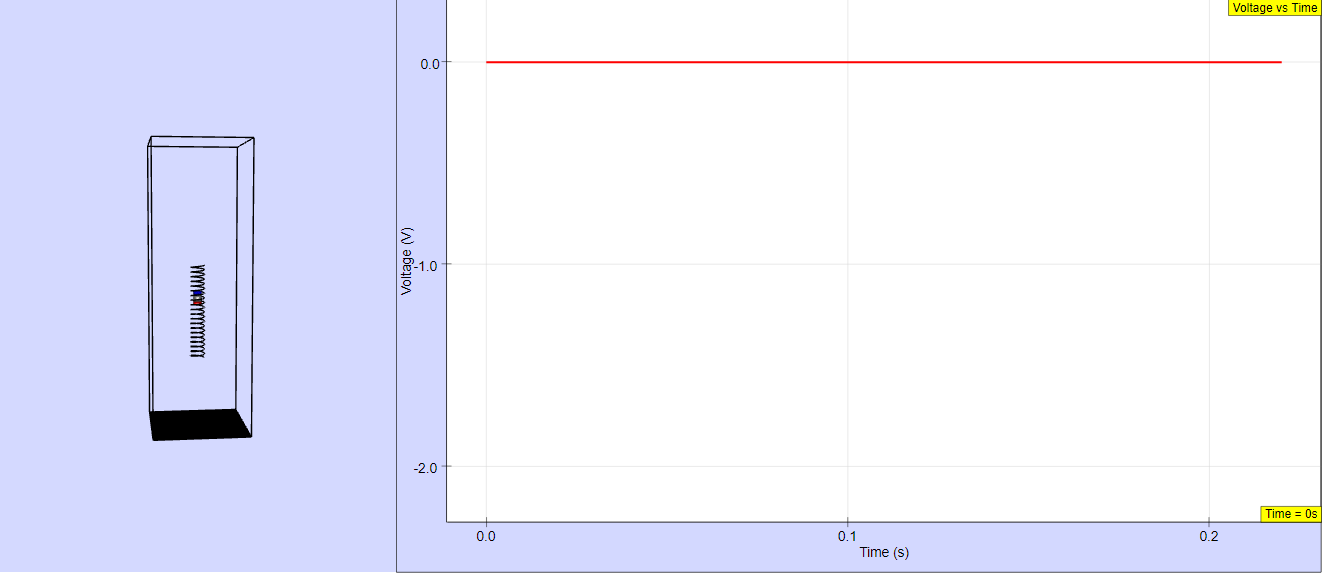
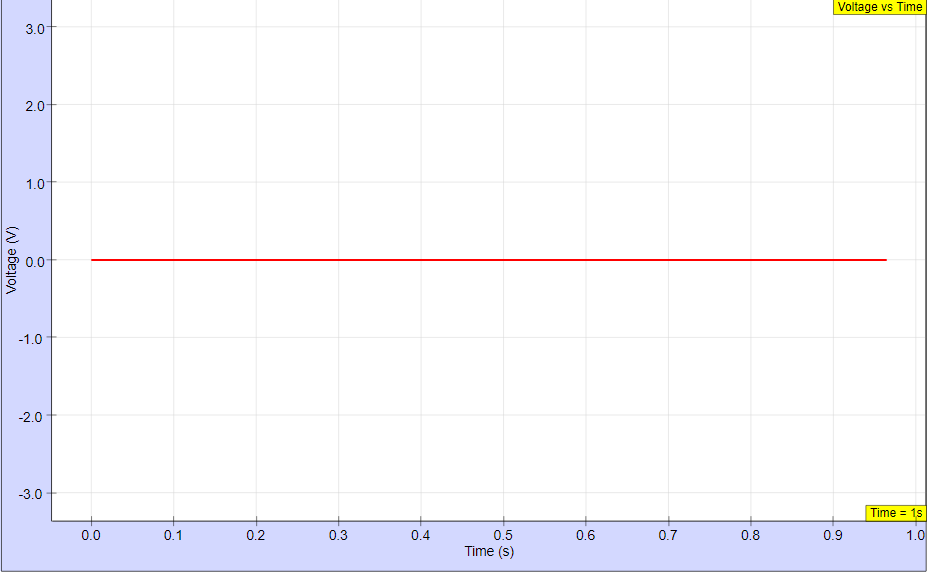
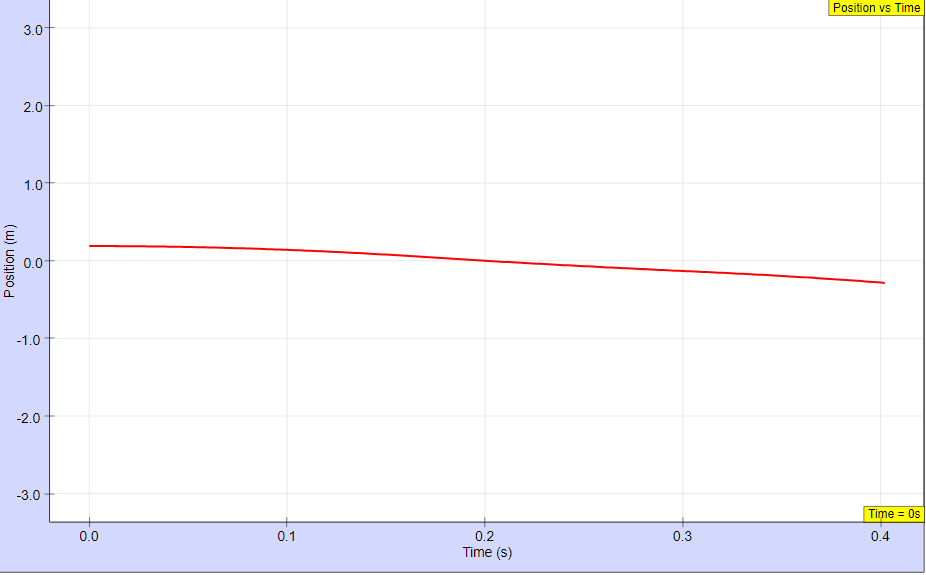
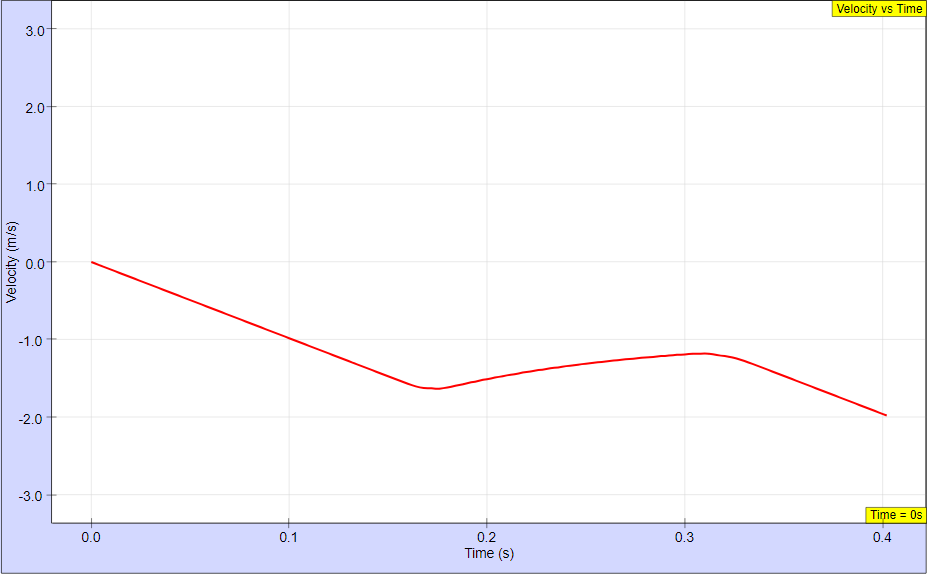
- Graph Toggling: The simulation displays graphs that can be toggled on or off, showing "(Voltage vs Time)," "(Position Vs Time)," and "(Velocity Vs Time)." These visual representations are crucial for analyzing the magnet's motion and the induced voltage in the coil.
- Editable Parameters: Users can adjust several key parameters through editable field boxes:
- Number of Turns (N): This controls the number of loops in the coil, directly impacting the magnitude of the induced voltage according to Faraday's Law. The instruction notes: "Adjusting the N field box will set the number of turns the coil will make."
- Magnet Strength (u): This parameter influences the magnetic flux and its rate of change, thus affecting the induced voltage and the forces acting on the magnet. The instruction states: "Adjusting the Magnet u field box will set the strength of the magnet."
- Coil Size: The physical dimensions of the coil can be adjusted, which would affect the magnetic flux linkage. The instruction clarifies: "Adjusting the Coil field box will set the size of the coil."
- Simulation Controls: Standard playback controls are provided: "Plays/Pauses, steps and resets the simulation respectively." These allow for detailed observation of the simulation.
- Full Screen Toggle: For better viewing, the simulation offers a full-screen toggle by double-clicking.
- Learning Goals (Sample): Although the specific learning goals are marked as "[text]," the presence of this section indicates that the simulation is designed with specific educational outcomes in mind. These likely relate to understanding:
- Faraday's Law of induction (induced EMF).
- Lenz's Law (the direction of the induced current opposing the change in magnetic flux).
- The effect of conductive materials on a moving magnet due to induced eddy currents and magnetic braking.
- The relationship between the magnet's motion (position, velocity) and the induced voltage in the coil.
- Target Audience (For Teachers): The inclusion of a "For Teachers" section highlights that this resource is intended to be integrated into physics curricula. Teachers can use this simulation as a demonstration tool, a platform for student inquiry-based learning, or as a virtual lab experiment.
- Technical Aspects: The simulation is built using "JavaScript Simulation Applet HTML5," indicating its modern web-based nature and compatibility across various devices without the need for additional plugins. The embed code provided ("") allows educators to easily integrate the simulation into their online learning platforms or webpages.
- Credits and Licensing: The resource acknowledges the contributors: "Maria Jose Cano, Ernesto Mart’n, and Francisco Esquembre - Universidad Murcia; Fremont Teng; Ernesto Martin; Francisco Esquembre - Universidad Murcia; Loo Kang Wee." It also explicitly states that the "Contents are licensed Creative Commons Attribution-Share Alike 4.0 Singapore License," promoting open access and sharing for educational purposes. Commercial use of the underlying "EasyJavaScriptSimulations Library" requires a separate license.
- Context within OER @ Singapore: This simulation is listed under "Electromagnetism" and part of "MOSEM² Minds-On Physics Learning Resources," indicating its alignment with specific physics topics and a broader pedagogical approach focused on active learning. Its presence within a larger collection of physics and mathematics simulations (as evident from the extensive list of other applets) suggests a commitment to providing a comprehensive library of interactive educational tools.
Quotes:
- Regarding tube materials: "Selecting options under the Tube Materials will set it's material. None, Copper, Aluminium, Plastic, Iron (Left to Right)"
- Regarding the number of turns: "Adjusting the N field box will set the number of turns the coil will make."
- Regarding magnet strength: "Adjusting the Magnet u field box will set the strength of the magnet."
- Regarding coil size: "Adjusting the Coil field box will set the size of the coil."
- Regarding simulation controls: "Plays/Pauses, steps and resets the simulation respectively."
Conclusion:
The "Magnet Falling in a Coil with Tube Simulator" JavaScript simulation applet is a valuable open educational resource for teaching and learning about electromagnetism. Its interactive features, adjustable parameters, and visual outputs (graphs) allow users to explore the fundamental principles of electromagnetic induction in a dynamic and engaging way. The availability of embed code and a Creative Commons license further enhances its utility for educators seeking to integrate interactive simulations into their teaching materials. The simulation aligns with modern web technologies, ensuring accessibility for a wide range of learners.
Magnet Falling in a Coil Study Guide
Key Concepts
- Electromagnetism: The fundamental interaction involving magnetic and electric fields. A changing magnetic field induces an electric field (Faraday's Law), and a moving electric charge creates a magnetic field (Ampère's Law).
- Faraday's Law of Induction: This law states that a changing magnetic flux through a closed loop induces an electromotive force (EMF) or voltage in that loop. The magnitude of the induced EMF is proportional to the rate of change of the magnetic flux.
- Lenz's Law: This law states that the direction of the induced current (and the associated magnetic field) in a closed loop is such that it opposes the change in magnetic flux that produced it.
- Magnetic Flux: A measure of the total magnetic field that passes through a given area. It depends on the strength of the magnetic field, the area, and the orientation of the field relative to the area.
- Induced Current: The electric current that flows in a closed loop due to an induced electromotive force (EMF) caused by a changing magnetic flux.
- Damping: The process by which an oscillation or movement is reduced or prevented, often due to energy dissipation. In this context, the induced current creates a magnetic field that opposes the falling magnet, thus damping its motion.
- Tube Materials: The conductive properties of the tube (if any) significantly affect the magnitude of the induced current. Conductive materials like copper and aluminum will experience stronger induced currents compared to non-conductive materials like plastic. Iron, being ferromagnetic, will also interact strongly with the magnet.
- Number of Turns (N): In a coil, a greater number of turns will result in a larger induced EMF for the same rate of change of magnetic flux, according to Faraday's Law.
- Magnet Strength (u): A stronger magnet will produce a larger magnetic flux and a greater rate of change of magnetic flux as it falls, leading to a larger induced EMF and current.
- Coil Size: The size and geometry of the coil influence the magnetic flux through it and how effectively it interacts with the falling magnet.
Short-Answer Quiz
- Explain the fundamental principle that governs the interaction between the falling magnet and the coil in this simulation.
- According to Lenz's Law, what is the direction of the magnetic field produced by the induced current in the coil as the magnet falls through it?
- How does changing the tube material in the simulation affect the motion of the falling magnet, and why?
- Describe the relationship between the number of turns in the coil and the induced voltage when the magnet falls.
- What would you expect to observe in the Voltage vs. Time graph if the falling magnet were stronger, and why?
- Explain why a magnet falling through a copper tube falls significantly slower than a magnet falling through a plastic tube of the same dimensions.
- What is magnetic flux, and how does the falling magnet cause a change in magnetic flux through the coil?
- In the simulation, what happens to the induced current in the coil after the magnet has completely passed through it? Explain your reasoning.
- How does the presence of induced currents in the conductive tube or coil lead to the concept of damping in the magnet's motion?
- Describe how you could use the graphs provided in the simulation (Position vs. Time, Velocity vs. Time) to analyze the effect of different tube materials on the magnet's fall.
Answer Key
- The interaction is governed by electromagnetism, specifically Faraday's Law of Induction and Lenz's Law. As the magnet falls through the coil, its changing magnetic field induces an electromotive force (EMF) and consequently a current in the coil.
- The induced current in the coil will create a magnetic field that opposes the change in magnetic flux caused by the falling magnet. This means the coil will generate a magnetic field with its north pole facing the approaching north pole of the magnet (repulsion) and then a south pole attracting the departing north pole.
- Changing the tube material affects the magnitude of the induced current. Conductive materials (copper, aluminum, iron) allow for induced currents, which create a magnetic field opposing the magnet's motion, slowing it down. Non-conductive materials (plastic, none) do not allow induced currents, so the magnet falls freely (ignoring air resistance).
- According to Faraday's Law, the induced EMF is proportional to the number of turns in the coil. Therefore, a coil with more turns will experience a larger induced voltage for the same rate of change of magnetic flux caused by the falling magnet.
- A stronger magnet would create a larger magnetic flux and a greater rate of change of magnetic flux as it falls. This would result in a larger induced voltage (peaks and troughs with greater magnitude) in the Voltage vs. Time graph.
- A copper tube is a good conductor of electricity. As the magnet falls, it induces eddy currents in the copper tube. These currents create their own magnetic field that opposes the motion of the falling magnet, resulting in a slower fall due to this electromagnetic braking effect. A plastic tube is a poor conductor, so minimal eddy currents are induced, and the magnet falls freely under gravity.
- Magnetic flux is the measure of the total magnetic field passing through a given area (the coil's cross-section in this case). As the magnet approaches and passes through the coil, the amount and direction of the magnetic field lines passing through the coil change, thus causing a change in magnetic flux.
- After the magnet has completely passed through the coil and is no longer causing a change in magnetic flux, the induced current in the coil will drop back to zero. This is because a changing magnetic flux is required to sustain an induced EMF and current.
- The induced currents generate a magnetic force that opposes the motion of the falling magnet. This opposition acts as a form of electromagnetic drag, dissipating some of the magnet's kinetic energy and thus damping its acceleration and final velocity compared to free fall.
- By observing the slope of the Position vs. Time graph (representing velocity) and the Velocity vs. Time graph itself for different tube materials, you can compare the acceleration and terminal velocity (if reached) of the magnet. A slower change in position and a lower velocity indicate a stronger damping effect due to induced currents in conductive materials.
Essay Format Questions
- Discuss the interplay between Faraday's Law of Induction and Lenz's Law in the context of a magnet falling through a conductive coil or tube. Explain how these laws together determine the observed motion of the magnet and the induced electromagnetic effects.
- Analyze the role of the tube material's conductivity in the "Magnet Falling in a Coil" simulation. Compare and contrast the expected behavior of the magnet when falling through tubes made of copper, aluminum, plastic, and iron, justifying your predictions based on electromagnetic principles.
- Explain how the adjustable parameters in the simulation (number of turns in the coil, magnet strength, coil size) would affect the induced voltage and the motion of the falling magnet. Discuss the physical principles underlying these relationships.
- Consider the energy transformations that occur when a magnet falls through a conductive coil. Describe how the magnet's mechanical energy is converted, and relate this to the concept of damping observed in the simulation.
- Beyond this specific simulation, discuss the broader applications of the principles demonstrated by a magnet falling through a coil or tube in real-world technologies or phenomena. Provide specific examples and explain the underlying physics.
Glossary of Key Terms
- Electromagnetism: The branch of physics that studies the fundamental force involving electric charges in motion (electricity) and their interaction through magnetic fields (magnetism).
- Faraday's Law of Induction: A fundamental law stating that a changing magnetic flux through a circuit induces an electromotive force (EMF) or voltage in the circuit. Mathematically expressed as EMF = -dΦB/dt, where ΦB is the magnetic flux and dt is the change in time.
- Lenz's Law: A principle stating that the direction of an induced current in a closed circuit is such that it opposes the change in magnetic flux that produces it. This opposition manifests as a magnetic field created by the induced current that counters the change in the original magnetic field.
- Magnetic Flux (ΦB): A measure of the amount of magnetic field passing through a given surface. It is defined as the component of the magnetic field perpendicular to the surface area, multiplied by the area (ΦB = B⋅A⋅cosθ).
- Induced Current: An electric current that is generated in a conductor due to a changing magnetic field or the relative motion of a conductor within a magnetic field.
- Electromotive Force (EMF): The voltage or potential difference induced in a circuit due to a changing magnetic flux (as per Faraday's Law). It is the force that drives the induced current.
- Damping: The dissipation of energy from an oscillating system, resulting in a decrease in the amplitude of oscillations or a slowing down of motion. In this context, electromagnetic damping occurs due to the energy lost to induced currents.
- Conductivity: A measure of a material's ability to conduct electric current. Materials with high conductivity (like copper and aluminum) allow electrons to flow easily, resulting in larger induced currents.
- Magnetic Field: A region around a magnet or a current-carrying conductor where magnetic forces are exerted. It is a vector field, having both magnitude and direction.
- Magnetic Dipole Moment (u): A measure of the strength and orientation of a magnet. A stronger magnet has a larger magnetic dipole moment, producing a stronger magnetic field.
Sample Learning Goals
[text]
For Teachers
Magnet Falling in a Coil with Tube Simulator JavaScript Simulation Applet HTML5
Instructions
Combo Box



Editable Field Boxes

Toggling Full Screen
Play/Pause, Step and Reset Buttons

Research
[text]
Video
[text]
Version:
Other Resources
[text]
Frequently Asked Questions: Magnet Falling in a Coil Simulator
1. What is the purpose of the "Magnet Falling in a Coil with Tube Simulator"?
This interactive simulation is designed as an open educational resource to help users understand the principles of electromagnetism, specifically Faraday's law of induction and Lenz's law. It allows users to visualize what happens when a magnet falls through a conductive coil, observing the induced voltage, position, and velocity of the magnet over time.
2. How can I use the simulator?
The simulator provides several interactive elements. You can select the material of the tube through which the magnet falls (None, Copper, Aluminium, Plastic, Iron). You can also toggle the visibility of graphs displaying Voltage vs Time, Position vs Time, and Velocity vs Time. Furthermore, you can adjust the number of turns in the coil (N), the strength of the magnet (Magnet u), and the size of the coil using the editable field boxes. The simulation can be started, paused, stepped frame-by-frame, and reset using the provided buttons. Double-clicking the screen toggles full-screen mode (when the simulation is not running).
3. What physical principles are demonstrated by this simulation?
The primary physical principle demonstrated is Faraday's law of induction, which states that a changing magnetic flux through a loop of wire induces an electromotive force (EMF), and thus a voltage, in the loop. As the magnet falls through the coil, the magnetic flux through the coil changes, inducing a voltage. Lenz's law is also relevant, as it dictates that the induced current will flow in a direction that opposes the change in magnetic flux that produced it. This opposition results in a force that acts against the falling magnet, slowing its descent, especially in conductive tubes like copper and aluminum.
4. How does the tube material affect the falling magnet?
The material of the tube significantly impacts the magnet's fall. In non-conductive materials like plastic or in the absence of a tube ("None"), the magnet will fall freely under gravity (ignoring air resistance). However, when the tube is made of a conductive material like copper or aluminum, the changing magnetic flux from the falling magnet induces eddy currents in the tube walls. These eddy currents create their own magnetic field that opposes the motion of the falling magnet, resulting in a slower and more controlled descent. Iron, being a ferromagnetic material, will also interact strongly with the magnet, but through a different mechanism involving magnetic attraction and the establishment of magnetic domains.
5. What do the adjustable parameters (N, Magnet u, Coil) control?
- N (Number of turns): Increasing the number of turns in the coil will increase the induced voltage because each turn experiences the changing magnetic flux, and the voltages are additive. A higher induced voltage can lead to stronger opposing forces on the magnet in conductive tubes.
- Magnet u (Magnet strength): A stronger magnet (higher magnetic moment, μ) will create a larger magnetic flux and a greater rate of change of flux as it falls through the coil. This will result in a larger induced voltage and stronger eddy currents (in conductive tubes), leading to a greater braking effect on the magnet.
- Coil (Coil size): The size of the coil (likely referring to its radius or length, though not explicitly specified) will influence the amount of magnetic flux passing through it and the geometry of the interaction with the falling magnet. A larger or longer coil might experience a changing flux for a longer duration, affecting the shape and duration of the induced voltage.
6. What can be learned by observing the different graphs?
- Voltage vs Time: This graph shows the induced voltage in the coil as the magnet falls. The shape and magnitude of the curve will depend on the speed of the magnet and the rate of change of magnetic flux. You'll likely see a peak as the magnet enters the coil and another peak (possibly with opposite polarity) as it exits. The area under the curve is related to the total change in magnetic flux.
- Position vs Time: This graph illustrates the vertical position of the magnet as a function of time. For free fall, this would be a parabolic curve. However, in conductive tubes, you will observe a deviation from this, showing a slower rate of change of position, indicating deceleration due to the induced magnetic forces.
- Velocity vs Time: This graph shows how the velocity of the magnet changes over time. In free fall, this would be a straight line with a constant positive slope (acceleration due to gravity). In conductive tubes, the slope will be less steep, and you might even see periods where the acceleration is negative (deceleration due to the opposing magnetic force).
7. How does this simulation relate to real-world applications?
The principles demonstrated by this simulation are fundamental to many real-world technologies, including:
- Eddy current braking: Used in some trains and roller coasters to provide non-contact braking.
- Induction cooktops: Utilize changing magnetic fields to induce currents in cookware, heating them directly.
- Metal detectors: Detect the presence of conductive materials by inducing eddy currents and sensing the resulting magnetic fields.
- Generators and alternators: Operate on the principle of moving a magnet relative to a coil (or vice versa) to induce an electric current.
- Non-destructive testing: Eddy current testing is used to detect flaws in conductive materials.
8. Who created this simulation and what is the licensing?
This "Magnet Falling in a Coil with Tube Simulator" was created by Maria Jose Cano, Ernesto Mart’n, and Francisco Esquembre from Universidad Murcia; Fremont Teng; Ernesto Martin; Francisco Esquembre from Universidad Murcia; and Loo Kang Wee. It is part of the Open Educational Resources / Open Source Physics @ Singapore project. The content is licensed under the Creative Commons Attribution-Share Alike 4.0 Singapore License, which encourages sharing and adaptation with attribution and similar licensing. For commercial use of the EasyJavaScriptSimulations Library used to create this, you need to refer to the specified license and contact This email address is being protected from spambots. You need JavaScript enabled to view it. directly.