
Breadcrumbs
- You are here:
-
Home

-
Interactive Resources
- Physics
01 Foundations of Physics
Foundations of Physics. This introductory section is designed to strengthen the framework and approach to physics that learners bring along from secondary school. An appreciation for measurement and uncertainty anchors the Ways of Thinking and Doing articulated in the Practices of Science. Physical quantities are modelled as mathematical objects like scalars and vectors, and simple examples are used to illustrate the key conceptual strands of motion, forces, and energy that thread through the syllabus. In H3 Physics, learners explore and wonder about the role of the observer in physical descriptions.
Here is the data from the Foundations of Physics section organized into a table with the H1, H2, and H3 columns:
| Topic | SLS Module | H1 | H2 | H3 |
| 01. Quantities and Measurement | Uncertainty | ✔️ | ✔️ | |
| Physical Quantities and SI units | ✔️ | ✔️ | ||
| Homogeneous Equations and the Scale of Universe | ✔️ | ✔️ | ||
| 2-D Vector Addition by resolving into perpendicular components | ✔️ | ✔️ | ||
| 02. Forces and moments | Forces | ✔️ | ✔️ | |
| Turning Effects of Forces | ✔️ | ✔️ | ||
| Equilibrium of Extended Bodies | ✔️ | ✔️ | ||
| 03. Motion and Forces | Relating Conservation of Momentum to Newton’s Third Law of Motion | ✔️ | ✔️ | |
| The Multiple Meanings of Mass | ✔️ | ✔️ | ||
| Force and Momentum | ✔️ | ✔️ | ||
| Kinematics: Representing Motion in Space and Time | ✔️ | ✔️ | ||
| Kinematics - Graphs of Motion | ✔️ | ✔️ | ||
| 04. Energy and Fields | Work and Power (Lesson 1/3) | ✔️ | ✔️ | |
| Energy and Systems (Lesson 2/3) | ✔️ | ✔️ | ||
| Conservation of Energy (Lesson 3/3) | ✔️ | ✔️ |
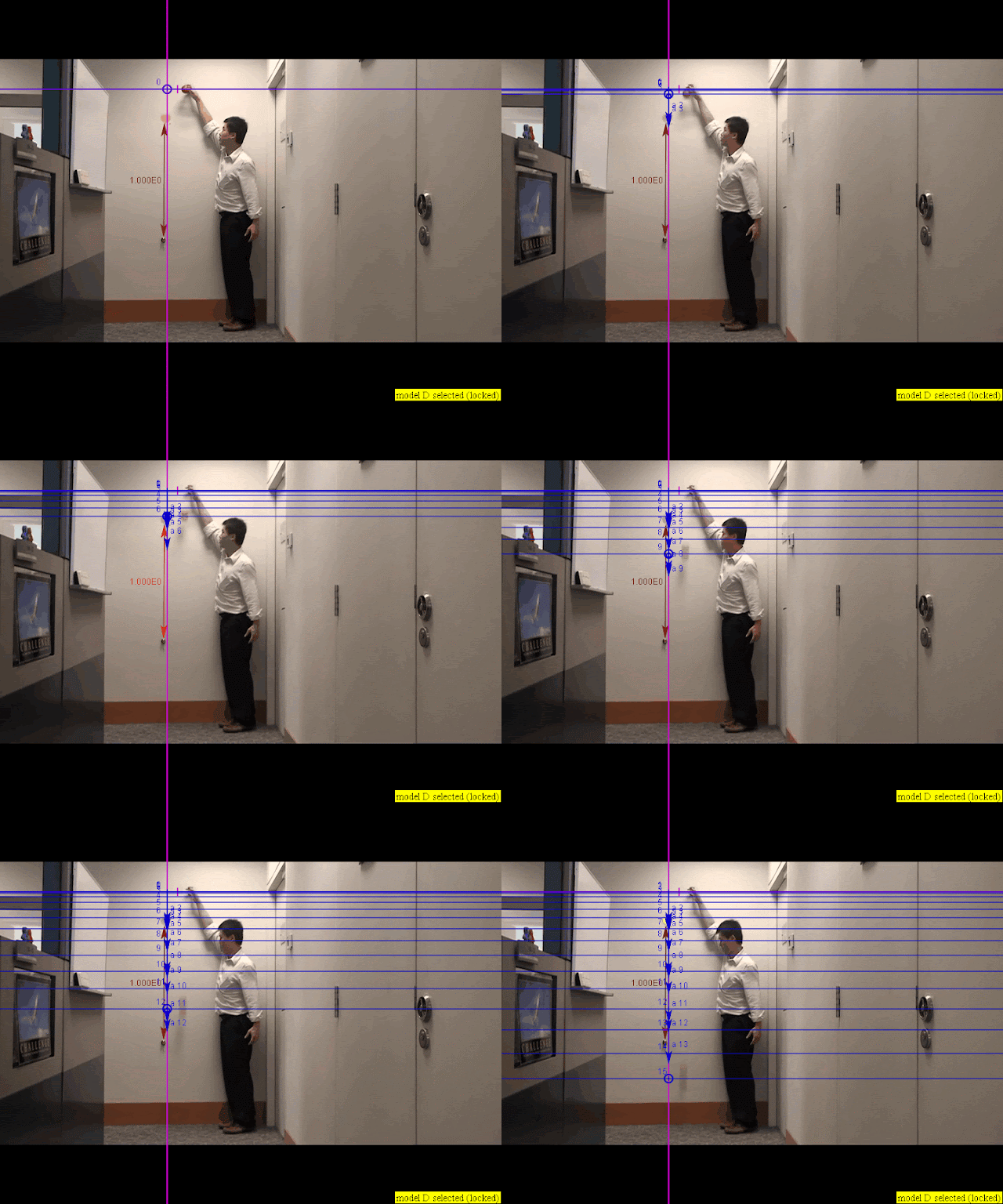
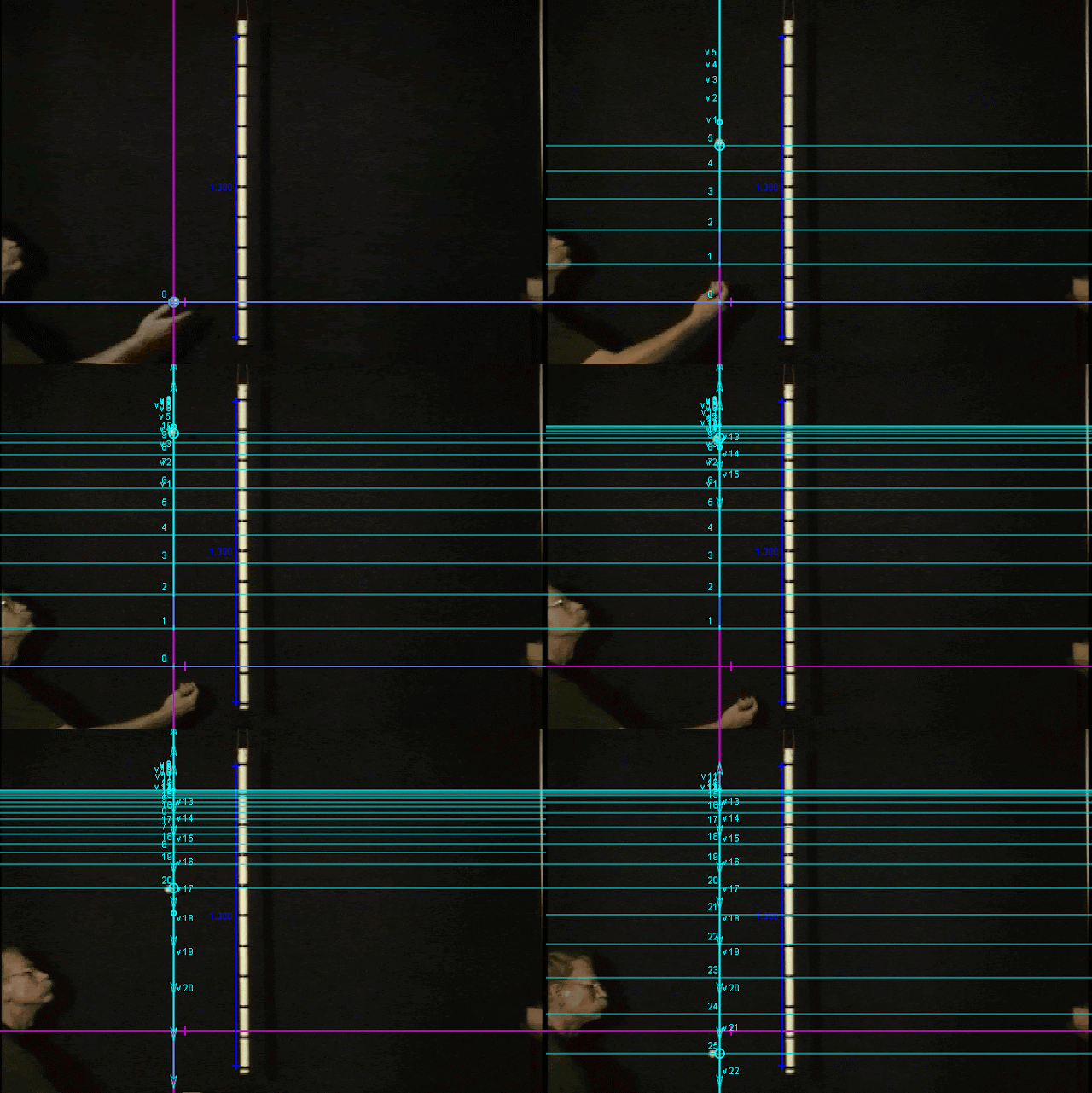
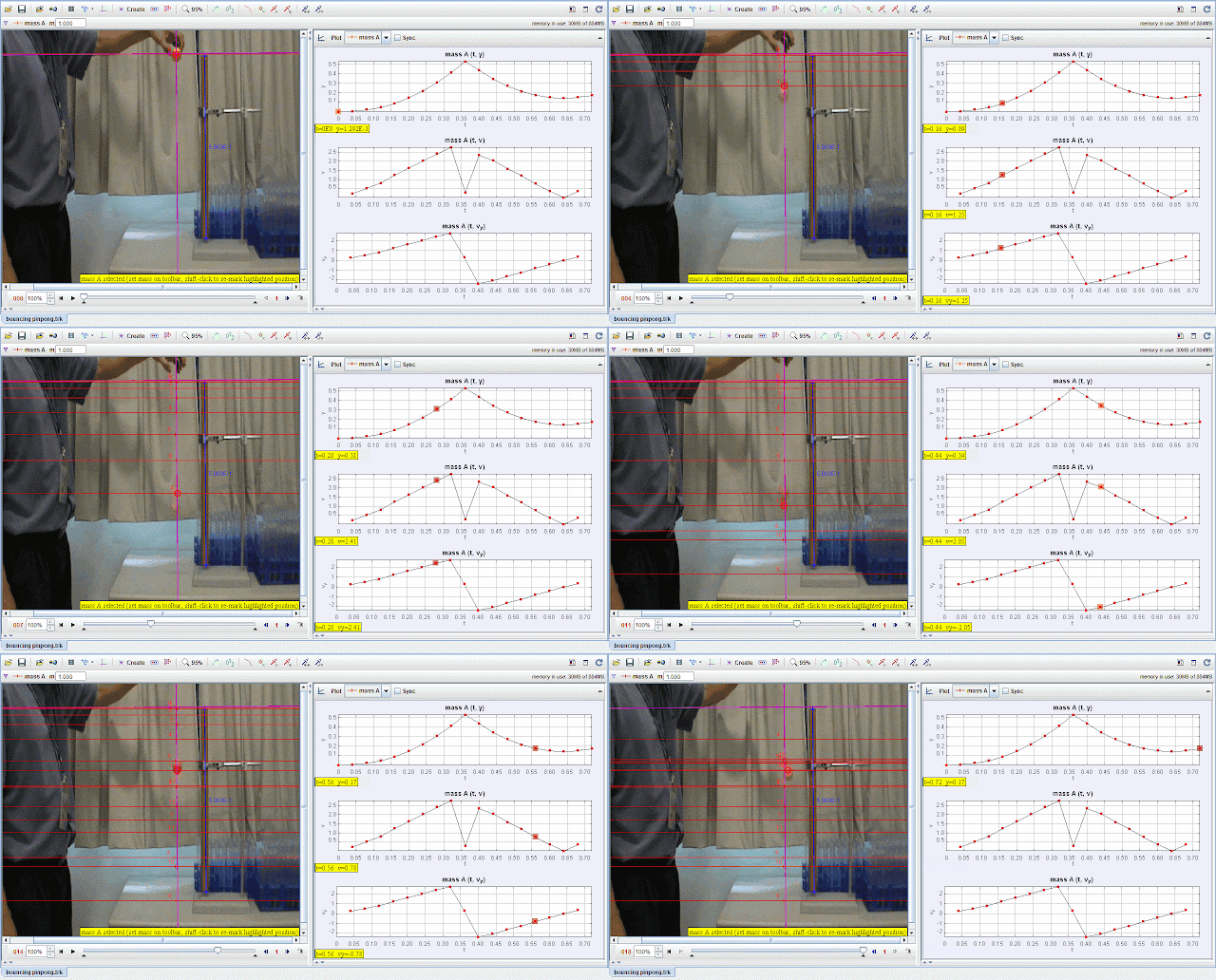
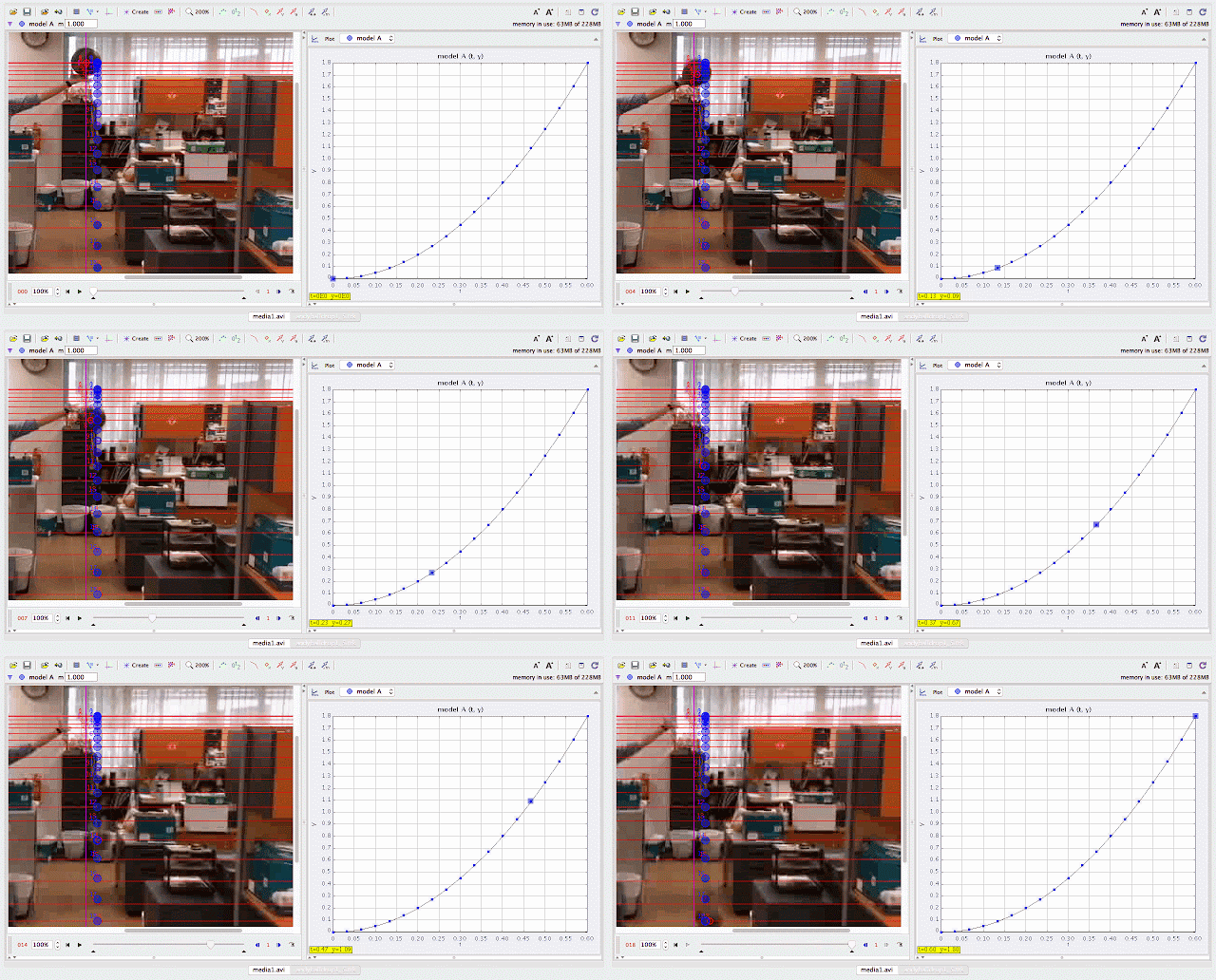
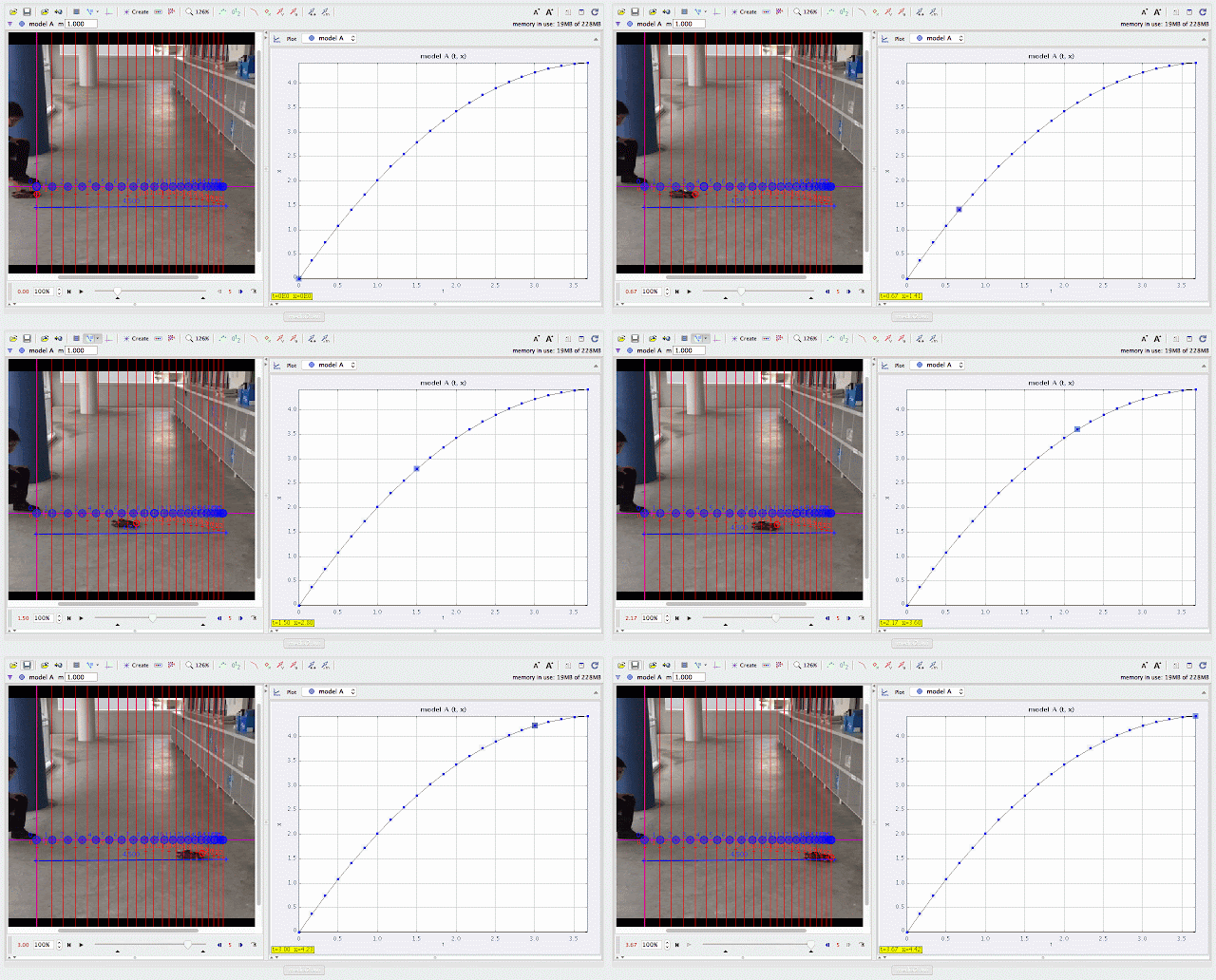
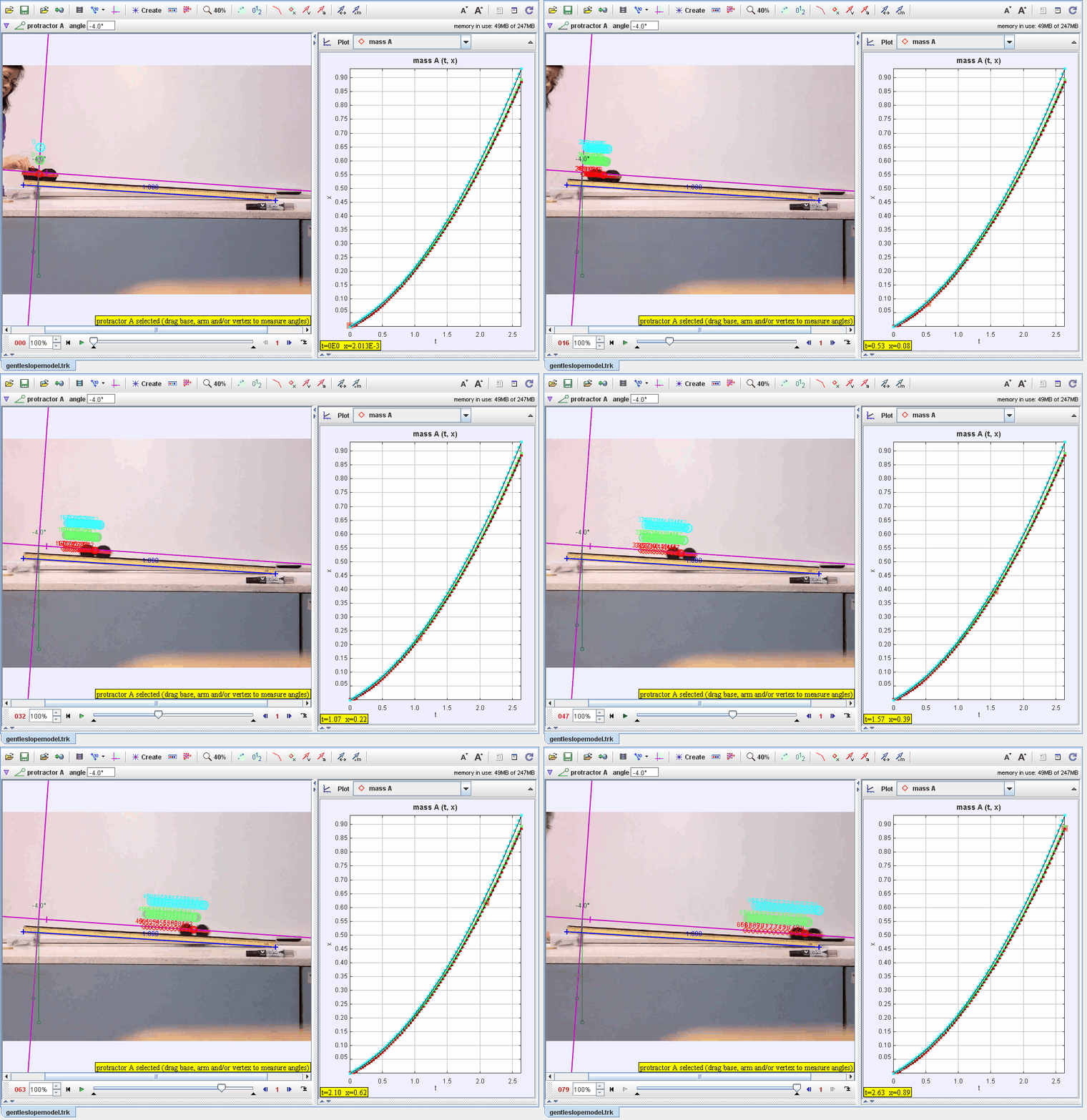
Tracker 2/6 Deccelerating Toy Car using Model Builder to create Simplify Graphs for Secondary School
- Details
- Parent Category: 03 Motion & Forces
- Category: 01 Kinematics
- Hits: 9083

- Details
- Written by Loo Kang Wee
- Parent Category: 03 Motion & Forces
- Category: 01 Kinematics
- Hits: 43260
- Details
- Written by Loo Kang Wee
- Parent Category: 03 Motion & Forces
- Category: 01 Kinematics
- Hits: 11790
- Details
- Written by Loo Kang Wee
- Parent Category: 03 Motion & Forces
- Category: 01 Kinematics
- Hits: 10448
- Details
- Written by Loo Kang Wee
- Parent Category: 03 Motion & Forces
- Category: 01 Kinematics
- Hits: 39257

- Details
- Written by Loo Kang Wee
- Parent Category: 03 Motion & Forces
- Category: 01 Kinematics
- Hits: 16702

- Details
- Written by Loo Kang Wee
- Parent Category: 03 Motion & Forces
- Category: 01 Kinematics
- Hits: 5478

- Details
- Written by Loo Kang Wee
- Parent Category: 03 Motion & Forces
- Category: 01 Kinematics
- Hits: 7554
- Details
- Written by Loo Kang Wee
- Parent Category: 03 Motion & Forces
- Category: 01 Kinematics
- Hits: 33581


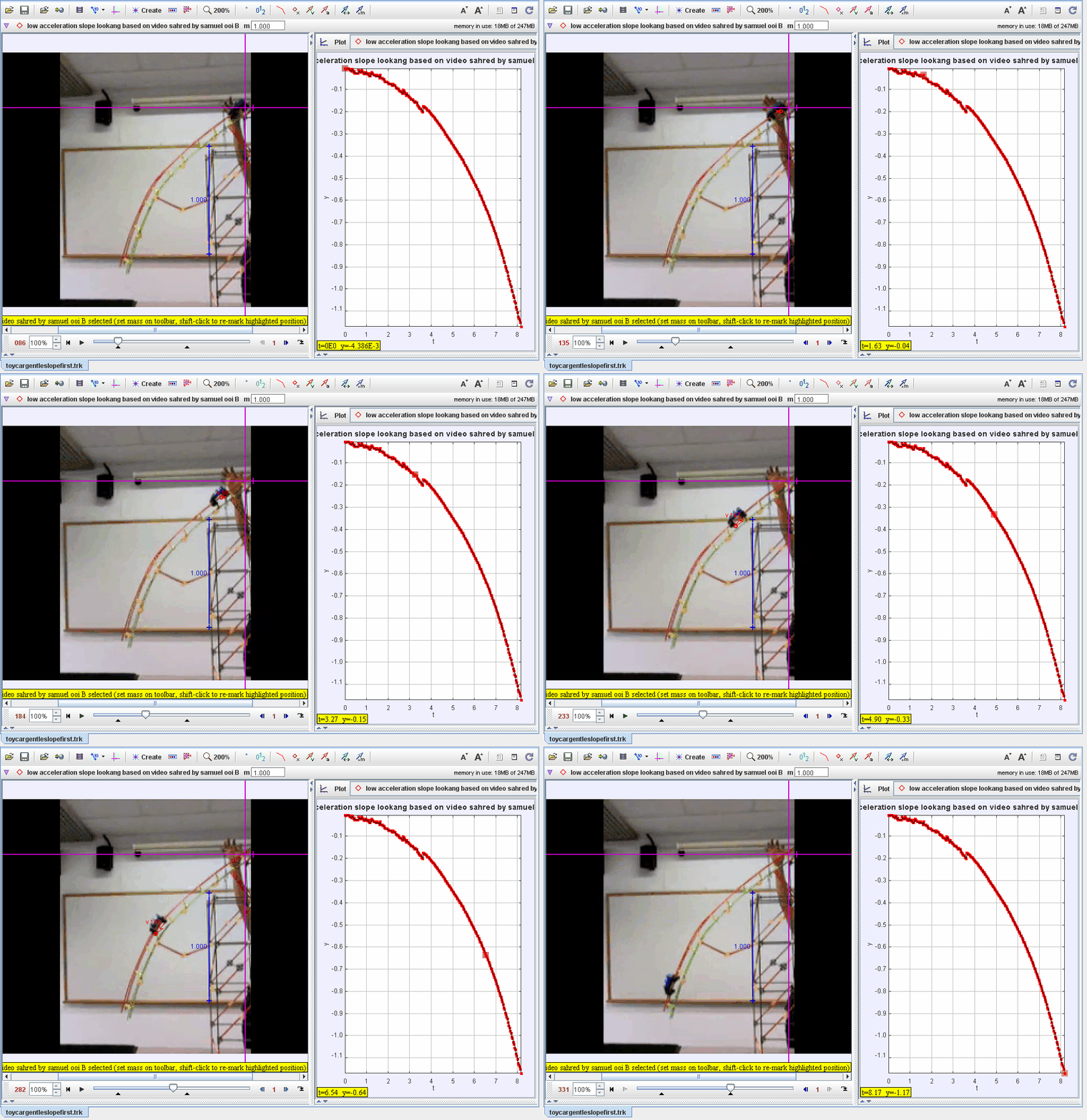

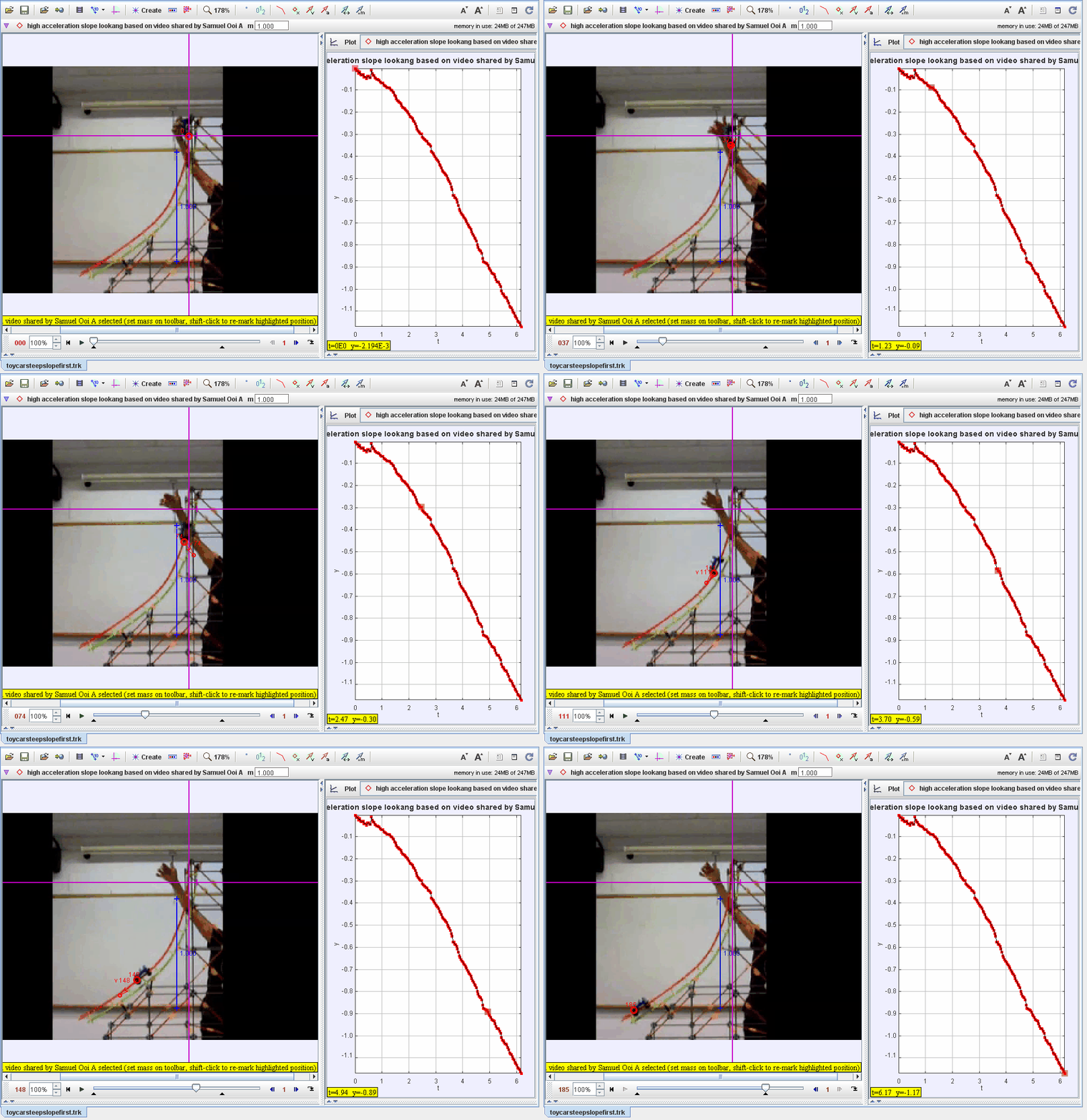
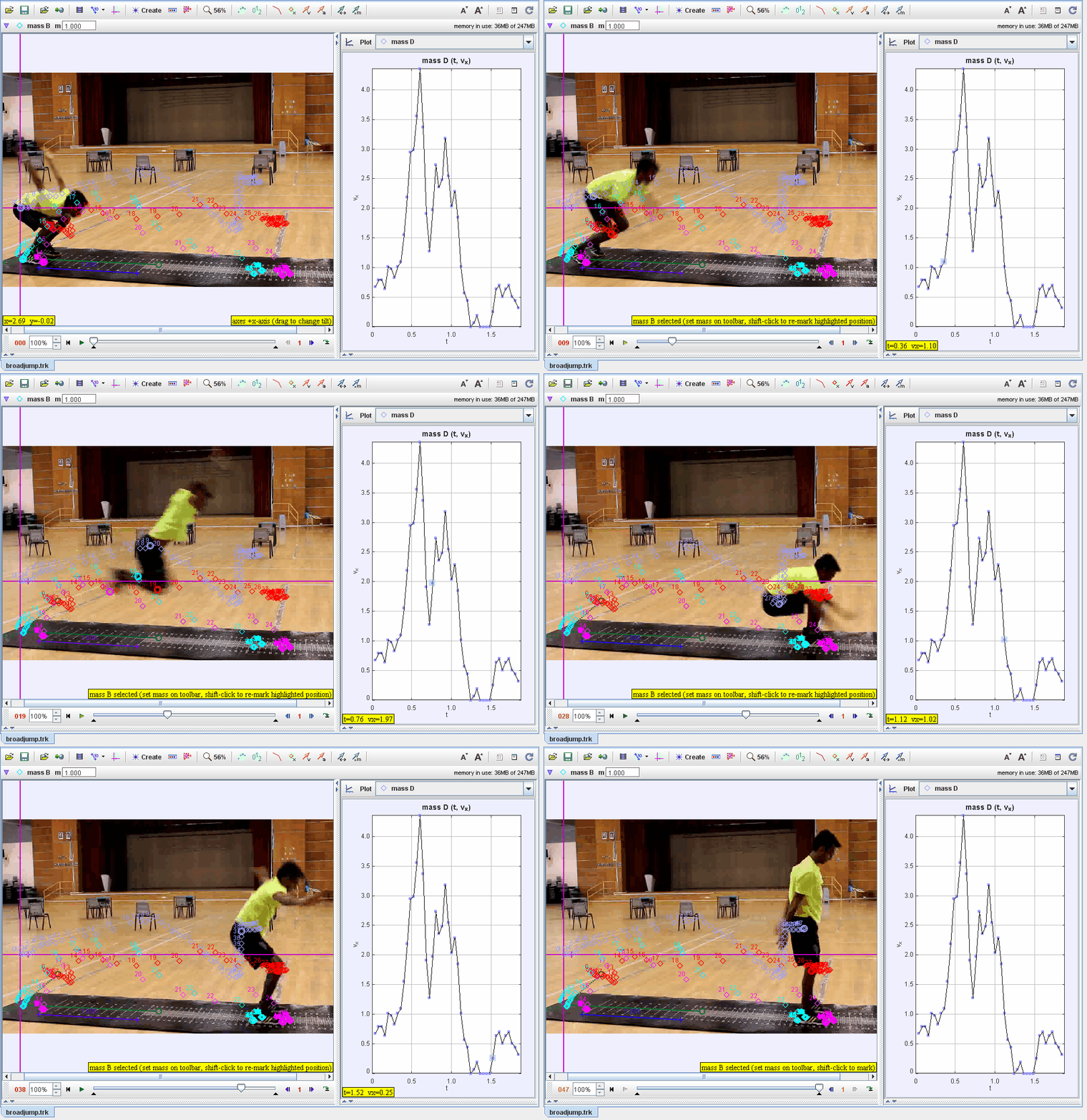


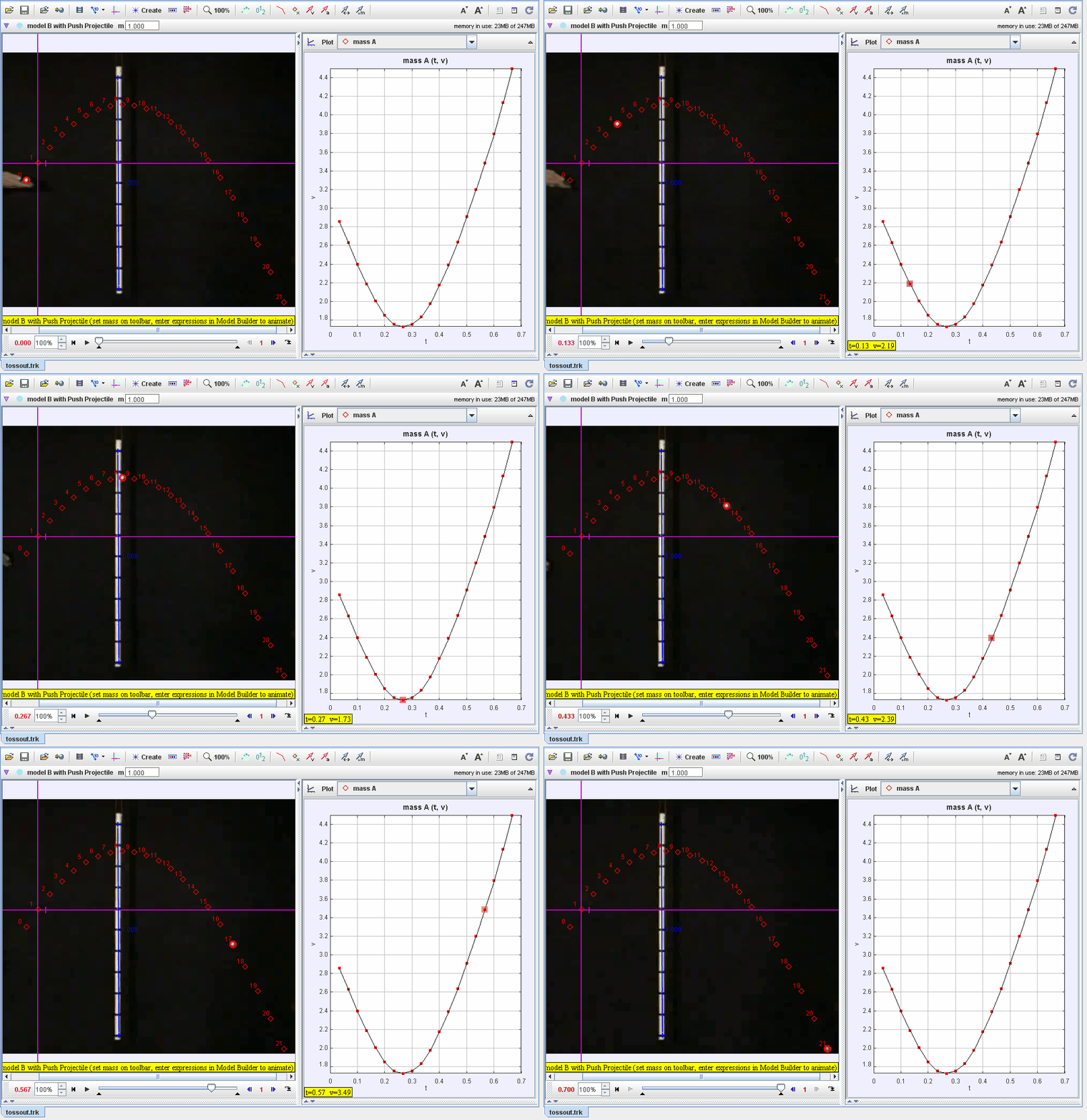
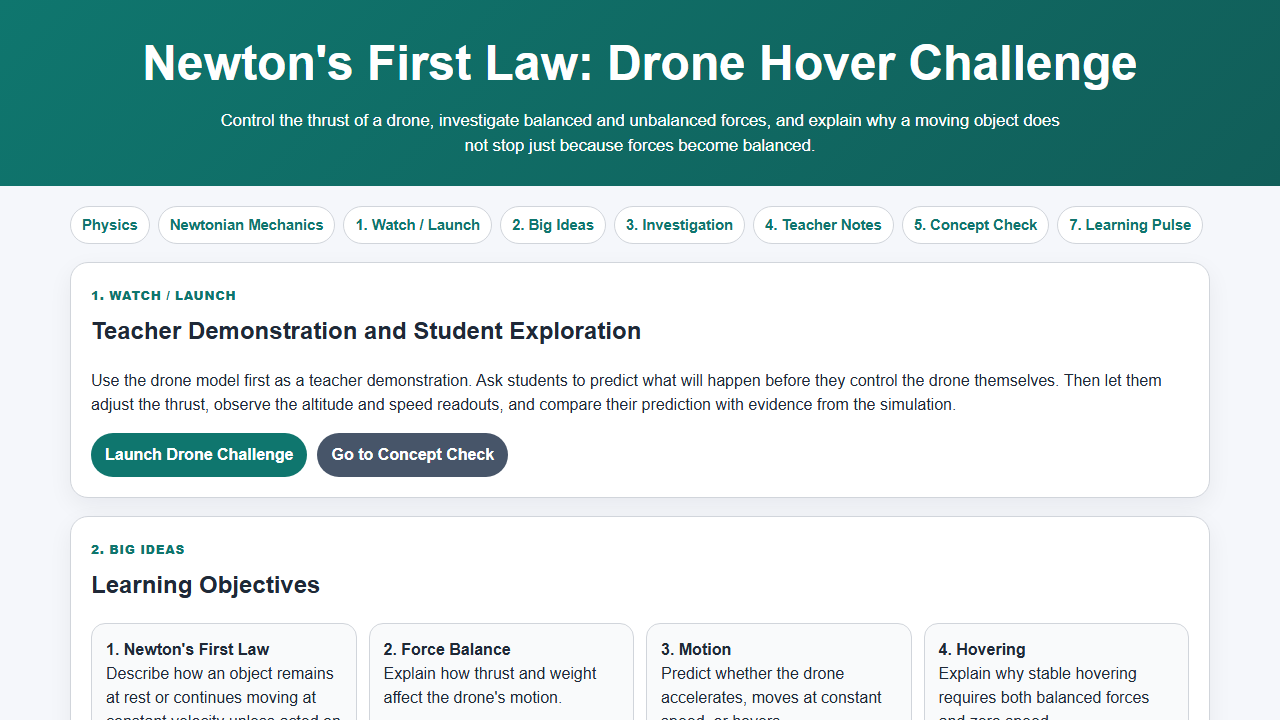
Newton's First Law Drone Hover Challenge is an HTML5 JavaScript physics lesson where students control a drone's thrust, compare thrust and weight, and decide whether the resultant force is zero or unbalanced.
The activity helps learners move beyond the common misconception that an object needs a continuous forward or upward force to keep moving. By watching altitude, velocity and force evidence together, students see that balanced forces mean zero acceleration, not necessarily zero velocity.
- Details
- Written by Loo Kang Wee
- Parent Category: 03 Motion & Forces
- Category: 02 Dynamics
- Hits: 5001
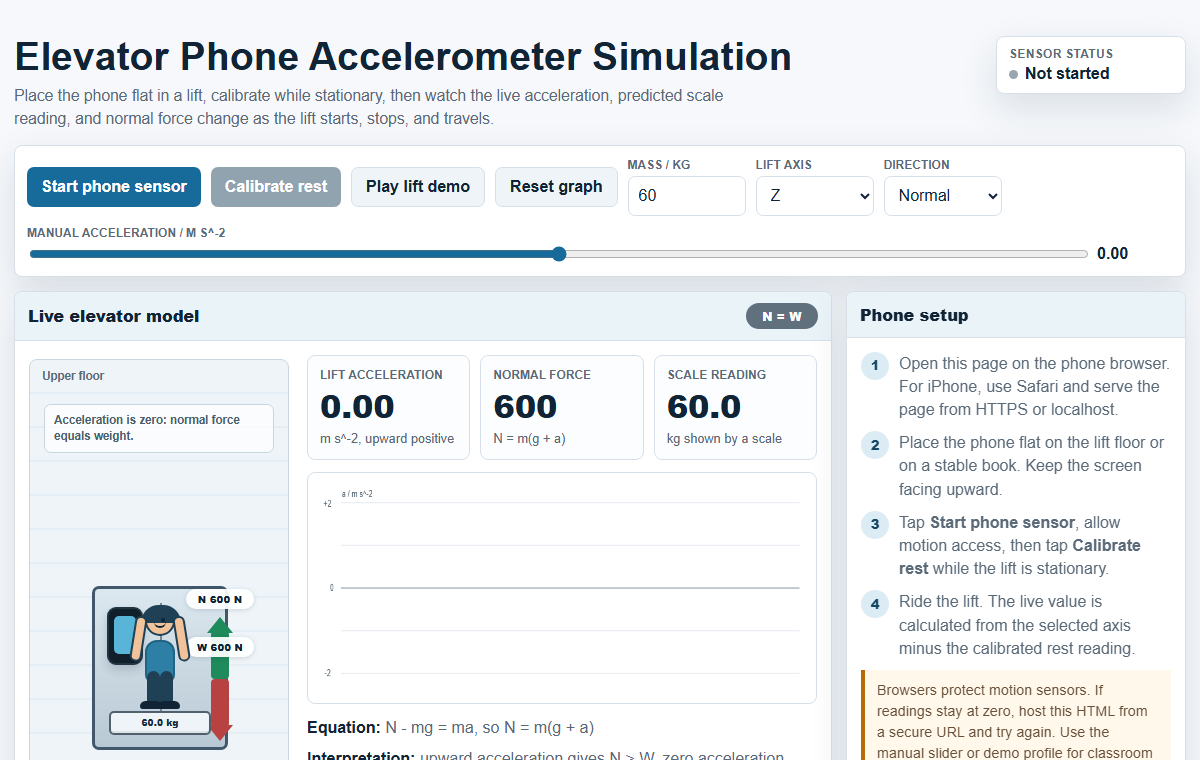
Interactive elevator phone accelerometer simulation for Newtonian mechanics: this browser-based model lets students use a phone accelerometer or a manual acceleration control to investigate normal force, weight, apparent weight and weighing-scale readings in a lift.
The activity goes beyond a static worksheet: learners observe live force arrows, calculate the scale reading, answer auto-marked questions, receive targeted hints, and generate xAPI/SLS-friendly learning evidence for teachers.
- Details
- Written by Loo Kang Wee
- Parent Category: 03 Motion & Forces
- Category: 02 Dynamics
- Hits: 5326

- Details
- Written by Loo Kang Wee
- Parent Category: 03 Motion & Forces
- Category: 02 Dynamics
- Hits: 12157

- Details
- Written by Loo Kang Wee
- Parent Category: 03 Motion & Forces
- Category: 02 Dynamics
- Hits: 7328
- Details
- Written by Loo Kang Wee
- Parent Category: 03 Motion & Forces
- Category: 02 Dynamics
- Hits: 5652
- Details
- Written by Loo Kang Wee
- Parent Category: 03 Motion & Forces
- Category: 02 Dynamics
- Hits: 3085

- Details
- Written by Z. Darren Tan
- Parent Category: 03 Motion & Forces
- Category: 02 Dynamics
- Hits: 7507

- Details
- Written by Loo Kang Wee
- Parent Category: 03 Motion & Forces
- Category: 02 Dynamics
- Hits: 11275
- Details
- Written by Loo Kang Wee
- Parent Category: 03 Motion & Forces
- Category: 02 Dynamics
- Hits: 13264

Subcategories
01 Measurements Article Count: 28
02 Forces & Moments Article Count: 14
04 Turning effects of forces Article Count: 14
03 Motion & Forces Article Count: 183
01 Kinematics Article Count: 77
02 Dynamics Article Count: 105
04 Energy & Fields Article Count: 18
07 Energy Work Power Article Count: 18